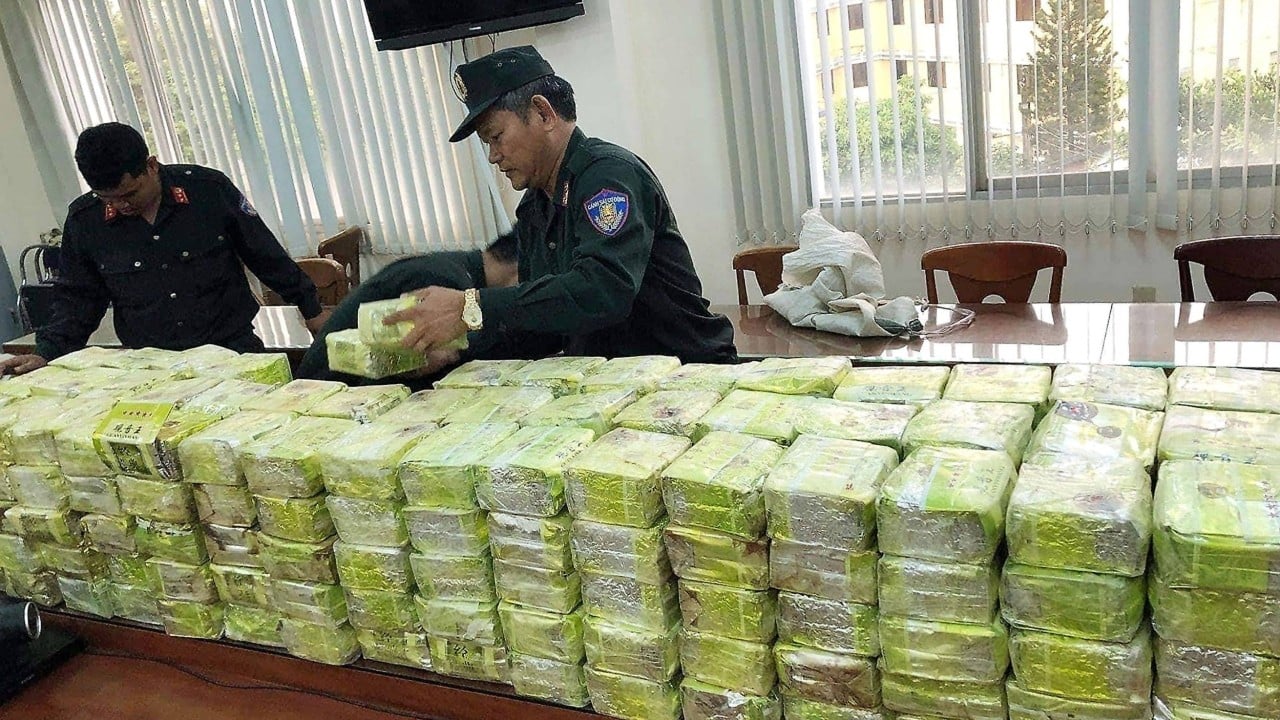
Every Western commentator reading the headlines about Vietnam rolling back capital punishment for drug trafficking is patting Hanoi on the back for a sudden attack of humanitarian conscience. They are dead wrong.
Stop viewing Southeast Asian criminal justice through the lens of Western human rights NGOs. You will miss the real story every single time. When an authoritarian state with one of the highest execution rates on the planet changes its penal code, it is rarely because the politburo stayed up late reading Amnesty International reports. It is because the old math stopped working.
For decades, Vietnam maintained some of the strictest narcotics laws in the world. Possessing or smuggling just 600 grams of heroin or 2.5 kilograms of methamphetamine was enough to earn a trip to the execution chamber. Firing squads were replaced by lethal injection in 2013, yet the state secrets surrounding execution numbers remained locked in a vault. Suddenly, the narrative shifts toward commuting sentences, restricting capital punishment for drug offenses, and rewriting the criminal code.
Mainstream news outlets treat this as a linear march toward progressive reform. That is lazy analysis. If you want to understand why Hanoi is taking the needle off the table for drug mules, follow the money, follow the extradition treaties, and look at the catastrophic operational failure of the Golden Triangle drug war.
The Deterrence Myth Collapsed Under Its Own Weight
Let us examine the core premise of capital punishment for narcotics: deterrence. The theory is simple. Make the price of getting caught absolute, and rational actors will find another line of work.
In practice, the exact opposite happened along the borders of Laos, Cambodia, and Vietnam.
I have spent years analyzing supply chain risk and illicit trade networks across the Mekong sub-region. The people getting caught with bricks of synthetic methamphetamine in Ho Chi Minh City or Nghe An province are almost never the cartel architects sitting in guarded compounds in Myanmar’s Shan State. They are impoverished farmers, desperate debtors, and low-level couriers paid a few hundred dollars to drive a truck across a porous mountain pass.
When you threaten a desperate courier with death, you do not stop the shipment. You simply increase the cartel's recruitment pool of disposable labor while driving up the street value of the product that makes it through. Worse, you create a deadly operational hazard for your own border police.
Think about the game theory of a cornered smuggler. If getting caught with two kilos of meth guarantees a lethal injection, a trafficker has zero incentive to surrender when stopped at a highway checkpoint. Every routine traffic stop turns into a firefight. Smugglers shoot to kill because they are already dead men walking. Vietnam’s law enforcement agencies realized they were losing officers in preventable gunfights over low-level mules who were immediately replaced by syndicates the next morning.
The death penalty did not shrink the drug supply. Synthetics flooded Vietnam at unprecedented volumes over the last decade. The execution chamber became a costly, bloody treadmill that generated zero strategic advantage against transnational organized crime.
The Extradition Trap That Protects the Real Kingpins
Here is the massive blind spot in every surface-level news report on this topic: international extradition law.
When Vietnamese authorities finally track down a major financier, a money launderer, or a corrupt state official who fled to Europe, Australia, or Canada, they hit a brick wall. Under European Union law, the UK’s Human Rights Act, and Australian extradition frameworks, governments are legally barred from extraditing suspects to any jurisdiction where they face the death penalty.
Imagine a scenario where a syndicate boss steals millions, coordinates ton-level shipments of precursors, and buys a golden visa in Cyprus or Vancouver. Hanoi issues a red notice. Foreign police arrest the target. Then, the extradition request dies in court because the defense lawyers point to Vietnam’s Penal Code.
By keeping capital punishment on the books for white-collar financial crimes and non-violent drug trafficking, Vietnam accidentally built a sanctuary system for its highest-value fugitives.
To get their hands on the actual bosses—and the billions in illicit capital they took with them—Hanoi had to remove the legal excuse foreign courts used to block extraditions. Dropping the death penalty for drug trafficking and embezzlement is not soft on crime. It is a calculated legal maneuver to strip overseas fugitives of their primary defense shield. You cannot execute a kingpin you cannot catch. A life sentence in a Vietnamese prison is infinitely more useful to state security than a theoretical death sentence that prevents a suspect from ever boarding a plane back to Hanoi.
Trade Deals and the Cost of Supply Chain Friction
Look at Vietnam’s economic trajectory. Over the past decade, Hanoi has positioned itself as the premier "China Plus One" manufacturing hub for global giants like Samsung, Apple, and Nike. It signed the Comprehensive and Progressive Agreement for Trans-Pacific Partnership (CPTPP) and the EU-Vietnam Free Trade Agreement (EVFTA).
Global trade in the 2020s is no longer just about tariffs and container ships. It is tied directly to governance, rule of law, and human rights compliance clauses.
Every time a European parliamentarian or a North American trade representative reviews Vietnam’s preferential trade status, the opacity of its execution statistics and the harshness of its penal code become bargaining chips against Hanoi. Foreign corporations conducting Environmental, Social, and Governance (ESG) audits face constant pressure over operating in jurisdictions with aggressive capital punishment regimes.
For the Vietnamese leadership, economic growth is the ultimate source of political legitimacy. Anything that creates friction for foreign direct investment (FDI) or threatens market access in Brussels and Washington is treated as a national security threat. Reforming the penal code to remove capital punishment for non-homicide offenses removes a massive diplomatic headache. It allows trade negotiators to point to tangible legal modernization without conceding a single inch of domestic political control.
Why Your Assumptions About Prison Reform Are Flawed
When people search for news on Vietnam changing its drug laws, they usually ask two questions: Does this mean Vietnam is legalizing drugs? and Are prisoners suddenly walking free?
The answer to both is a resounding no. If you mistake the removal of the death penalty for leniency, you fundamentally misunderstand how the Vietnamese justice system operates.
- Life Without Parole Is a Slow Erasure: Commuting a death sentence to life imprisonment in Vietnam does not look like a Scandinavian rehabilitation facility. Penal colonies in remote provinces involve harsh physical conditions, minimal outside contact, and decades of hard labor. For many inmates, a life sentence is simply a slower, quieter exit than lethal injection.
- Zero Tolerance Remains Absolute: Possession of microscopic amounts of narcotics still triggers mandatory rehabilitation camps—which function as administrative detention centers—or multi-year prison terms. Street-level enforcement has actually intensified alongside these high-level penal code adjustments.
- The State Retains Ultimate Leverage: By keeping prisoners alive, intelligence and narcotics officers retain an ongoing asset. Dead men cannot flip on their suppliers. A trafficker facing life in prison has a lifetime to trade information on upstream chemical suppliers in exchange for better rations, family visits, or a fractional reduction in their sentence decades down the road.
The Uncomfortable Downside Nobody Wants to Discuss
To pretend this policy shift has zero drawbacks would be dishonest. Every major shift in criminal justice creates new systemic pressures, and Hanoi is walking straight into two massive logistical problems.
First, there is the prison overcrowding crisis. Vietnam’s detention facilities are already stretched past capacity, largely due to aggressive sweeps of low-level drug users and petty dealers. Eliminating capital punishment and replacing it with decades-long sentences means the state must house, feed, and guard thousands of high-risk inmates indefinitely. Without a massive expansion of prison infrastructure—or a parallel reform that decriminalizes simple possession—the system risks imploding under its own weight.
Second, there is the domestic political backlash. Decades of state media messaging successfully convinced the Vietnamese public that drugs are a "social evil" that destroys families and requires absolute eradication. A significant portion of the domestic population actually supports the death penalty for traffickers. When families see dealers who ruined their neighborhoods spared from execution, public trust in the courts takes a hit. The government has to manage internal resentment while keeping foreign diplomats happy.
How Global Operators Should Read the Signal
If you work in international logistics, compliance, cross-border finance, or regional risk analysis, do not read this headline as a sign that Southeast Asia is softening its stance on illicit trade. Read it as a sign that enforcement is getting smarter, more surgical, and more globally integrated.
- Audit your supply chains for precursor chemicals. As Vietnam aligns its legal frameworks with Western standards, expect joint task forces with the DEA, Australian Federal Police, and Europol to skyrocket. Law enforcement cooperation always follows penal code alignment. If your chemical or logistics firm moves dual-use goods through Hai Phong or Cat Lai ports, compliance scrutiny is about to double.
- Watch the white-collar extradition pipeline. The exact same legal logic removing the death penalty for drug trafficking applies to financial crimes, fraud, and corruption. Executives and financiers who thought they were safe in London, Frankfurt, or Sydney because of extradition blocks just lost their insurance policy.
- Separate rhetoric from enforcement reality. Never confuse a change in sentencing guidelines with a change in policing intensity. Arrest quotas in Southeast Asia do not drop when execution rates fall; they usually rise to prove to the public that the state has not gone soft.
History shows that empires and states rarely abandon brutal practices out of sudden moral enlightenment. Britain stopped hanging pickpockets when juries refused to convict them, making the law useless. Vietnam is stepping back from the execution chamber for drug traffickers because dead mules do not stop cartels, dead men do not snitch, and dead men cannot be extradited from Europe.
It was never about mercy. It was always about return on investment.