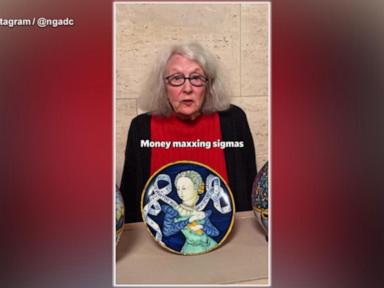
A frontline museum worker goes viral. A clip gets millions of views. An honor arrives. Applause follows.
Everyone loves a feel-good story about an overlooked employee getting their moment. It feels warm. It feels human. It feels like the internet finally noticed someone doing hard, quiet work behind velvet ropes and fluorescent lights.
It is also a distraction.
When a story like "WATCH: Viral museum worker gets unexpected honor" makes the rounds, the lazy consensus writes the exact same script. The script says: look how charming and dedicated staff members are when they share their passion online. Look how generous an institution is for recognizing them. Look how social media bridges the gap between dusty galleries and modern audiences.
That reading misses the entire point. A viral staffer getting an honor does not prove a museum is thriving or evolving. Most of the time, it proves the institution is starving for relevance, struggling to pay competitive wages, or clinging to an outdated model where public visibility is treated as a substitute for structural change.
I have spent years watching cultural institutions, nonprofits, and public-facing organizations chase attention while ignoring the mechanics that keep them alive. I have seen boards celebrate a single heartwarming PR win while leaving core operations underfunded. I have seen leadership treat viral attention like permanent equity when it behaves far more like a sugar rush.
You do not fix a centuries-old institutional bottleneck with a thirty-second video clip and a plaque.
Why We Celebrate the Exception Instead of the System
The standard reaction to a viral museum worker is sentimental. People watch a docent, gallery attendant, educator, or conservator explain something with genuine humor or clarity, and they project their own affection onto the institution housing them.
That projection is convenient for leadership. Very convenient.
In cultural administration, institutional legitimacy refers to the public trust, funding stability, and authority an organization holds over time. Earned attention, by contrast, is spikes of public interest triggered by novelty, emotion, or algorithm distribution. Confusing the two is one of the oldest mistakes in public relations.
When a museum relies on an organic viral clip to look lively, energetic, or accessible, it is borrowing credibility from an individual worker's personality. The worker brings the warmth, timing, and human friction that traditional institutional copy usually drains out of every sentence. The institution gets the halo effect.
Then comes the unexpected honor. Maybe it is an internal award, a public shout-out, a special title, or a ceremony staged right after the clip peaks. On the surface, it looks like gratitude. Look closer, and it often functions as containment. The organization acknowledges the person who accidentally did the marketing job an entire communications department struggled to pull off, without asking why the official voice felt so stiff in the first place.
A viral clip does not mean the public suddenly fell in love with institutional curation. Usually, it means someone finally spoke like a real human being in a space that usually sounds like a press release.
Think about the economics behind those roles. Across the cultural sector, front-of-house workers, gallery educators, and early-career museum staff routinely face tight budgets, seasonal or part-time contracts, and compensation that lags behind comparable roles in tech, media, or corporate training. Public devotion to art or history does not pay rent. Praise from a comment section does not cover healthcare.
When an institution honors a viral worker, the gesture is rarely bad in isolation. Being recognized feels good. Nobody hates getting flowers. The problem starts when applause becomes policy—when a viral moment and a shiny honor let executives avoid addressing pay compression, burnout, rigid hierarchies, or hiring freezes.
Imagine a scenario where a regional museum sees a gallery attendant's quirky video hit four million views in a week. Ticket sales bump for ten days. The director presents the attendant with a "Culture Champion" honor on camera. Six months later, two full-time educator positions remain frozen due to budget shortfalls, and starting pay for floor staff is still barely above local living costs. The video looked great in the annual report. The floor still lacked coverage on busy weekends.
That is not a fairy tale. It is a recurring pattern in under-resourced organizations everywhere.
You Are Asking the Wrong Questions About Viral Culture Clips
Whenever a clip like this takes off, the same questions pop up in search feeds and comment threads. Most of them start from a broken premise.
"Why do viral museum workers suddenly get honored?"
Because timing and optics are cheap. A clip goes viral, leadership notices the spike in mentions, and someone realizes a quick honor makes the institution look responsive, warm, and plugged in. It takes almost no capital compared to restructuring staffing models or overhauling visitor programs. Sometimes a leader genuinely wants to celebrate a colleague. Often, they also want to ride a wave that already has momentum. Treating a reactive honor as proof of deep organizational values mistakes a reflex for a philosophy.
"Does a viral employee help bring more visitors through the doors?"
Sometimes, briefly. Curiosity clicks convert into foot traffic at much lower rates than headlines imply. A video might persuade local followers to stop by over the next couple of weekends, especially if the worker is featured or referenced. It rarely builds durable habit on its own. Repeat attendance depends on what happens after the visitor walks through the entrance: clear signage, engaging programming, fair admission pricing, comfortable spaces, and staff who are not stretched so thin they look exhausted. A funny clip gets someone to the curb. Operations decide whether they come back.
"Should more museums encourage staff to post viral content?"
No. Not if "encourage" means pushing overworked employees into unpaid on-camera labor. Real personality cannot be manufactured by memo. The moment a museum tells every attendant, registrar, or guard to "be the next viral hit," the magic evaporates. Forced authenticity reads like corporate cringe within three seconds. Worse, it shifts marketing pressure onto workers whose actual jobs lie elsewhere, often without extra pay, clear boundaries, or protection from online harassment.
Look at what happens when ordinary employees get thrust into internet spotlights. One day you are helping someone find the restrooms or explaining nineteenth-century ceramics. The next day, strangers have opinions about your voice, your posture, your appearance, or your politics. An honor does not shield a worker from internet pile-ons. Sometimes it puts a bigger target on their back.
| Metric or Signal | What the Lazy Consensus Sees | What Actually Happens on the Ground |
|---|---|---|
| Viral view count | Proof of strong brand resonance | Short-term algorithmic reach driven by novelty |
| Public or internal honor | Deep institutional appreciation | Low-cost PR alignment with an existing trend |
| Comment-section praise | Rising community loyalty | Passive audience sentiment with low conversion |
| Staff humor and warmth | Successful institutional culture | Individual human resilience despite stiff norms |
What Real Institutional Strength Looks Like
If viral moments and sudden honors are mostly surface noise, what actually builds a strong, respected cultural institution?
Start with institutional memory and structural care. In museology and organizational management, thinkers like Nina Simon, who wrote extensively about participatory culture in museums, and researchers studying museum labor and visitor engagement have pointed for years to a basic truth: relevance grows out of genuine relationship and trust, not stunts. When institutions treat public engagement as an ongoing dialogue rather than a broadcast, visitors feel part of the space instead of spectators to a show.
I have watched organizations spend six figures on flashy campaigns while ignoring the people who greet visitors every single day. The contrast is painful. Frontline staff are the living interface of an institution. Visitors judge the whole place by how they are treated at the desk, in the galleries, and in workshops.
If an institution wants to build something real after a worker goes viral, here is the unconventional playbook that actually works:
- Pay for the value you just advertised. If a worker's knowledge, warmth, or communication skills drew public attention to the institution, reflect that value in real compensation, clear career paths, or formal role adjustments—not just a certificate.
- Audit the friction in your own voice. Ask why an unscripted employee felt fresher than your official channels. Strip away jargon, stiff formality, and committee-approved blandness from your everyday communication.
- Protect boundaries before chasing exposure. Give staff clear opt-in rules, support when public attention turns harsh, and zero quota expectations around going viral.
- Invest in repeatability over spectacle. One viral clip is a lottery ticket. Consistent programming, accessible pricing, well-maintained exhibits, and well-supported teams are a compounding asset.
The Catch With Being Contrarian About Feel-Good Stories
Being skeptical of viral-honor stories comes with its own trap. Taken too far, cynicism turns flat and joyless.
There is a real downside to viewing every feel-good moment through an institutional critique. Sometimes a worker really does get celebrated by leaders who genuinely admire them. Sometimes a quirky video really does spark a kid's curiosity about history or art that stays with them for years. If you reduce every human moment to power dynamics and PR calculus, you miss the actual warmth sitting right in front of you.
That is the tension worth holding. You can be glad a hardworking person got recognized and refuse to confuse a spotlight with structural reform. Gratitude and clear-eyed scrutiny do not cancel each other out. One keeps you human; the other keeps you from getting fooled.
The next time a clip of a museum worker goes viral and an unexpected honor follows, enjoy the moment if it makes you smile. Then look past the applause to see who is doing the heavy lifting, who is getting paid what they are worth, and what the institution changes when the cameras turn off.