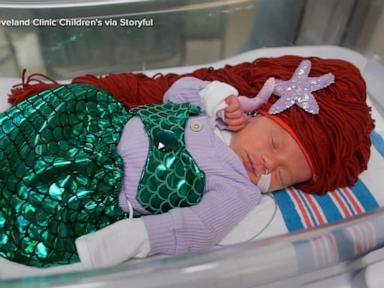
Every October, local news broadcasts and social media feeds fill up with photos of premature infants wearing tiny felt pumpkins, knitted superheroes, and miniature Disney characters inside hospital incubators. To the average viewer, dressing up NICU babies for Halloween looks like a simple, heartwarming PR stunt orchestrated by hospital marketing teams. The reality inside a Neonatal Intensive Care Unit is far more calculated, medically constrained, and psychologically necessary than a thirty-second evening news clip ever reveals. Behind every handmade costume lies a strict set of infection control protocols, developmental care strategies, and a deliberate clinical effort to help traumatized parents reclaim a shred of normalcy during the worst weeks of their lives.
You cannot simply walk into a retail store, buy a newborn-sized polyester costume, and slip it onto a baby born at twenty-six weeks gestation. Everything inside a modern Level III or Level IV NICU is governed by rigorous biomedical safety standards. Standard store-bought costumes are a non-starter for several non-negotiable reasons.
First, commercial costumes are typically constructed from synthetic blends, cheap dyes, and loose embellishments like sequins, buttons, or synthetic fur. For an infant whose skin barrier is still developing—often translucent and fragile enough to tear from standard medical adhesive—rough seams and chemical dyes pose immediate dermatological risks. Second, a critically ill neonate is tethered to a web of life-sustaining hardware. Pulse oximeters, electrocardiogram leads, umbilical catheters, feeding tubes, and continuous positive airway pressure (CPAP) prongs leave almost no room for traditional sleeves, zippers, or pull-over garments. Trying to thread an arm connected to an arterial line through a fitted sleeve is a clinical hazard that no bedside nurse will ever permit.
Because of these constraints, the costumes seen in viral Halloween segments are rarely clothing at all. They are custom-engineered medical workarounds.
How Nurses and Volunteers Engineer Medical-Safe Costumes
When NICU nurses, child life specialists, and hospital volunteer guilds create Halloween outfits, they design around the machinery rather than over it. Most of these items are no-sew felt cutouts, crocheted caps, or flat fabric overlays that rest gently on top of the infant's blanket or swaddle without restricting chest wall movement or obscuring vital line sites.
Consider a hypothetical example of how a bedside nurse preps a baby for a Halloween photo. Suppose an infant is stable on a nasal cannula and enclosed in a heated isolette. Instead of dressing the baby in a full-body jumpsuit, the nurse might place a soft, hospital-laundered felt superhero emblem directly over the top of the receiving blanket, paired with a loosely resting knit mask or cap that avoids the tape securing the breathing tubes. The entire setup takes less than ninety seconds. Nothing is wrapped tightly around the torso, nothing blocks the nurse's visual line of sight to the baby's chest rise, and every piece can be lifted away in a fraction of a second if an alarm sounds.
Fabric selection is equally strict. Hospitals routinely enforce guidelines dictating that donated items must be made from specific, hypoallergenic materials—most often 100 percent acrylic yarn or brand-new, pre-washed felt—sourced from smoke-free, pet-free environments. Wool is almost universally banned due to skin irritation and shedding fibers that can be inhaled or interfere with incubator humidity sensors. Before any handmade hat or pumpkin overlay touches a baby, it typically goes through a hospital-approved laundering or sterilization cycle, or sits sealed in quarantine bags to eliminate viral and bacterial pathogens.
Even with sterilized, non-invasive props, participation is strictly triaged. Babies in the acute phase of respiratory distress, those undergoing therapeutic hypothermia, or infants experiencing frequent apnea and bradycardia spells do not get dressed up. Clinical stability dictates everything. A baby who cannot tolerate the minor tactile stimulation of a hat being placed on their head is skipped entirely, ensuring that a holiday tradition never compromises physiological stability.
The Psychological Mechanics of Normalized Parenting
If dressing up premature infants requires this much logistical friction, why do major pediatric centers invest hundreds of staff hours into pulling it off every October? The answer sits at the intersection of family-centered care and trauma psychology.
Having a child admitted to the NICU strips parents of their foundational identity. Under normal circumstances, new parents decide when to feed their baby, when to pick them up, what to dress them in, and how to introduce them to the world. In the NICU, those rights are immediately suspended by medical necessity. Parents must ask permission to touch their own child through an incubator porthole. They watch strangers perform the first diaper changes, administer the first feedings through a nasogastric tube, and document every milliliter of fluid output on a digital chart.
This loss of agency triggers severe psychological distress. Clinical literature consistently shows that NICU parents experience rates of acute stress disorder, postpartum depression, and post-traumatic stress symptoms that far exceed those of parents with healthy term newborns. Holidays amplify this grief. Watching friends post photos of healthy babies at pumpkin patches while your own child is intubated under fluorescent lights deepens the sense of isolation and biological failure that many mothers and fathers quietly carry.
Bringing Halloween into the unit functions as a deliberate psychological intervention. When a nurse invites a parent to pick out a tiny felt pumpkin or a miniature astronaut patch, the dynamic in the room shifts. For a few minutes, the conversation moves away from blood gas levels, bilirubin counts, and oxygen saturation percentages. Parents get to make a low-stakes, joyful decision for their child—one of the few normal parenting choices available to them.
Photographic documentation plays an equally critical role in this process. Many NICU parents avoid taking pictures of their babies during the early weeks because the sight of endotracheal tubes, feeding lines, and bruised heels feels too painful to memorialize. A carefully framed Halloween photo gives families a visual memory they actually want to share with relatives and keep in a baby book. It reframes the infant not merely as a fragile patient in an ICU bed, but as a baby celebrating a milestone.
The Unspoken Tension Between PR Value and Clinical Reality
While the therapeutic benefits for families and bedside staff are well-documented, there is an undeniable commercial dimension to how these stories reach the public. Hospital media relations departments know that NICU holiday photos are guaranteed media gold. In an era of shrinking local newsrooms and algorithm-driven social feeds, an upbeat segment featuring tiny babies in costumes requires minimal reporting effort and generates massive engagement, positive brand sentiment, and donor visibility.
This media dynamic creates a subtle tension inside healthcare institutions. On one hand, publicizing these moments humanizes the hospital and boosts morale among neonatal nurses—a workforce facing chronic burnout and high turnover rates. Spending an off-duty evening cutting out felt Disney characters or crocheting miniature hats gives staff a creative outlet and a tangible way to bond with the families they care for during grueling twelve-hour shifts.
On the other hand, polished news segments can inadvertently sanitize the harsh realities of prematurity. A thirty-second montage set to cheerful background music rarely mentions the months-long hospital stays, the financial strain on families, the neurodevelopmental risks of extreme prematurity, or the grim reality that not every baby in the unit is stable enough to participate. Viewers see the triumph of a tiny baby wearing a cape, without seeing the exhausting respiratory therapy, the alarms ringing every ten minutes, or the parents sleeping in reclining chairs beside the isolette.
Ethical pediatric hospitals navigate this divide through strict HIPAA compliance and informed consent protocols. No photo is ever released to a local television station or posted to an official hospital social media account without explicit, written authorization from the parents. Reputable media teams also avoid pressuring families during vulnerable moments, allowing parents to keep the photos strictly private if they prefer not to have their child's medical journey broadcast to the public.
Developmental Care and the Risk of Overstimulation
Beyond infection control and media ethics, there is a third, purely physiological factor that dictates how modern NICUs handle holiday celebrations: neurodevelopmental protection.
A premature infant's brain is developing outside the womb during a period when it was biologically designed to be shielded from bright lights, loud noises, and abrupt physical handling. In the third trimester of pregnancy, the uterus provides a dark, muffled, fluid-cushioned environment. By contrast, an intensive care unit is an assault on an immature nervous system. Excessive sensory input can trigger spikes in heart rate, drops in blood oxygen levels, and elevated cortisol, all of which interfere with healthy brain maturation.
Because of this, modern neonatal medicine prioritizes clustered care—grouping necessary medical assessments, diaper changes, and feedings together so the baby gets uninterrupted stretches of deep sleep. A holiday photo shoot cannot disrupt this rhythm. Experienced NICU teams wait until a scheduled care window to place a prop on the infant, snap two or three quick photos with a smartphone or DSLR camera, and immediately remove the item so the baby can return to sleep.
There are no bright camera flashes, no prolonged posing sessions, and no passing the baby around for multiple angles. If a baby shows subtle stress cues—such as splaying their fingers, hiccuping, yawning repeatedly, or exhibiting a slight dip on the pulse oximeter—the session ends immediately. The photo is entirely secondary to preserving the infant's autonomic stability.
What Happens to the Costumes Afterward
Once the photos are taken and October passes, these miniature outfits do not get tossed into a storage bin for next year. Because cross-contamination between patients is a constant threat in intensive care environments, costumes are strictly single-patient use. Families take the handmade hats, felt cutouts, and crocheted blankets home with them, often placing them inside memory boxes alongside the baby's first tiny diapers, hospital wristbands, and discharge paperwork. For parents whose infants eventually graduate from the NICU, that piece of craft felt becomes a physical marker of survival—proof of just how small their child once was, and how far they had to fight to make it home.