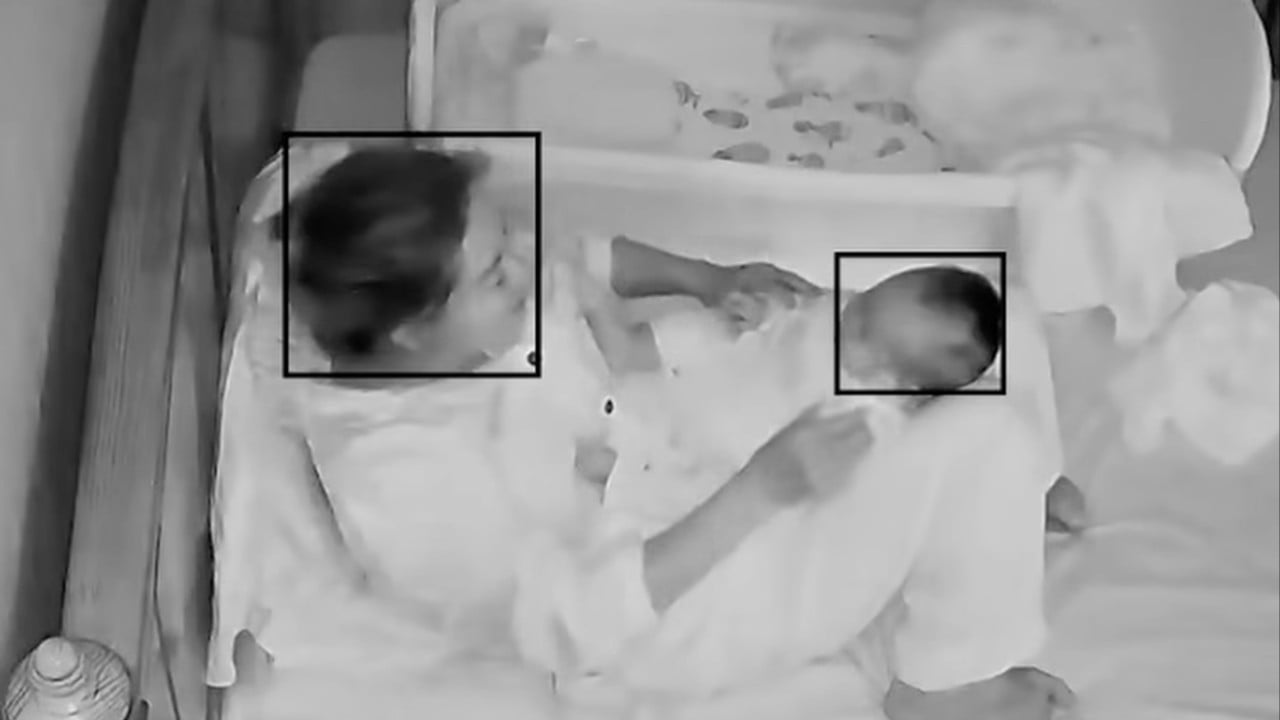
When a video of a Chinese confinement nanny weeping uncontrollably while handing a three-month-old infant back to its parents goes viral, millions of internet users see a heartwarming display of pure maternal devotion. Look closer at the mechanics of the industry, and a much more complicated reality emerges. The tears are real, yet they are also the predictable byproduct of a high-pressure, emotionally extractive labor market known as yuesao—specialized postpartum caregivers who live inside a family’s home for weeks or months at a time, commanding salaries that rival white-collar executives while sacrificing their own personal lives to raise someone else’s child.
Social media algorithms thrive on uncomplicated emotion. A caregiver sobbing at the front door, reluctant to let go of a baby she has fed, bathed, and comforted around the clock, fits neatly into a comforting narrative about human connection. What those sixty-second clips rarely show is the structural reality behind the scenes. These women are operating inside a booming, fiercely competitive domestic service sector shaped by China’s demographic anxieties, traditional postpartum customs, and the commodification of intimate labor.
The Mechanics of Zuo Yuezi and the Rise of the Yuesao
To understand why a three-month contract produces such intense grief, you first have to understand the cultural institution of zuo yuezi, or "sitting the month." Rooted in centuries-old Traditional Chinese Medicine principles, this practice dictates that a woman who has just given birth must rest almost entirely for thirty to forty days to restore her depleted energy, or qi, and protect her body from cold and wind. Historically, mothers and mothers-in-law managed this recovery period, cooking specialized herbal broths and taking over infant care.
Urbanization and shifting family dynamics broke that traditional chain. Modern Chinese couples living in megacities like Beijing, Shanghai, and Shenzhen often live hundreds of miles away from their aging parents, or they simply prefer professional, science-backed infant care over generational friction with in-laws. Enter the modern confinement nanny.
Unlike a standard babysitter or a general housekeeper, a yuesao is positioned as a specialized postpartum nurse, lactation consultant, nutritionist, and infant sleep trainer rolled into one. The standard contract lasts twenty-six days—the traditional lunar month—though affluent families increasingly book nannies for two, three, or even six months to bridge the gap until the infant develops a predictable sleep schedule.
During that window, the boundaries between employer and employee dissolve completely. A live-in confinement nanny typically sleeps in the same room as the newborn. She wakes up every two to three hours for feedings, tracks diaper output, prepares six tailored postpartum meals a day for the recovering mother, and manages the household’s anxious energy. When you spend ninety consecutive days as the primary waking and sleeping anchor for a helpless infant, neurobiology takes over. Oxytocin does not check an employment contract before bonding a caregiver to a child.
The Economics of Intimate Labor
The viral videos rarely mention the paycheck, yet money is the primary engine driving women into this grueling line of work. In tier-one Chinese cities, a top-tier confinement nanny can earn anywhere from 15,000 to over 30,000 RMB per month, roughly equivalent to $2,000 to $4,200 USD. For middle-aged women from smaller towns or rural provinces—many of whom were laid off from factory jobs or lack formal university degrees—this represents a rare pathway to substantial financial independence.
That income comes at a steep physical and psychological cost. Most yuesao work back-to-back contracts with only a few days of rest in between, desperate to maximize their earning years before age or physical exhaustion forces them out of the market. Sleep deprivation is an occupational hazard that is treated as a badge of honor rather than a workplace safety issue.
Consider a hypothetical example of a typical three-month placement. A nanny arrives at a client's apartment on a Monday morning and does not leave the building for weeks. She gets no weekends off. Her own children, often teenagers or young adults back in her hometown, are managed via brief late-night WeChat video calls while the newborn finally sleeps. By the time the ninety days end, she has poured every ounce of her physical stamina and emotional bandwidth into a family that will replace her the next morning.
The industry itself reinforces this total immersion. Domestic service agencies train nannies not just in infant CPR and breast massage, but in emotional performance. Agencies know that five-star reviews and word-of-mouth referrals depend heavily on how "loving" and "devoted" a nanny appears. A caregiver who treats the job with cool, clinical detachment rarely climbs to the highest pay brackets. Families want to believe they are buying genuine familial love, not merely renting technical competence.
Emotional Labor and the Farewell Performance
This brings us back to the viral farewell videos. When a nanny cries at the end of a three-month contract, the internet overwhelmingly praises her character. Comments flood in calling her a "living saint" or urging the family to stay in touch forever. Rarely does anyone ask what happens to her twenty-four hours later.
Sociologists call this emotional labor—the process of managing feelings and expressions to fulfill the emotional requirements of a job. In the confinement care sector, emotional labor is both genuine and commodified. A nanny truly falls in love with the baby she has kept alive and thriving for three months. At the same time, her livelihood depends on demonstrating that depth of attachment visibly to the parents.
There is also a subtle power dynamic at play when families film these moments and upload them to Douyin or Xiaohongshu. For the parents, posting a video of a weeping nanny serves as social proof. It validates their parenting choices, proves they hired a caring professional, and signals to their social circle that their baby is so lovable even a seasoned veteran couldn't bear to leave.
Meanwhile, the nanny’s grief is real, raw, and entirely uncompensated once she steps into the elevator with her suitcase. She has to sever an intense attachment overnight, swallow the heartbreak, and walk into a stranger’s apartment forty-eight hours later to start the cycle all over again with a brand-new newborn.
The Demographic Paradox Fueling the Boom
The explosion of interest in confinement nannies is happening against a backdrop of severe demographic contraction. China’s birth rate has fallen to historic lows, shrinking the overall pool of newborns every single year. Standard economic theory would suggest that fewer babies should mean lower demand and falling prices for infant caregivers. The exact opposite has occurred.
As families have fewer children—often stopping at one—the financial and emotional investment poured into that single child has skyrocketed. Parents who might once have split their resources across two or three children now funnel everything into ensuring their only child receives the absolute best start possible. Confinement care has transformed from a traditional recovery practice into a high-stakes status symbol and an essential insurance policy against postpartum anxiety.
This hyper-focus on individual infants has also raised the bar for what constitutes acceptable care. Today’s parents read Western pediatric journals alongside traditional Chinese postpartum guides. They install high-definition cameras in the nursery and monitor every interaction from their smartphones. A nanny isn't just competing against other nannies; she is competing against an idealized, anxiety-driven standard of perfection.
What Viral Clips Hide About Industry Regulation
Beneath the heartwarming surface of social media stories lies a sector struggling with uneven regulation and rampant credential inflation. Because the barrier to entry is relatively low compared to formal medical professions, the market is flooded with agencies offering rapid-fire training programs. A woman can pay a fee, attend a two-week course, and emerge with a stack of laminated certificates claiming expertise in postpartum psychology, infant early education, and pediatric nutrition.
For families, separating genuine clinical skill from clever marketing is notoriously difficult. Many certificates are issued by private training companies rather than accredited medical institutions. High-profile scandals involving mistreatment or negligence periodically rock the industry, prompting parents to rely even more heavily on emotional cues—like how much a nanny cries or how fiercely she hugs the baby—as a proxy for trustworthiness.
At the same time, the nannies themselves operate with minimal labor protections. Many work as independent contractors matched through intermediary agencies that take a hefty cut of the first month’s fee while offering zero health insurance, pension contributions, or legal backing if a dispute arises over unpaid wages or workplace injuries. If a nanny develops chronic back pain from lifting a growing baby or suffers severe insomnia from months of disrupted sleep, she absorbs the cost alone.
The Reality of Post-Contract Relationships
Internet users love to imagine that the weeping nanny becomes an honorary grandmother, visiting on birthdays and remaining woven into the child’s life for decades. Occasionally, that happens. Wealthier families sometimes retain a favorite yuesao as a long-term yuersao—a toddler nanny who stays until the child enters kindergarten.
More often, the relationship fades within months. Babies grow rapidly, and their needs shift from feeding schedules to early education and socialization. Parents move on to the next stage of child-rearing, and the nanny moves on to the next newborn. A few polite WeChat messages on Lunar New Year replace the daily intimacy of those first ninety days.
The viral video captures the exact second before that quiet erasure begins. It freezes a complex economic transaction at its most tender, human peak, allowing millions of viewers to feel moved without having to confront the exhausting machinery that produced the moment.
A three-month-old baby will never remember the woman who rocked her through the darkest hours of the night, nor will she remember the tears shed at the front door. The nanny, carrying her suitcase toward the next apartment and the next sleepless month, will remember every single one of them.