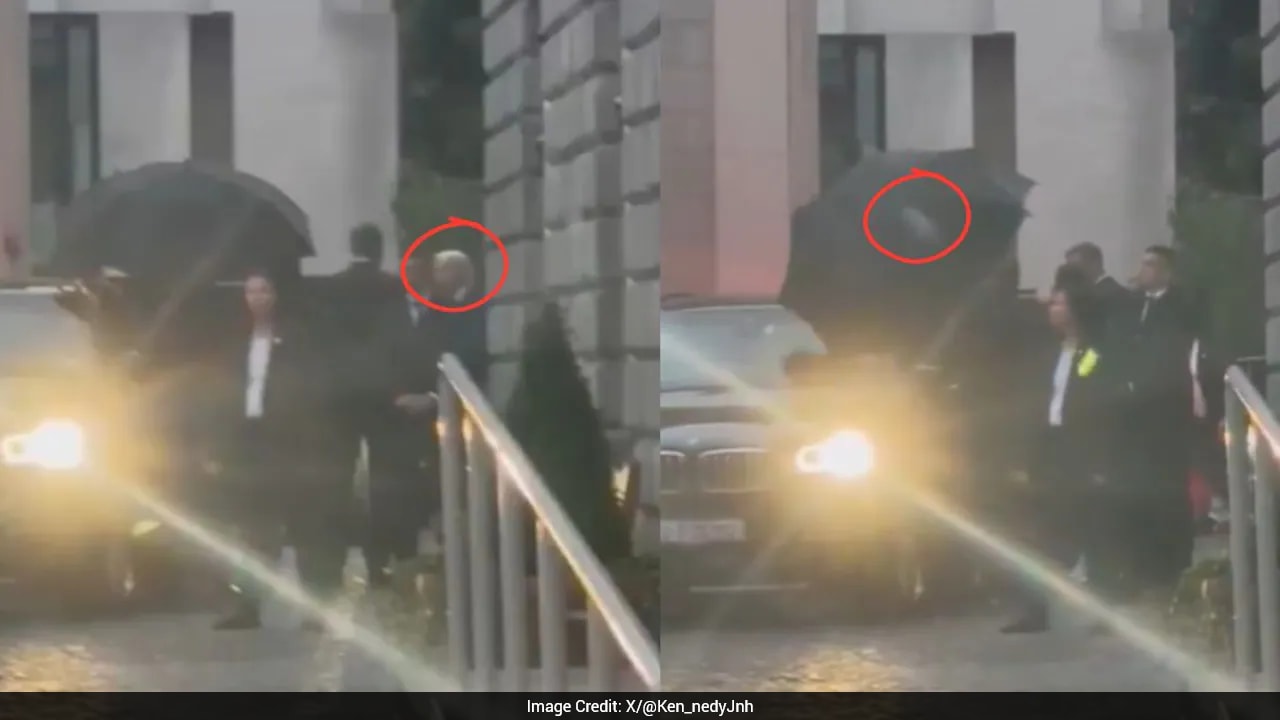
Videos claiming to show pro-Palestinian protesters throwing milk cartons at former President Joe Biden in Ireland are completely false. No such incident happened during Biden's historic visit to Ireland in April 2023, nor during any subsequent public appearances there. The viral clips circulating across social media are fabrications designed to exploit ongoing geopolitical tensions by recycling old, unrelated footage and attaching fabricated captions to maximize outrage.
Understanding how a non-existent dairy assault gained millions of views requires looking past the rage-bait headlines and examining the mechanics of modern viral misinformation.
Anatomy of a Manufactured Outrage Cycle
When a high-profile political figure travels abroad, local demonstrations are practically guaranteed. During Joe Biden’s four-day trip to Northern Ireland and the Republic of Ireland in April 2023, small groups of protesters did gather at various stops, including in Belfast, Dublin, and Ballina. Those demonstrations focused on a wide range of local and international grievances, from Northern Ireland’s political stalemate to U.S. foreign policy.
None of them involved protesters pelting the presidential motorcade or the president himself with cartons of milk.
Yet, months and even years later, short vertical videos began surfacing on platforms like X, TikTok, and Instagram, alleging exactly that. The formula behind these posts is remarkably consistent and relies on a tactic media analysts call context collapse. Bad actors or engagement-farming accounts take genuine video footage—often showing a chaotic crowd, a thrown object at a completely different political rally, or an unrelated street altercation—and overlay text claiming it depicts a breaking humiliation of an American leader.
The milk carton narrative works because it hits several psychological triggers simultaneously. First, throwing food or dairy products at politicians carries a distinct historical resonance in British and Irish political protest, often referred to as "milkshaking." Because audiences already associate dairy-throwing with political dissent in the region, the claim feels plausible at a glance. Second, tying the alleged incident to pro-Palestinian activism taps into an intensely polarized global conversation, ensuring that algorithms boost the post as users argue furiously in the comments.
Why "Milkshaking" Feels Believable to Scroll-Happy Audiences
To understand why audiences fell for the fabricated Biden milk carton story, you have to look at the recent history of political protests across the United Kingdom and Ireland.
In 2019, throwing milkshakes at right-wing political figures in Britain became a widespread protest tactic. High-profile incidents involving figures like Nigel Farage and Tommy Robinson generated massive international press coverage. The visual of a politician covered in thick white liquid became an instant internet meme, permanently etching the tactic into the public consciousness.
Disinformation networks rely heavily on these pre-existing mental templates. If a fabricated post claimed protesters threw antique typewriters at a presidential motorcade, people would immediately question its authenticity. Claiming they threw milk cartons sounds just plausible enough that a user scrolling rapidly through a feed won't pause to verify it.
Furthermore, the sheer logistics of a U.S. presidential visit make the viral claim practically impossible. When a sitting or former U.S. president travels internationally, the United States Secret Service establishes overlapping rings of physical security. In Ireland, this was reinforced by thousands of officers from the Garda Síochána and the Police Service of Northern Ireland. Crowds are kept behind heavy steel barricades, streets are cleared blocks in advance, and bulletproof vehicles move at high speeds through secured corridors. Getting close enough to hurl a liquid-filled carton at the president without triggering an immediate, massive security lockdown—which would have dominated global news broadcasts for days—is virtually impossible.
The Mechanics of Engagement Farming
The accounts pushing the "milk cartons thrown at Joe Biden" video rarely care about Irish politics, American foreign policy, or Palestinian human rights. They care about monetization.
Social media platforms have fundamentally altered their reward structures over the last few years. On several major networks, creators with verified accounts receive direct financial payouts based on the volume of impressions and replies their posts generate. Outrage is the most reliable currency in this economy.
Here is how the business model operates:
- The Hook: An account finds an obscure, low-resolution video clip from a past protest anywhere in Europe. Low resolution is actually an asset here; grainy footage obscures street signs, license plates, and weather conditions that might give away the true time and location.
- The Caption: The poster writes an urgent, emotionally charged caption using capital letters and breaking-news framing. Mentioning Joe Biden and pro-Palestinian protesters guarantees that search algorithms will index the post under two of the highest-traffic political keywords on the internet.
- The Pile-On: Supporters of the protesters share the video celebrating the supposed act of defiance. Critics of the protesters share the exact same video condemning the alleged disrespect and lack of security. Both groups are actively boosting the post's algorithmic reach, putting money directly into the pocket of the account owner who fabricated the story.
By the time independent fact-checkers or platform community notes attach a correction to the post, the engagement farmer has already banked the impressions and moved on to the next recycled clip.
What Actually Happened During Biden's Ireland Trip
The contrast between the viral fiction and the documented reality of Biden’s trip to Ireland highlights just how distorted social media narratives can become.
In April 2023, Biden traveled to Belfast to mark the 25th anniversary of the Good Friday Agreement, the historic peace accord that largely ended decades of sectarian violence known as the Troubles. Following his brief stop in Northern Ireland, he spent three days touring the Republic of Ireland, visiting ancestral roots in County Louth and County Mayo, and addressing the Irish Parliament in Dublin.
Throughout the trip, the overwhelming public reception was warm, celebratory, and heavily stage-managed. Tens of thousands of people lined the streets of Ballina in driving rain to watch him speak outside St. Muredach's Cathedral.
Protests did occur, as they do during any U.S. presidential visit. In Belfast, republican dissident groups staged small rallies opposing British rule and U.S. involvement. In Dublin, anti-war activists and environmental groups held peaceful demonstrations outside the U.S. Embassy and near Leinster House, criticizing American military spending and foreign interventions.
In every single instance, those demonstrations were kept well away from the president's immediate physical vicinity. Local police reported no major security breaches, no arrests for throwing projectiles at the president, and certainly no viral milk-throwing incidents.
Additionally, the timeline of the viral posts exposes another glaring flaw. The intense global wave of pro-Palestinian street protests outside Western political events escalated dramatically after October 2023—six months after Biden’s visit to Ireland had already concluded. Retroactively slapping a pro-Palestinian label onto distorted clips from an April trip is a classic hallmark of sloppy, opportunistic disinformation.
How to Spot Recycled Protest Footage
When viral videos claim to show shocking, unverified attacks on world leaders, a basic verification routine will expose the manipulation in seconds.
Check the Mainstream Press Footprint
A physical projectile hitting—or even being thrown directly at—a U.S. president or former president is a massive international news event. It triggers immediate Secret Service reviews and dominates coverage across wire services like the Associated Press, Reuters, and BBC. If a video claims this happened, yet zero reputable news organizations are reporting it, the video is fake.
Look at the Environmental Clues
Disinformation accounts routinely recycle footage from different seasons and countries. Look closely at the background of the video. Are people wearing heavy winter parkas during a trip that took place in warm weather? Are the police uniforms wearing high-visibility yellow vests typical of continental Europe rather than the specific insignia of the Irish Gardaí? Look at the architecture, the language on storefronts, and the shape of vehicle license plates.
Perform a Reverse Frame Search
Pause the video on a clear frame showing a distinct building, sign, or crowd banner. Take a screenshot and run it through a reverse image search tool. In almost every case of recycled protest footage, the original video will appear in news reports from years earlier, often documenting a completely unrelated event like a football riot, a pension strike in France, or a local demonstration in another hemisphere.
Scrutinize the Audio Track
Many fabricated viral clips strip out the original audio—which would immediately reveal a different language or different chants—and replace it with generic crowd noise or dramatic music. If the audio doesn't match the visible lip movements of the people in the foreground, or if the ambient sound loops awkwardly, the clip has been edited to hide its true origin.
The Real Cost of Cheap Viral Fakes
Dismissing a fake video about thrown milk cartons as harmless internet noise misses the broader damage these fabrications inflict on public discourse.
When social media feeds are flooded with invented confrontations, real political activism gets buried under fabricated spectacles. Genuine protesters organizing around complex geopolitical issues find their actual messages distorted by algorithmic noise. At the same time, ordinary news consumers develop a cynical fatigue, struggling to distinguish documented historical events from cheap digital counterfeits.
The next time a grainy video promises to show a dramatic, unverified humiliation of a major political figure, look at who benefits from your outrage before you hit share.