Corporate boardrooms love a good spectacle. They love it even more when they can slap a corporate logo on a multi-billion-dollar global sporting event and call it "experiential marketing."
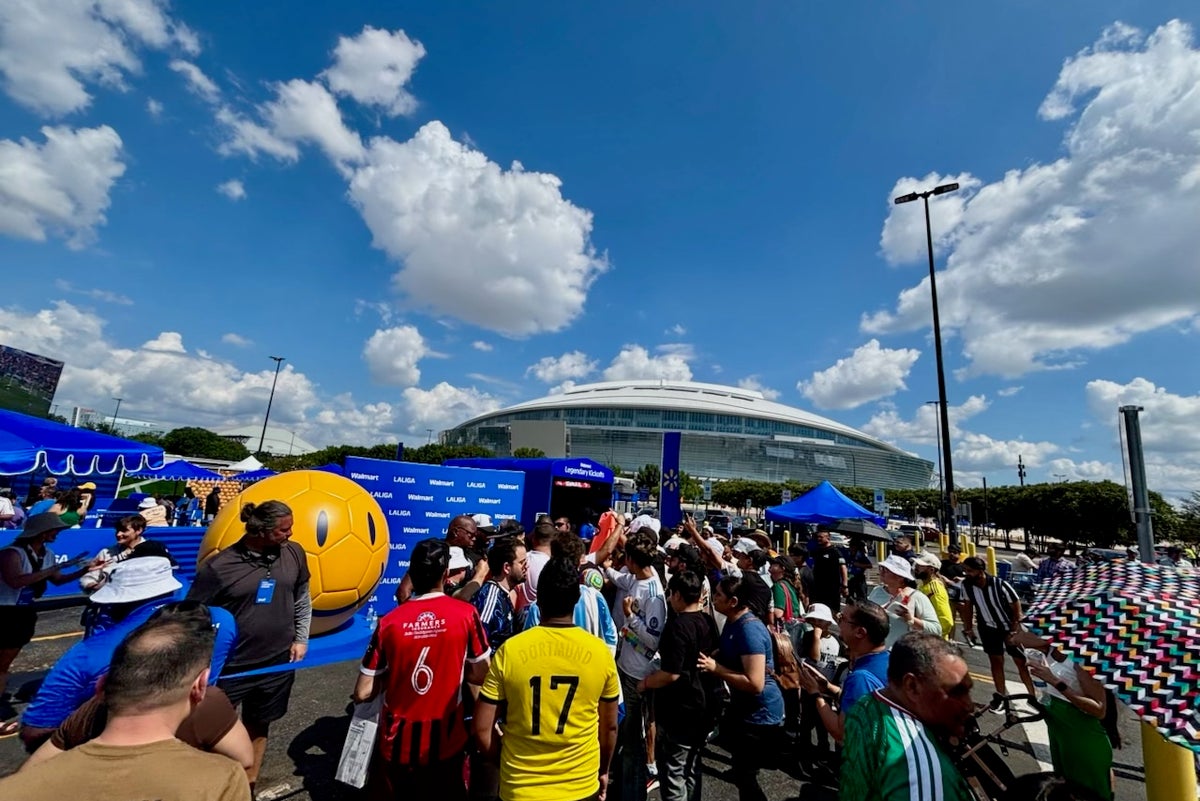
The latest case study in this expensive delusion? Walmart hosting VIP tours for curious soccer fans during the World Cup. Don't forget to check out our recent coverage on this related article.
On paper, the PR pitch sounds cozy. Let's invite international fans into our massive supercenters. Let's show them the sweeping scale of American retail. Let's give them a "VIP experience" inside a grocery store.
It is a strategy born in a spreadsheet and destined to die in reality. To read more about the context here, Business Insider offers an in-depth breakdown.
I have spent fifteen years analyzing retail operations and corporate sponsorships. I have watched brands flush millions down the toilet chasing cultural relevance. This stunt isn't just a waste of capital; it fundamentally misunderstands why people travel across oceans to watch sports.
Nobody flies 4,000 miles to look at an aisle of bulk laundry detergent.
The Myth of the Experiential Tourist
The corporate consensus assumes that global travelers possess an insatiable curiosity about every facet of host-country culture, including its supply chains. This is a fundamental misreading of consumer behavior.
When a fan books a flight to the World Cup, they are purchasing a high-octane emotional product. They want tribal camaraderie, stadium adrenaline, and local nightlife. They are operating on a dopamine-driven, time-crunched schedule.
Retailers mistakenly believe that because their brand is ubiquitous, it is inherently interesting. It isn't.
To an international tourist, a big-box store is a utility, not a destination. If they need hydration packs or sunscreen, they will walk in, buy it, and walk out. Forcing a curated VIP tour onto this demographic miscalculates the value of a fan's time. You are competing with the actual tournament. You are competing with fan zones, historical landmarks, and bars.
You cannot out-compete a World Cup match with a guided walk through the frozen food section.
The Operational Strain Nobody Admits
Let's look under the hood of what a VIP tour actually requires from a retail store.
A standard supercenter operates on razor-thin margins and precise labor scheduling. Every hour of employee time is optimized for inventory management, checkout velocity, and digital order fulfillment.
When corporate mandates a VIP tour initiative, it disrupts this entire ecosystem.
- Labor Reallocation: Managers must pull high-performing staff off the floor to act as tour guides and brand ambassadors.
- Logistical Friction: Creating dedicated VIP zones or pathways slows down regular, paying local foot traffic.
- The Authentic Backlash: Tourists see through the sanitized corporate theater immediately. If the store looks pristine for the VIPs, it means normal operations were paused to create an illusion.
If you have ever managed a retail footprint during a major regional surge, you know that your primary objective is keeping shelves stocked and registers moving. Adding a secondary layer of public relations theater to an already strained staff is an operational nightmare. The return on investment is non-existent because the metric being tracked is "brand sentiment" rather than actual basket size or long-term customer acquisition.
The Math Behind Sponsorship Spoilage
Academic research regularly exposes the flaws in generic event tying. Look at the data from past mega-events like the London 2012 or Brazil 2014 games.
Researchers at the University of Colorado studied consumer recall for official sponsors versus ambush marketers. The findings were damning. Unless a brand has an intrinsic, functional connection to the sport itself—like Nike providing boots or Gatorade providing sports drinks—the consumer's brain filters out the activation as background noise.
Walmart sells everything, which means in the context of a hyper-focused sporting event, it represents nothing specific.
Imagine a scenario where a retail giant spends $5 million on localized event activations, VIP transport, and dedicated store signage. To break even on that marketing spend based on a standard grocery net margin of 2%, the activation needs to generate $250 million in incremental revenue directly tied to those visitors.
International tourists buying snacks and souvenirs will not move that needle. The math doesn't work. The activation exists solely to fulfill a corporate KPI that someone invented to justify a marketing budget.
The Counter-Intuitive Alternative
If a massive retailer wants to capture the economic windfall of a global tournament, they need to stop trying to be a tourist attraction. They need to lean into being an infrastructure provider.
Do not ask fans to come to you to look at your store. Go to them with the exact utility they lack.
Instead of VIP tours, the winning playbook involves aggressive, unglamorous utility. Deploy automated, micro-fulfillment kiosks directly outside stadium perimeters. Stock them exclusively with high-margin, context-specific inventory: poncho packs, localized merchandise, region-specific snacks, and power banks.
Forget the storytelling. Forget the corporate history of the founder. Focus entirely on reducing friction for a consumer who is hot, tired, and holding a smartphone with a 4% battery life.
The downside to this approach is that it isn't sexy. It doesn't look good in a corporate sizzle reel. It won't get featured in lifestyle magazines. But it drives immediate, high-margin revenue and solves a genuine consumer pain point.
Stop treating your retail space like a museum. It is a distribution engine. Use it like one.