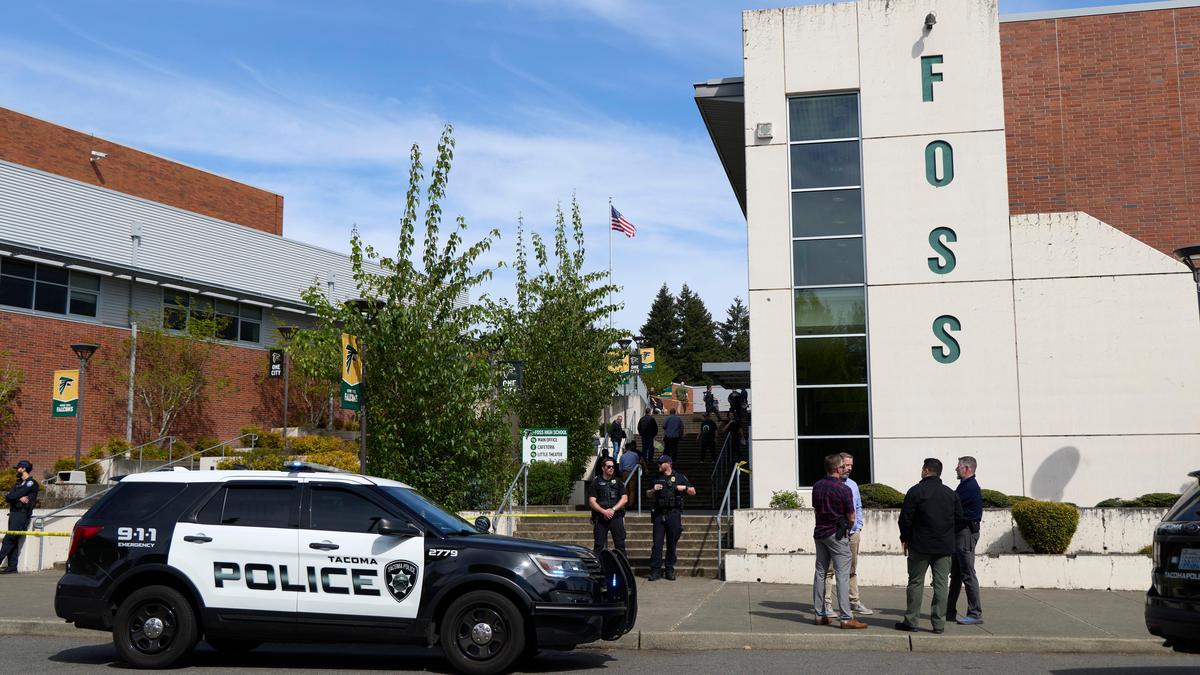
Chaos broke out at a Washington State high school when a stabbing incident left six people injured. This wasn't just a minor scuffle or a hallway disagreement that got out of hand. It was a violent eruption that fundamentally changed the sense of security for every student and parent in that district. Police reports confirm the suspect is among the six injured, which usually points to a chaotic intervention or self-inflicted wounds during the struggle. When you hear about six people getting hurt in a high school hallway, your first instinct is to ask how this could happen in a place that’s supposed to be a safe zone.
We see these headlines and we want immediate answers. Parents want to know if the metal detectors failed or if the school resource officers were looking the other way. The reality is often more messy. High schools are large, porous environments. You can't turn a public school into a maximum-security prison without destroying the educational atmosphere, yet the current frequency of these incidents suggests our middle-ground approach isn't working.
What actually happened on the ground
The details coming out of the investigation show a scene of pure panic. Witnesses described students sprinting for exits while others locked themselves in classrooms, following the "run, hide, fight" protocols they’ve practiced since kindergarten. It’s a grim reality. Kids today are experts at barricading doors with desks. They know which corners of a room are "blind spots" for someone looking through a door window.
Five victims were transported to local hospitals. Their conditions varied, but the trauma of a blade-related attack is different from other types of school violence. It’s intimate. It’s close quarters. It happened in a high-traffic area, likely during a passing period or near a common space like the cafeteria. The suspect was taken into custody shortly after the police arrived, but those first few minutes before sirens are heard feel like an eternity to anyone trapped inside.
Local law enforcement acted fast. You have to give credit to the first responders who didn't hesitate to enter the building. In the post-Uvalde era, the standard operating procedure for police has shifted toward immediate entry and neutralization of the threat. They don't wait for a perimeter. They go in. That’s likely why the injury count didn’t climb higher.
The failure of the bystander effect
In almost every one of these cases, someone knew something was off. Maybe it was a social media post. Maybe it was a comment made in the locker room. We talk a lot about "See Something, Say Something," but we don't talk about the social cost for a teenager to snitch on a peer. It’s high.
If we want to stop these stabbings, we have to change the culture of silence. Most school attackers leak their intentions before they act. They drop hints. They show off weapons. When a student brings a knife to school, it's rarely a secret kept by just one person. The school's tip lines are only as good as the trust students have in the administration. If the kids don't think the adults will handle it discreetly, they’ll keep their mouths shut to avoid being targeted themselves.
Why metal detectors aren't a silver bullet
I’ve heard plenty of people argue that every school needs airport-style security. It sounds good on paper. In practice? It’s a nightmare. Imagine trying to funnel 2,000 teenagers through two or three checkpoints every morning at 7:00 AM. You’d have lines stretching around the block, making students sitting ducks for a different kind of attack outside the building.
Besides, knives are easy to hide. They don't always trigger older sensors if they're made of specific alloys or ceramics. Security is a layer cake, not a single wall. You need the physical barriers, sure, but you also need behavioral intervention teams. You need teachers who actually know their students’ names and notice when a kid is spiraling. Technology is a tool, not a savior.
The mental health gap in school safety
We keep blaming the tools—the knives, the guns, the physical objects. We’re missing the point. A healthy, well-adjusted teenager doesn't walk into a crowded hallway and start swinging a blade. There is always a backstory of isolation, bullying, or untreated mental health crises.
Schools are currently overwhelmed. Guidance counselors are stuck doing paperwork and college prep instead of actual counseling. When one person is responsible for the mental well-being of 500 kids, things slip through the cracks. We’re seeing the violent manifestation of a mental health system that has been gutted at the local and state levels. If you want fewer stabbings, you need more social workers in the halls. It’s that simple.
Immediate steps for parents and districts
If you're a parent in Washington or anywhere else watching this unfold, don't just wait for the next school board meeting. You need to be proactive. Talk to your kids tonight. Don't ask "How was school?" Ask them if they feel safe. Ask them if they know who to talk to if they see something weird.
Districts need to stop performing security theater and start investing in real infrastructure.
- Audit the entry points. Are side doors being propped open by students going out for lunch?
- Review the communication systems. Can a teacher in a back classroom actually hear the intercom?
- Empower the students. Create anonymous reporting apps that actually work and provide feedback so the "whistleblower" knows their tip was taken seriously.
The investigation into this specific Washington stabbing will continue for weeks. We'll learn about the suspect's motives and the victims' recovery. But the broader lesson is already clear. We are reacting to tragedies instead of preventing them. We have to be faster than the crisis. We have to be louder than the silence. Demand better from your local district today. Don't wait for the next "breaking news" alert to hit your phone.