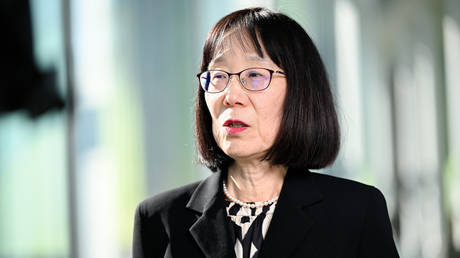
Washington just escalated its quiet war on international justice by slapping financial restrictions and travel bans on the president of the International Criminal Court.
The White House isn't hiding its intent. US Secretary of State Marco Rubio made it clear that the goal is to systematically dismantle the tribunal. If you've been wondering why a superpower is openly targeting a judicial body in The Hague, you have to look past the diplomatic press releases and examine the collision between state sovereignty and global accountability.
Who Is Actually on the Sanctions List
The latest designations target ICC President Tomoko Akane and senior trial lawyer Abdoulaye Seye. This isn't happening in a vacuum. Under Executive Order 14203, signed by US President Donald Trump, the administration has steadily built a pressure campaign against the court's leadership.
Nine of the court's 18 judges, along with key prosecutors and legal personnel, are now barred from interacting with American citizens and face severe lockouts from the global financial grid. Akane noted publicly that she anticipated the move, stating that the real danger isn't the personal inconvenience, but the potential collapse of the international rule of law.
The Core Conflict Over Jurisdiction
The root of this feud comes down to a fundamental disagreement about who answers to whom. The ICC was established in 2002 by the Rome Statute to prosecute genocide, war crimes, and crimes against humanity. Today, 123 countries are member states.
The United States, Israel, Russia, and China never signed or ratified the treaty. Washington's stance is simple: an un-ratified court has zero authority over citizens of a non-member state. When the tribunal launched investigations into US military actions in Afghanistan or issued arrest warrants for high-ranking Israeli officials over operations in Gaza, Washington viewed it as an overreach and a direct threat to national security.
Rubio slammed the institution as a corrupt and politicized body that abuses its mandate. From the American perspective, allowing an international court to sit in judgment of a superpower's soldiers or allied leaders sets a dangerous precedent that undermines domestic constitutional law.
Pushback From The Hague and the United Nations
The response from international bodies was immediate and sharp. The ICC issued a formal statement calling the latest designations a flagrant attack on judicial independence. UN leadership, including spokesperson Stéphane Dujarric, voiced serious concern over the ongoing penalization of court employees.
The court argues that threatening judges for simply applying international law puts the entire global legal framework at risk. For victims of mass atrocities in regions with no other recourse, the tribunal represents the last stop for justice. When those judges face financial ruin or travel restrictions just for doing their jobs, the entire system wobbles.
At the same time, the ICC faces internal friction. Over the summer, several African nations—including Burkina Faso, Mali, Niger, and Chad—moved to withdraw or distance themselves, accusing the institution of disproportionately focusing on the continent. Between pushback from non-members like the US and growing skepticism from within, the court is navigating its most volatile political crisis yet.
Watch how member states respond to these financial penalties in the coming months. If European allies and other signatories fail to provide robust diplomatic or financial backstops for targeted judges, the US campaign to neuter the court's reach might actually work.