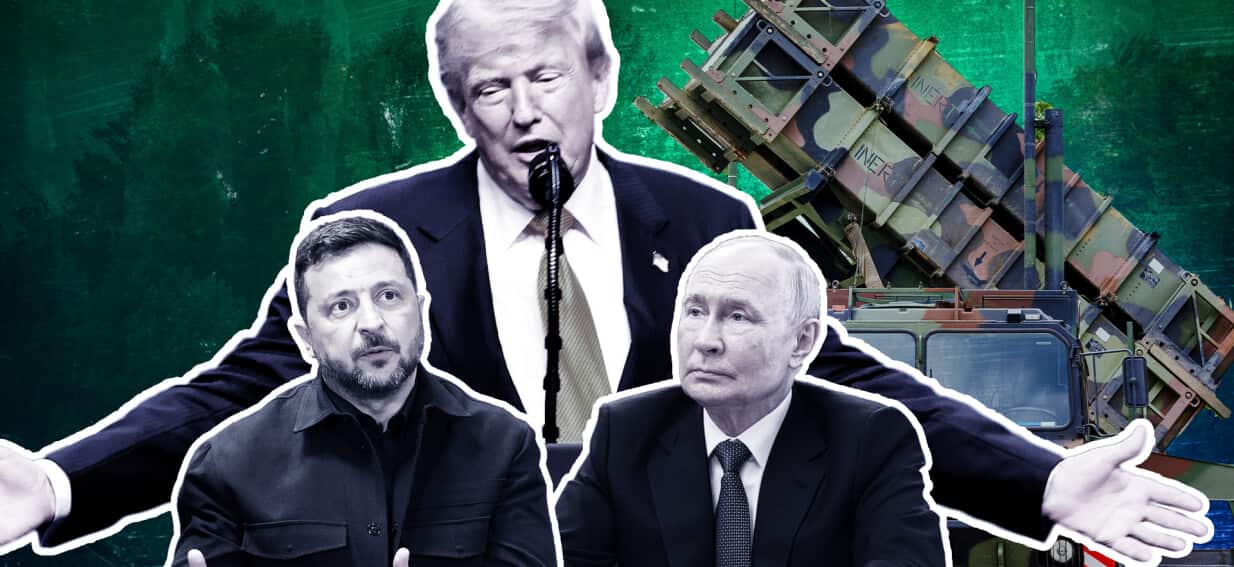
The foreign policy establishment is running its favorite playbook again. Following the latest round of US air strikes against Iranian-linked targets, the consensus across cable news and mainstream print is as predictable as it is hollow. Analysts are breathlessly debating whether Donald Trump’s warnings that things could get "much worse" will successfully re-establish deterrence. They are charting drone capabilities, counting Tomahawk missiles, and parsing official press releases like oracle bones.
They are missing the entire point. If you found value in this post, you should read: this related article.
The media treats these military actions as a display of leverage. In reality, they are a profound admission of bankruptcy—both strategic and economic. Washington is trapped in an expensive, reactive loop, spending millions of dollars per missile to intercept cheap, mass-produced asymmetric threats while fundamentally failing to alter Iran’s regional calculus. The administration promises that escalating the kinetic pressure will force Tehran to blink. History, economics, and the basic mechanics of regional proxy warfare say otherwise.
The Deterrence Myth: Why Bouncing Rubble Changes Nothing
The foundational flaw in the current strategy is the belief that conventional military strikes can deter a decentralized, asymmetric adversary. For decades, the US has operated under a model designed for nation-states: if you inflict enough pain on an enemy’s infrastructure, their cost-benefit analysis shifts, and they back down. For another perspective on this story, see the recent update from The New York Times.
This model breaks completely when applied to Iran’s network architecture.
Iran does not fight the West directly; it operates via the Axis of Resistance—a highly localized, self-sustaining network of militias across Iraq, Syria, Lebanon, and Yemen. When US ordnance hits a logistics depot in eastern Syria or a launch site in Yemen, it does not degrade Iran’s domestic stability or core assets. It destroys cheap, easily replaceable hardware and kills low-level proxy fighters.
For Tehran, this is a highly acceptable cost of doing business. The strategic burden is entirely exported. By treating these strikes as a solution, Washington satisfies a political domestic need to "do something," but it fails to touch the actual center of gravity. You cannot deter an adversary who views your multimillion-dollar retaliation as a cheap cost paid by someone else.
The Mathematical Absurdity of Modern Escallation
Let’s look at the raw balance sheet of these engagements. Having spent years tracking defense procurement budgets and regional supply lines, I can tell you that the math is completely unsustainable for the West.
Consider the Red Sea and Gulf of Aden engagements, which serve as a perfect microcosm for this broader conflict. The US Navy regularly fires Standard Missile-2 (SM-2) or SM-6 interceptors to down incoming threats.
- An SM-2 costs roughly $2 million per shot.
- An SM-6 pushes past $4 million.
- The incoming Houthi or Iraqi militia drones they are intercepting? Often manufactured for between $10,000 and $20,000 using commercial, off-the-shelf components.
+--------------------------+---------------------+
| System Component         | Approximate Cost    |
+--------------------------+---------------------+
| US Navy SM-6 Interceptor | $4,300,000          |
| US Navy SM-2 Interceptor | $2,100,000          |
| Asymmetric Attack Drone  | $15,000             |
+--------------------------+---------------------+
This is a negative economic yield of catastrophic proportions. Iran has successfully weaponized inflation against Western defense logistics. They are forcing the Pentagon to deplete finite stockpiles of precision-guided munitions to defend shipping lanes and remote bases against weapons built in garage-scale workshops.
When the white house warns that things could get "much worse," they imply a massive conventional bombardment. But a larger air campaign doesn't solve this mathematical asymmetry; it exacerbates it. It accelerates the burn rate of critical Western defense inventories while leaving the production lines of the adversary completely untouched.
Dismantling the Sanctions Delusion
The secondary argument always paired with military strikes is that economic sanctions have left Iran too weak to sustain a prolonged confrontation. This is a dangerous misreading of how sanctions operate in the real world over a multi-decade timeline.
Sanctions are highly effective as a short-term shock tool to force a negotiation. As a permanent status quo, they lose their efficacy. Iran has had more than forty years to adapt to Western economic isolation. They have built a sophisticated, deeply entrenched illicit trade infrastructure—often referred to as the "shadow banking" network—that bypasses Western financial clearinghouses entirely.
Through a complex web of front companies in shell jurisdictions, black-market oil sales to East Asian markets, and localized barter economies, Iran generates billions in untraceable revenue. More importantly, the funds required to maintain proxy networks are remarkably small. It does not take a thriving, G20-sized economy to fund a drone assembly plant in Iraq or pay stipends to militia fighters. By relying on the premise that Iran is on the verge of total economic collapse, Western planners are building strategies on a foundation of wishful thinking.
The Contradiction of the Aggressor Premise
Mainstream coverage frames the US as a stabilizing force reluctantly drawn into a defensive conflict. This ignores how Western actions are interpreted inside the supreme leader's inner circle.
From the Iranian perspective, the survival of their regime is the ultimate goal. They look at the historical record: nations that volunteered to dismantle their non-conventional deterrents or lacked regional proxy umbrellas—such as Libya in 2003 or Iraq in 2003—were ultimately subjected to forced regime change. Nations that possess a fierce, deniable, deeply embedded forward defense network are treated with intense caution.
Therefore, when the US launches high-profile strikes and threatens worse to come, it does not convince Tehran to abandon its regional strategy. It reinforces their belief that their strategy is the only thing keeping the regime alive. Every strike validates the hardliners in Tehran who argue that Western hostility is permanent and that compliance equals suicide.
Stop Playing Iran's Game
The current strategy is a failure because it plays entirely within the parameters Iran has set. They want the US engaged in a high-cost, low-yield kinetic whack-a-mole game across thousands of miles of Middle Eastern desert. It drains Western political capital, strains naval deployments, and drives up insurance premiums for global commerce, all while keeping the core of the Iranian state safe from harm.
If Washington wants to break this cycle, it must stop reacting
Why Trump's New Iran Strikes Are a Direct Sign of Military Impotence
news, business
The legacy media is running its standard script. Washington orders kinetic action in the Middle East, a sitting president steps up to a microphone to declare that things could get "much worse," and the talking heads immediately begin debating the logistics of World War III. They call it a escalation. They call it a show of force.
They are entirely wrong.
These strikes are not a display of power. They are a display of structural bankruptcy. When an administration relies on cyclical, predictable bombing runs to signal deterrence, it is admitting that its economic, diplomatic, and long-term strategic leverage has completely collapsed. I have spent years tracking the intersection of geopolitical risk and global energy markets, watching administrations bleed trillions of dollars on the exact same kinetic loop. The consensus view treats these military interventions as a heavy-handed foreign policy tool. The reality is far more embarrassing: it is the geopolitical equivalent of a corporate manager throwing a tantrum because they lost control of the board.
Trump’s warning that things could get "much worse" assumes the United States is operating from a position of absolute leverage. It is not. By treating a deeply entrenched asymmetric actor like a conventional state military, Washington is playing a game that was optimized for 1991, completely blind to the realities of modern gray-zone warfare.
The Flawed Premise of Kinetic Deterrence
The foundational error of the competitor narrative is the belief that precision strikes alter the calculus of a highly decentralized adversary. They do not.
To understand why, we have to look at the economic asymmetry of modern conflict. The United States routinely deploys multimillion-dollar missiles from platforms that cost tens of thousands of dollars per hour to operate, all to neutralize drone infrastructure, storage facilities, and launch sites that cost pennies on the dollar to replace.
This is bad business. It is an unsustainable operational model.
[Cost of US Intercept/Strike Platform]  ---> $$$$$$$$$$
[Cost of Adversary Asymmetric Asset]   ---> $
When a superpower uses its most expensive assets to engage in a war of attrition against mass-produced, low-tech hardware, the superpower is losing the economic war. The adversary does not need to win a single conventional battle. They only need to exist, absorb the impact, and force the larger power to keep spending at a catastrophic ratio.
Furthermore, the conventional military mindset assumes that hitting a target reduces the enemy's capacity to fight. In gray-zone conflict, the opposite is frequently true. Every strike serves as a localized recruiting tool, validates the adversary's domestic propaganda, and hardens their logistical resilience by forcing them to decentralize even further. The lazy consensus calls this "degrading capabilities." An insider calls it "subsidizing the enemy's next reorganization."
The Financial Reality the Media Ignores
Let's address the question everyone asks but no one answers honestly: Why don't these strikes ever actually solve the problem?
Because the problem is not military. The problem is structural liquidity.
For decades, the standard playbook has been to couple military action with sweeping economic sanctions. We are told these sanctions isolate the target and starve their military apparatus. It sounds clean on paper. In practice, it has created an ultra-resilient, multi-billion-dollar shadow economy that thrives precisely because of the restrictions.
When you formalize a maximum pressure campaign, you do not shut down commerce; you merely shift it to unmonitored networks.
- The Sanctions Premium: Illicit trade networks charge higher fees, creating massive profit margins for intermediaries, cartel leaders, and corrupt officials who have zero incentive to see the conflict end.
- The Commodity Re-routing: Hydrocarbons and raw materials do not vanish from the global market. They get rebranded, blended at sea, and sold to hungry Eastern markets at a slight discount.
- The Sovereign Backstop: Major global competitors who wish to see American influence diluted are more than happy to provide financial architecture, alternative payment clearing systems, and diplomatic cover.
By the time the bombs start falling, the target's elite have already insulated their wealth within these parallel systems. The people bearing the brunt of the kinetic and economic damage are civilians and low-level militants, neither of whom hold any sway over the strategic decisions of the regime. The assumption that pain equals political compliance is a failed doctrine that Washington refuses to retire.
The Blind Spot of Conventional War Games
Imagine a scenario where a corporate CEO decides to fix a falling stock price by firing the assembly line workers instead of changing the broken product design. That is what a localized strike campaign looks like to anyone who understands the regional chess board.
The competitor piece focuses heavily on the immediate tactical outcome: planes launched, targets hit, casualties reported. This is superficial reporting. The real friction happens in the domains that don't make the evening news.
The Strait of Hormuz Fallacy
The press loves to panic about the potential closure of the Strait of Hormuz, through which roughly a fifth of the world's petroleum passes. They frame it as a conventional naval blockade scenario where the US Navy would simply sweep the waters clear.
This is an obsolete view of naval warfare. An adversary does not need to deploy a fleet of capital ships to close a shipping lane. They can do it via commercial disruption:
- Insurance Risk Inflation: Merely launching a few low-cost sea drones or smart mines forces maritime insurance syndicates like Lloyd's of London to skyrocket their premiums.
- Carrier Avoidance: Shipping companies will refuse to send vessels into a designated high-risk zone regardless of what naval escorts are present, effectively shutting down the port logistics through sheer economic friction.
- Supply Chain Choke: The resulting maritime gridlock shifts global logistics costs instantly, sparking inflationary spikes that Western central banks cannot control through interest rate adjustments.
A localized strike in an isolated desert location does absolutely nothing to deter this capability. In fact, it invites it. The more Washington exposes its reliance on conventional kinetic responses, the more it signals to its adversaries exactly which asymmetric levers to pull next.
Stop Asking if the Strikes Succeeded
If you look at the queries circulating in public discourse, people are constantly asking: "Did the strikes hit their targets?" or "Was the mission successful?"
This is the entirely wrong question. It accepts the premise that the mission's objective was meaningful. A strike can be 100% tactically successful—hitting every GPS coordinate with absolute precision—and still be a total strategic failure.
The question you should be asking is: What is the exit criteria?
There isn't one. The policy has devolved into a perpetual maintenance cycle. You bomb a radar site; they rebuild it with off-the-shelf commercial components within six months. You eliminate a local commander; a more radical lieutenant steps into the vacuum within forty-eight hours. It is an endless loop of unearned tactical satisfaction masking a total absence of geopolitical vision.
If the goal is to permanently eliminate the threat, a few rounds of airstrikes are completely irrelevant. If the goal is to trigger a total regime collapse, history demonstrates that external military pressure almost always causes a population to rally around the central authority, no matter how unpopular that authority was previously.
The Uncomfortable Insider Alternative
The hardest truth for Washington to swallow is that true deterrence does not look like an explosion on a night-vision feed. True deterrence is quiet, structural, and profoundly unsexy to report on.
If an administration actually wanted to neutralize an asymmetric regional adversary, it would abandon the theatrical bombing runs entirely and execute a strategy that targets the structural vulnerabilities of the adversary's network.
- Weaponize the Shadow Supply Chain: Instead of sanctioning commodities broadly—which just drives up prices and enriches smugglers—you systematically disrupt the specific maritime logistics companies, flag-of-convenience registries, and boutique insurance firms operating out of secondary jurisdictions. You attack the paperwork, not the refineries.
- Decouple From the Conflict Loop: The ultimate leverage is indifference. By pivoting strategic focus and energy dependence away from high-friction corridors, you decrease the systemic value of the adversary's choke points. When their ability to disrupt your economy drops to zero, their geopolitical relevance drops with it.
- Accept the Cost of Defensive Hardening: Invest heavily in localized, low-cost defensive systems—like directed-energy weapons and kinetic counter-drone swarms—to nullify the adversary's economic advantage. Make it so that their one-thousand-dollar drone costs you only ten dollars to shoot down, flipping the economic ratio back in your favor.
This approach has major downsides. It takes years to yield results. It requires immense bureaucratic discipline. Most importantly for politicians, it doesn't offer a dramatic televised moment where a leader can stand up, look tough, and promise that things could get "much worse."
But the alternative is what we are seeing play out right now: an empire running on autopilot, burning precious capital to buy brief moments of simulated control while the underlying strategic position continues to deteriorate. The strikes will continue, the statements will grow more aggressive, and the results will remain exactly the same.