Dawa Sherpa can smell the shift in the air before the mountain even begins to breathe.
It is a faint, metallic odor. It smells of ancient rock dust ground down to flour by miles of slow-moving ice, held deep inside a frozen cage for ten thousand years. When that cage cracks, the scent escapes. Down in the valleys of Nepal, where the stone houses cling to the steep walls of the Khumbu region like barnacles on a ship's hull, people know that smell. It is the smell of a clock running out.
For generations, the high passes of the Himalaya were measured by their permanence. Old men told stories about trails that never changed, glaciers that reached down into the gorges like white tongues, and rivers that followed predictable rhythms of snowmelt and freeze. Those old men are gone now. The ice is leaving with them.
What is happening in the high mountains of Nepal is not a distant environmental crisis happening behind glass. It is a slow-motion hydraulic hammer striking the foundations of everyday life. To understand why whole valleys are waking up in terror, you have to look past the abstract language of climate metrics and stare straight into the water.
Ice is never just ice. It is a library. Every winter storm, every volcanic eruption on the other side of the planet, every shift in atmospheric carbon over millennia is trapped in those frozen layers. But when temperatures climb, the library burns.
The immediate engine of catastrophe is the glacier lake outburst flood, known locally as a GLOF. High above the timberline, as glaciers retreat, they leave behind massive terminal moraines—gigantic piles of loose rubble, boulders, and silt that act as natural dams. Behind these unstable earthen walls, meltwater pools into lakes that grow larger with every passing season.
Picture a massive bathtub perched on the edge of a jagged cliff, filled to the brim with grey, freezing water, held back only by a wall of loose gravel and wet mud. Now, imagine an avalanche drops from the peak above, or a massive chunk of ice calves off into the water. The wave hits the gravel wall. The wall gives way.
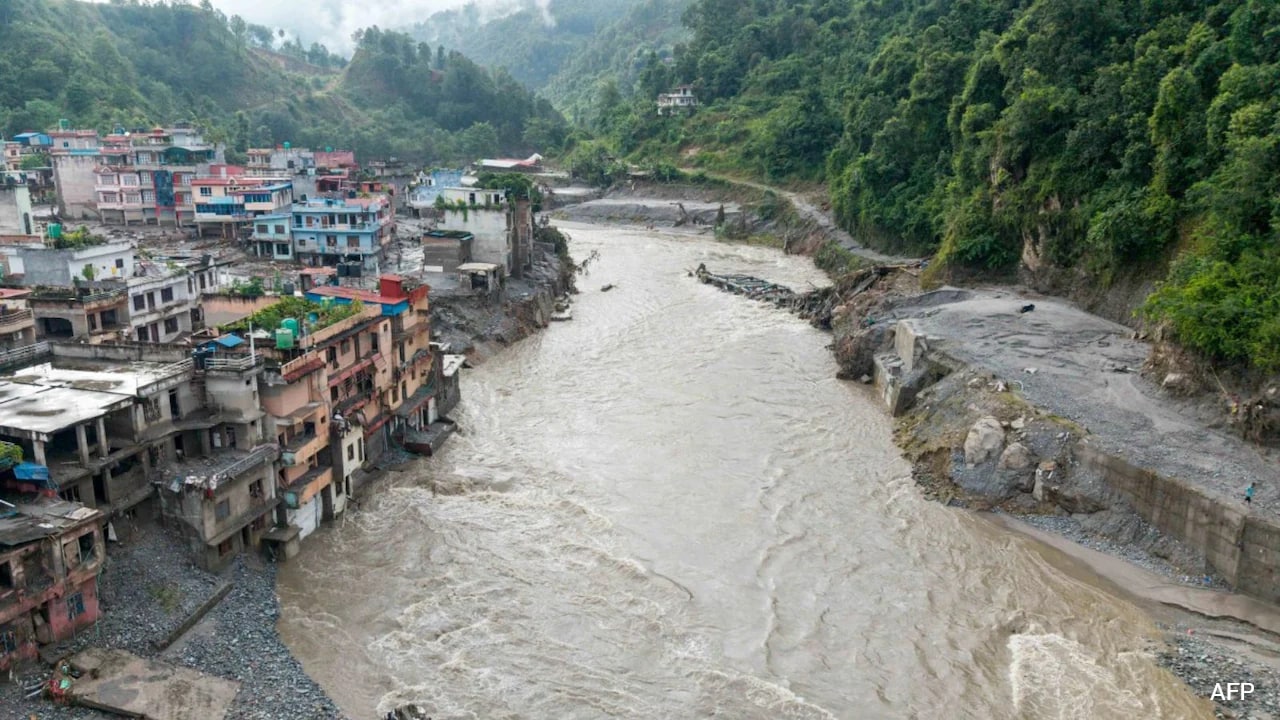
In a matter of minutes, millions of cubic meters of water rush downward, turning into a terrifying slurry of mud, boulders, and pulverized stone. It scours the valley floor clean. It takes bridges, schools, terraced fields, micro-hydro plants, and human lives, erasing decades of labor in a single, roaring breath.
Dawa remembers the flood of 1985 at Dig Tsho. He was young then, tending yaks near the Namche Bazaar trail. He heard a sound like artillery fire echoing off the face of Langmoche. Within hours, the Bhote Koshi river rose by several meters, swallowing everything in its path, washing away a nearly completed hydro-electric plant and cutting off entire communities.
"We thought the mountain was angry," Dawa says, pouring dark, spiced tea into a metal cup. His hands are weathered like old pine bark. "We thought we had done something wrong to the gods of the summit. Now we know the mountain is simply melting."
Scientists monitoring the region point to staggering numbers. Nepal is home to thousands of glaciers, and hundreds of glacial lakes have been identified as potentially dangerous. According to recent assessments by organizations like the International Centre for Integrated Mountain Development, dozens of these lakes are at a high risk of bursting as temperatures in the Hindu Kush Himalaya rise significantly faster than the global average.
The air up here is warming at nearly double the global mean. That means the ice isn't just retreating; it is collapsing from the inside out. Internal drainage systems open up within the glaciers, forming underground rivers of meltwater that hollow out the ice structure until the surface caves in. The whole landscape becomes a honeycomb of hazard.
Yet, numbers rarely capture the emotional core of displacement.
Consider a village like Thame. For centuries, its residents farmed the steep terraces, harvesting potatoes and barley in the short summer months, guiding trekkers through the autumn, and weathering the bitter cold of winter. They built their homes of stone and timber, facing south to catch the sun. They anchored their lives to the earth.
When a sudden outburst flood tore through Thame, it didn't just destroy infrastructure; it severed the invisible threads connecting families to their ancestral soil. Homes built by grandfathers vanished into the grey froth. Pasturelands turned into boulder fields. When you lose the land your ancestors cleared with their bare hands, you lose the grammar of your identity. You become a refugee in your own country, displaced not by human conflict, but by the weight of water seeking sea level.
There is a strange psychological duality to living beneath a ticking clock of ice. Down in Kathmandu, politicians debate carbon tariffs and international climate financing packages, bandying about acronyms like NAP and NDC as if bureaucratic paperwork can plug a breach in a moraine dam. Up in the valleys, people watch the clouds gather over the high peaks every afternoon, wondering if this rain is the one that triggers the slide.
Fear becomes background noise. You learn to live with it, the way you live with the thinness of the air. You look up at the terminal moraine of the Imja Lake or Tsho Rolpa, and you calculate your escape route every time you walk down to the river.
Engineering offers some answers, though they are desperate, expensive, and temporary.
Engineers have trudged up to high-altitude lakes—working in brutal conditions where oxygen is scarce and the weather turns hostile without warning—to install siphon pipes and artificial drainage channels. By manually lowering the water levels of lakes like Tsho Rolpa by a few meters, they relieved the immense pressure on the weak gravel dams, buying the downstream villages precious time.
It is like performing open-heart surgery with a pocketknife while the patient is running a marathon.
You cannot drain every lake in the Himalaya. There are too many, spread across terrain so vertical and remote that even helicopters struggle to land. The sheer scale of the transformation defies human intervention. Every meter of ice lost is a permanent alteration of the water tower of Asia.
Downstream, the consequences ripple outward across borders and ecosystems. The rivers fed by these glaciers—the Koshi, the Gandaki, the Karnali—are the lifelines for hundreds of millions of people living across the plains of Nepal and northern India. They irrigate crops, fill municipal reservoirs, and sustain vast agricultural economies.
When the glaciers are gone, the seasonal rhythm of these rivers breaks. The initial phase brings catastrophic floods as the ice disappears. The final phase brings severe, bone-dry drought as the natural storage system empties out completely. It is a cruel double jeopardy: first you drown in the melt, and then you starve for the lack of it.
Standing on a ridge overlooking the Dudh Koshi, watching the grey, silt-laden water churn through the gorge, the illusion of human dominion over nature evaporates entirely. We spent centuries drawing borders on maps, building concrete walls, and writing laws to govern the earth, as if the planet were a finished product.
It is not. It is a living, shifting, melting process.
The ice is gone, and it is never coming back in our lifetimes, nor in the lifetimes of our children's children. What remains is a reckoning with the consequences of a warmer world, written in mud, stone, and tears across the roof of the world. Dawa walks back inside his stone lodge, pulling a woolen blanket tighter around his shoulders as the evening wind begins to howl down from the heights of Everest. Outside, in the dark, the mountain stands silent, shedding its white skin piece by piece, waiting for the dawn.