The sky did not simply darken over Downers Grove; it bruised. Around noon on a Monday that began like any other, the Illinois horizon turned the color of wet slate, heavy with the promise of violence. Tornado warnings blared on phones, wind sheared tree limbs from their trunks, and residents scrambled for cover as horizontal sheets of rain battered the western suburbs.
Up above, it was chaos. Down below, hidden behind concrete and cast iron, it was something much worse. Also making headlines in this space: The Anatomy of Civil Unrest in Pakistan administered Kashmir.
On the 800 block of Curtiss Street, near the quiet dignity of the village hall and police station, a routine maintenance project turned into a nightmare. Two contract workers, employed by Vortex Lining Systems to care for the subterranean arteries that keep modern towns from drowning, were inside a storm sewer. They were doing the kind of work civilization relies upon entirely yet notices least: tending to the dark, forgotten infrastructure running beneath our feet.
Then the heavens opened. More details into this topic are explored by NBC News.
When a severe storm drops inches of rain in a flash, the urban watershed transforms. Dry or manageable concrete tubes become roaring, subterranean white-water rapids in seconds. The water does not ask permission; it surges, fills, and claims every available cubic inch.
At 12:50 p.m., frantic coworkers flagged down local police officers near the site. Two men were trapped in the stormwater network.
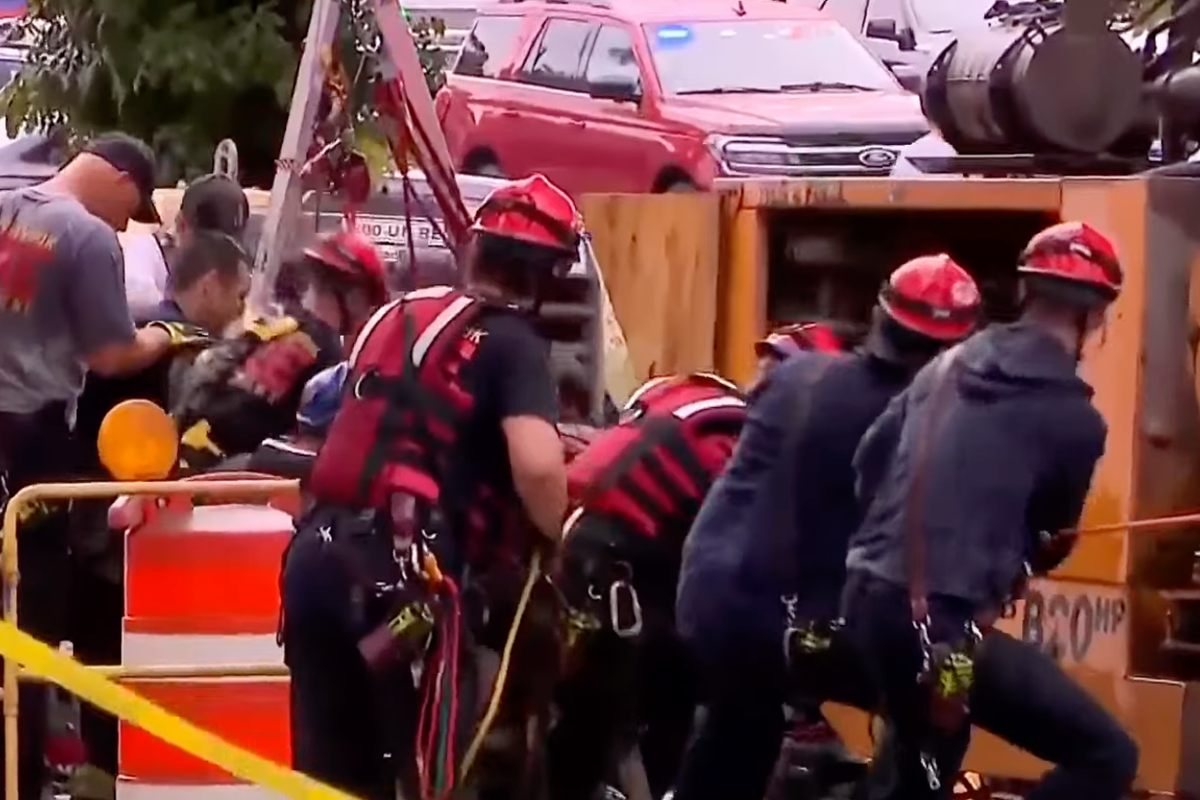
What followed was a masterclass in raw courage and technical desperation. Downers Grove firefighters and technical rescue technicians arrived instantly, rigging pulley systems and peering into the gaping maw of an eight-foot-diameter pipe. Imagine descending into total blackness, the air thick with the roar of churning floodwaters, knowing that every secondary surge could trap you alongside the people you are trying to save.
They pushed forward. Roughly 200 feet into the labyrinth, rescue crews located one of the workers. They pulled him from the rushing current, hauling him back to the surface before rushing him to Advocate Good Samaritan Hospital. He was battered, soaked, and shaken to his core, but alive.
Yet the math of disaster rarely balances out cleanly.
The second worker remained lost inside the network as the afternoon bled into evening. As darkness settled over DuPage County, the sheer volume of rushing water made continuing the search a suicide mission for the rescue personnel. Officials faced the agonizing choice every commander dreads, making the official transition from a rescue operation to a recovery mission.
Outside, the neighborhood surveyed the wreckage of the storm—shattered branches, flooded lawns, and the chilling reminder of how fragile our engineered safety really is. Inside the command post, investigators from the Occupational Health and Safety Administration arrived to piece together how a Monday morning shift met a meteorological wall.
Consider what happens next: the waters recede, the headlines shift, and the heavy machinery packs up. But beneath the asphalt of Curtiss Street, the echoes of a sudden summer tempetuousness remain, a stark monument to the invisible labor that holds our world together, and the sudden, unforgiving cost of the weather above.
Contractor remains missing after being trapped in Downers Grove sewer
This video provides local news coverage of the severe weather in Downers Grove and the ongoing efforts at the storm sewer site.


