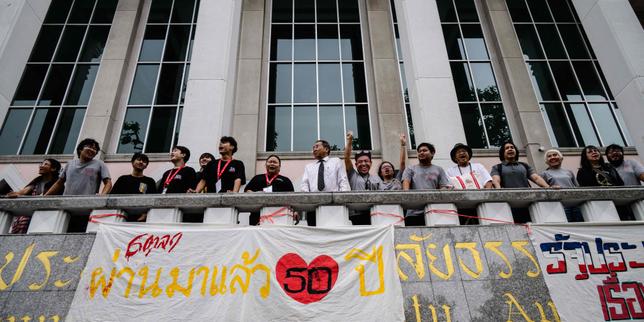
Every October, international correspondents and local activists wheel out the sepia-toned ghosts of Thammasat University. They point to the haunting 1976 photographs of state-backed lynchings, dust off the narrative of youthful resistance, and declare that the current generation is waking up to reclaim its democratic destiny by invoking the memory of blood. It makes for excellent foreign correspondence. It is also a strategic dead end.
The lazy consensus across global media is that historical memory serves as an automatic weapon against authoritarianism. If you remind the public of past atrocities, the logic goes, tyranny becomes untenable.
History begs to differ. Thailand's ruling apparatus does not fear your memory. It weaponizes your obsession with it.
The Trap of Historical Nostalgia
Let us look past the romantic veneer of student protests. I have watched analysts spend decades chronicling every coup, every royal intervention, and every student uprising in Bangkok, treating each cycle as a step toward eventual liberation. This is a comforting delusion.
When youth movements brandish the trauma of 1976, they operate under the assumption that the regime possesses a conscience that can be shamed. That is a fundamental misread of structural power. The Thai royal-military complex survived the Cold War, multiple constitutional rewrites, and waves of digital-native dissent precisely because it treats history not as a moral ledger, but as a theater of deterrence.
Every time youth leaders organize an anniversary vigil, state intelligence does not panic. They catalog the faces, map the networks, and calculate the threshold of tolerable dissent. Commemoration without leverage is merely permission for the state to monitor its opposition in high definition.
The Mechanics of Institutional Immunity
To understand why invoking 1976 fails to dislodge the old guard, you must look at how impunity functions in a hybrid regime. Power in Bangkok is not centralized in a single dictator who can be overthrown by a critical mass of angry twenty-somethings. It is dispersed across an entrenched network of judicial bodies, administrative agencies, and financial dynasties anchored by the monarchy.
When students demand structural reform, they are met with a legal architecture built specifically to criminalize systemic critique. Article 112 of the Criminal Code—the lèse-majesté law—does not care about your historical grievances. It converts the invocation of past state violence into a fresh criminal offense.
Consider the mathematics of modern Thai activism. A generation rises, organizes digital campaigns, fills the streets, and invokes the ghosts of 1976. The establishment responds not with M-16s on the university lawn as they did in the seventies, but with the quiet, bureaucratic violence of asset seizures, dissolution orders, and ten-year prison sentences handed down by compliant courts. The outcome is attrition, not revolution.
Why the Status Quo Holds
The comfortable narrative is that technology and social media have leveled the playing field, allowing modern youth to bypass traditional censorship. This ignores economic reality. The families who control the commanding heights of Thailand’s conglomerates are deeply intertwined with the military leadership. They do not need to fire bullets when they control employment, credit, and the judiciary.
When youth movements focus their energy on symbolic confrontations over history, they play an away game on a pitch designed by the home team. The establishment welcomes the framing of politics as a culture war over historical memory because it keeps the battlefield away from where it actually hurts: capital flight, structural tax reform, and the dismantling of military-owned monopolies.
Breaking the Cycle
If the current generation wants to move past perpetual cycle repetition, it must stop treating political struggle like a historical reenactment society.
Stop asking the state to apologize for crimes it considers acts of patriotism. Stop treating courtrooms as forums for moral expression when they are clearly execution blocks for political careers. True disruption requires economic disobedience, the severing of corporate supply chains that feed the junta, and an absolute refusal to play by constitutional rules written to guarantee elite victory.
Memory is not a weapon if the target is immune to shame. Until the opposition trades its banners of the past for cold, hard economic leverage, the crown and the barracks will continue to watch from above, entirely unbothered by the ghosts you choose to raise.