The rain in northern Spain doesn't just fall. It heavy-drops from a bruised sky, soaking through layers of tracksuits and burrowing straight into the bone. On nights like this, the grass at the training ground turns into a slick, unforgiving mirror. You can hear everything. The wet slap of a leather ball against a boot. The sharp, rhythmic intake of breath. The heavy thud of a body hitting the turf.
For a professional footballer, these quiet, freezing sessions are where the real tax is paid. Long before the bright lights of the stadium turn on, and well before the commentators scream your name to millions of homes, there is just the mud and the expectation. Read more on a similar issue: this related article.
Mikel Oyarzabal knows this tax better than most.
To look at him on a team sheet is to see a reliable asset. A versatile forward. A statistical guarantee of work rate. But football isn't played on a spreadsheet. When Spain lined up against Saudi Arabia, the casual observer saw a routine friendly, a comfortable 4-0 victory, and a predictable disparity in world rankings. They saw a box score. They missed the entire human drama unfolding on the grass. More reporting by NBC Sports highlights similar views on the subject.
The Ghost in the Subconscious
Every athlete who has ever torn a ligament carries a ghost around with them. It lives in the knee. It whispers to you when you change direction on a damp surface. It reminds you of the sound—that sickening pop—and the long, lonely months of rehabilitation where the rest of the world moves on without you.
When Oyarzabal suffered his serious knee injury a few years back, he wasn't just losing playing time. He was losing his identity. Coming back from that level of physical trauma requires a quiet, almost delusional stubbornness. You have to force your brain to trust your body again, even when every instinct begs you to slow down, to protect yourself, to let someone else make the high-speed sprint into the penalty box.
Against Saudi Arabia, that ghost was finally laid to rest.
The match itself began with the expected patterns. Spain controlled the tempo, passing the ball with that characteristic, hypnotic rhythm that wears opponents down to the psychological bone. Saudi Arabia sat deep, organized and compact, defending like a team with everything to prove. For the first twenty minutes, it felt like watching a grandmaster slowly arrange chess pieces. Perfect. Methodical. Slightly detached.
Then, the narrative shifted.
A Study in Clinical Instinct
It happened in a fraction of a second. A loose ball, a momentary hesitation in the defensive line, and a flash of red jersey.
Oyarzabal didn't just run; he anticipated. That is the difference between a good forward and a great one. Good forwards react to where the ball is. Great ones arrive precisely where the ball is destined to be, as if they possess a map of the immediate future. His first goal wasn't a triumph of brute force. It was a masterclass in spatial awareness. A deft touch, a cool eyes-on-the-keeper moment, and the ball was nesting in the back of the net.
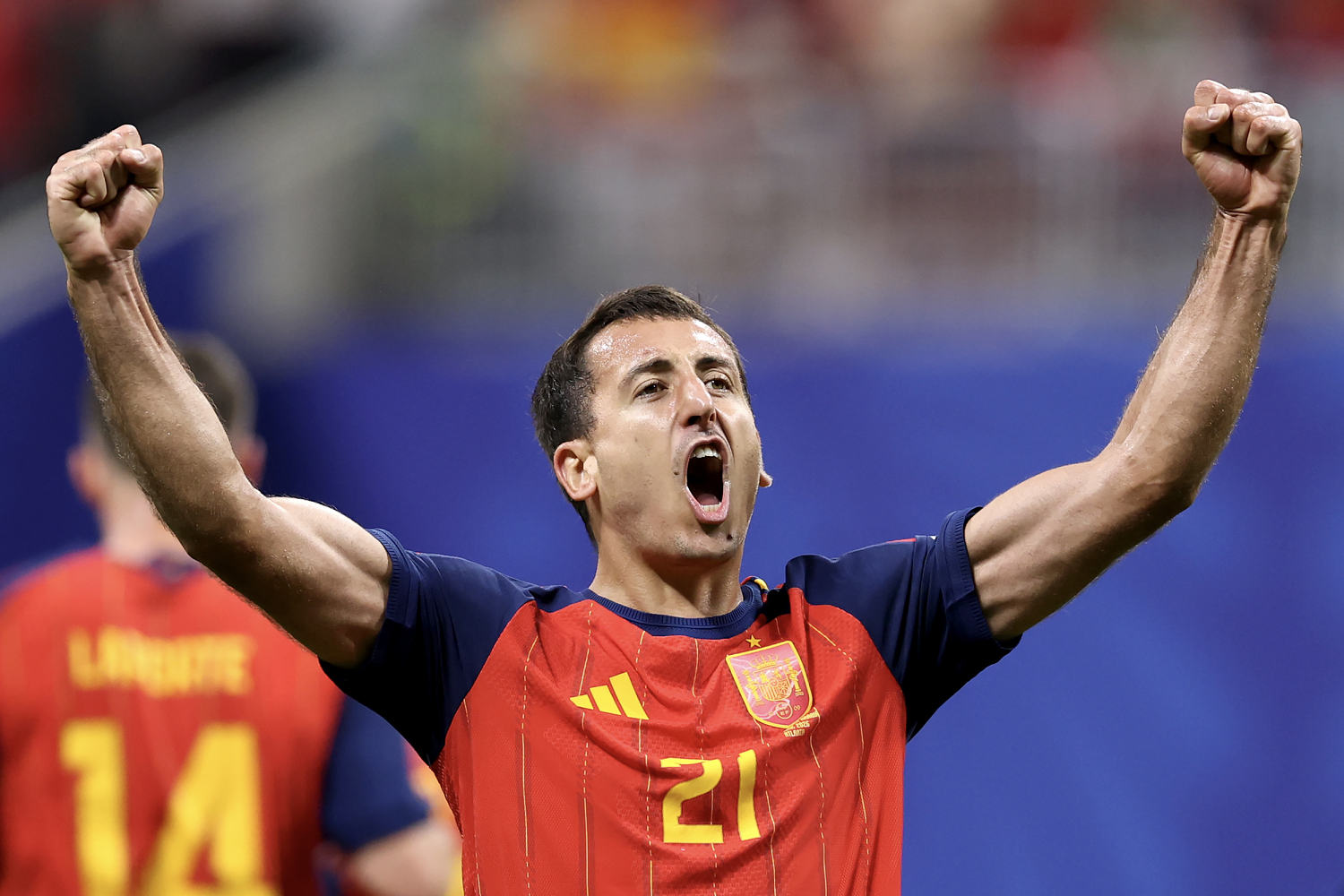
The stadium erupted, but if you watched his face closely, there was no wild, erratic celebration. There was relief. A sudden, visible unloading of pressure from a man who has spent months answering questions about whether he would ever return to his clinical best.
Consider what happens next to an opposing team when a player finds that kind of rhythm. The tactical plan breaks down. The defenders stop watching the ball and start watching the man. They tighten up. They make mistakes.
By the time his second goal arrived, it felt less like an event and more like an inevitability. It was the culmination of a performance defined by relentless movement. He ghosted between the center-backs, exploited a pocket of space that didn't exist two seconds prior, and struck with a clinical finality that left the goalkeeper stranded. Two goals. A commanding lead. A statement made to anyone who doubted his resurgence.
The Unseen Supporting Cast
A four-goal victory is never a solo act, even if one man claims the headlines. The machinery of the Spanish national team requires every cog to turn in perfect unison. While Oyarzabal provided the sharp edge, the midfield engine room provided the oxygen.
The passing metrics from the match will tell you about possession percentages and pass completion rates. What they won't tell you is the sheer exhaustion of the Saudi Arabian players who spent ninety minutes chasing shadows. Every time they tried to press, the ball vanished. Every time they tried to counter-attack, a Spanish red shirt appeared to smother the spark before it could become a fire.
The final 4-0 scoreline was a fair reflection of dominance, but it was also a cruel testament to the gap that exists at the very highest level of international sport. One team plays with a margin for error; the other plays on a tightrope over a canyon. One mistake, and you fall. Saudi Arabia made four, and Spain punished every single one with a cold, mathematical precision.
The True Value of a Friendly
There is a tendency in modern sports culture to dismiss matches like this. Friendly fixtures are often labeled as meaningless, glorified training sessions designed to fulfill commercial obligations rather than sporting merit.
That view is a luxury reserved for people who don't have to wear the jersey.
For the manager, this was a laboratory. It was a space to test partnerships under pressure, to see how the younger players handled the weight of representing a nation, and to monitor the physical condition of senior leaders. For Oyarzabal, it was something far more visceral. It was validation. It was proof that the countless hours spent in the gym, the painful physiotherapy sessions, and the mental battles fought in the dark had been worth it.
The goals mattered, of course. They always do for a striker. But the real victory was the freedom of his movement. The way he cut inside without hesitation. The confidence to demand the ball in tight spaces.
When the final whistle blew, the rain was still falling, turning the pitch into a sodden mess. The players exchanged shirts, the stadium lights began to dim, and the reporters rushed to type out their standard, factual recaps of a routine 4-0 win.
But as Mikel Oyarzabal walked down the tunnel, dripping wet and exhausted, he carried something much heavier than a match ball or a headline. He carried the certainty that he was finally, truly, back.