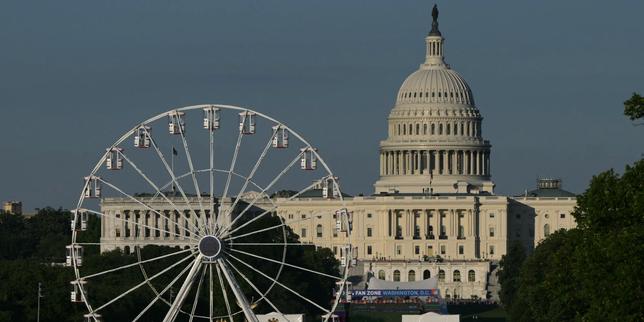
The paper arrived without a siren. It did not come with the dramatic flair of a midnight press conference or a televised address from the Oval Office. Instead, it was a routine transmission, a sheaf of text uploaded to a congressional portal in the quiet hours of a Tuesday afternoon.
On that paper, the White House scrawled a number that defies human comprehension.
Eighty-eight billion dollars.
They called it an emergency supplemental request. They categorized it under the chillingly clinical phrase "urgent needs." It is a financial band-aid designed to sustain an escalating conflict half a world away in Iran. But when a number grows that large, it ceases to be money. It becomes an abstract force of nature, a bureaucratic tidal wave that reshapes lives before a single dollar is even spent.
To understand what is happening right now in the corridors of power, you have to look past the spreadsheets. You have to look at the ink.
The Geography of a Spreadsheet
Numbers are designed to numbing. When we hear terms like "supplemental appropriations," our eyes glaze over. The brain cannot naturally process eleven zeros. We nod, we read the headlines, and we move on to our morning coffee.
Let us ground this math in something real.
If you were to spend one dollar every single second, it would take you roughly thirty-one years to spend one billion dollars. To burn through the White House's new wartime request, you would have to spend that dollar every second for nearly twenty-eight centuries.
That is the scale of the "urgent need."
In Washington, this request is treated as an administrative inevitability. Committees will meet. Staffers will drink lukewarm coffee from paper cups at 2:00 AM, scanning line items for munitions, intelligence-sharing systems, and troop deployments. They will debate the fine print of regional stability.
But consider a hypothetical desk in the Pentagon where these numbers are translated into steel. On that desk sits a procurement order for a single precision-guided missile. That missile costs more than the average American worker will earn in an entire lifetime. When that missile is launched over the Zagros Mountains, a lifetime of human labor vanishes in a flash of heat and a cloud of gray dust.
That is where the math meets the earth.
The conflict in Iran is not a theoretical chess match played by grandmasters in dark rooms. It is a physical reality defined by heat, noise, and friction. By asking for eighty-eight billion dollars more, the government is acknowledging that the current machine is hungry. It needs more fuel. It needs more metal.
The Sound of Urgent Needs
What does an urgent need actually sound like?
To an administration official, it sounds like a ringing phone. It is the voice of a commander in the Persian Gulf explaining that supply lines are stretched thin, that drone defense systems are burning through interceptors faster than factory lines can assemble them. It is the quiet panic of realizing that a modern war consumes material at a pace that mocks peacetime projections.
To an ordinary family, the sound is entirely different.
Imagine a family in a small town in Ohio. Let us call them the Millers. They do not watch the geopolitical analysis on cable news. They do not track the movements of carrier strike groups in the Strait of Hormuz. But they do feel the subtle vibration of that eighty-eight billion dollar request.
They feel it when they look at their local school board budget, which has been frozen for three consecutive years. They feel it when they drive past the shuttered community clinic that closed because funding dried up.
The money moves through invisible channels. When the federal government prioritizes the immediate stabilization of an overseas theater, resources shift. Priorities harden. The national conversation bends toward survival, leaving domestic aspirations waiting in the hallway.
This is the trade-off we rarely discuss openly. To admit it feels unpatriotic, or worse, naive. We are told that national security is absolute, that without it, nothing else matters. That is true. But it is also true that a nation is more than its perimeter defense. A nation is the health of its people, the safety of its bridges, and the education of its children.
When we spend eighty-eight billion dollars on an emergency, we are choosing which fires to put out and which ones to let smolder.
The Ghost of Conflicts Past
We have been here before. The rhythm is intoxicatingly familiar.
A crisis erupts. The initial budget is deemed sufficient. Then, the reality of prolonged engagement sets in. The enemy does not capitulate on schedule. The terrain proves unyielding. The supply chains falter. Suddenly, the original numbers look like wishful thinking.
During the early years of the engagements in Iraq and Afghanistan, the phrase "supplemental funding" became a permanent fixture of the congressional vocabulary. It was a financial trapdoor. By keeping wartime costs out of the regular annual budget, leaders could pretend the expenses were temporary. They could isolate the bleeding from the main ledger.
But temporary costs have a habit of becoming permanent scars.
The current request for the Iranian conflict follows this exact historical orbit. It is framed as an exception, an unpredictable spike caused by the friction of an active battlefield. Yet, anyone who has watched the last thirty years of foreign policy knows that these spikes have a flattening effect. They set a new baseline. They train the economy to expect war as a permanent consumer of public wealth.
The defense industrial base responds to these signals instantly. Factories in Arizona, Pennsylvania, and Texas scale up operations. Shift workers take on overtime to build the components that will replace the material expended in the sands of the Middle East. For those communities, the eighty-eight billion dollars looks like job security. It looks like a steady paycheck in an uncertain world.
This is the deep irony of the wartime economy. The money that funds destruction abroad simultaneously stabilizes households at home. It binds the economic well-being of working-class Americans to the continuation of violence thousands of miles away. It creates a system where peace is a market risk.
The View From the Ground
Step away from the American ledger for a moment. Look at what that money buys on the receiving end.
In Iran, the concept of billions of dollars is meaningless to a population navigating the ruin of conflict. To a civilian in Isfahan or Bandar Abbas, the White House request is not a political debate reported on the internet. It is an echo in the sky.
It is the knowledge that the sky will remain dangerous for the foreseeable future.
When an empire decides to fund an "urgent need" to this degree, it signals endurance. It means the conflict is not winding down. It means the logistical pipelines are being filled for a long winter. For the people living beneath those flight paths, the news of the budget extension is a sentence. It means more nights spent in basements, more disruptions to the electrical grid, and more months of watching their society fracture under the pressure of external force.
The human mind is poorly equipped to balance these scales. We see our own needs clearly, but the needs of the distant other are faint, blurred by distance and cultural divide. We comfort ourselves with the idea that our intentions are clean, that the eighty-eight billion dollars is meant for defense, for deterrence, for the restoration of an international order that benefits everyone.
Perhaps it is. But the metal doesn't care about intentions. A shrapnel fragment carries no ideology. It only carries velocity.
The Unspoken Consensus
The most unsettling aspect of this entire apparatus is how little friction it encounters.
A domestic policy proposal aimed at expanding healthcare or rebuilding decaying rail infrastructure will face months of partisan warfare. It will be dissected by think tanks. It will be decried as inflationary, reckless, and unsustainable. Politicians will look directly into cameras and declare that the coffer is empty, that we must live within our means.
Yet, when the White House requests eighty-eight billion dollars for an overseas war, the machinery moves with astonishing grease. The opposition party may grumble about strategy or demand oversight, but the money almost always flows. The consensus is swift. The votes are tallied, and the bill is signed.
This reveals a profound truth about our collective priorities. We are structured for crisis response, not for steady cultivation. We will find the billions to react to a threat, but we cannot find the millions to prevent a decay.
This is not a conspiracy. It is a cultural habit. We have grown so accustomed to the posture of global management that we no longer question the price tag. We treat the defense budget like a utility bill—something to be paid without joy, but without fail, lest the lights go out.
But the lights are already flickering in places we choose not to look.
The document requesting the eighty-eight billion dollars will soon pass from a proposal into law. The contracts will be signed. The cargo ships will be loaded at ports in Georgia and California, their hulls heavy with the material bought by the American taxpayer.
The conflict will continue its slow, grinding rotation, consuming wealth, lives, and focus.
On a quiet evening in Washington, long after the budget hawks have gone home, a lone janitor vacuums the floor of a congressional hearing room. The dust settles over empty leather chairs and mahogany desks where the fate of billions was decided. Outside, the city moves on, oblivious to the invisible weight that has just been added to the future, a debt written in the dark and paid in the blood of people who will never know each other's names.