The sound of a door closing in a boardroom in Tehran or Washington doesn’t just echo against the wood and glass of high-rise offices. It travels. It moves across the dry plains of the Middle East, vibrates through the shipping lanes of the Persian Gulf, and eventually lands on the kitchen tables of families who will never meet the men making the decisions. When the rhetoric between Iran and the United States sharpens, the world holds its breath. We have spent decades watching this pendulum swing. We have seen the threats, the sanctions, and the brief, flickering moments of diplomacy that seem to vanish as quickly as they appear.
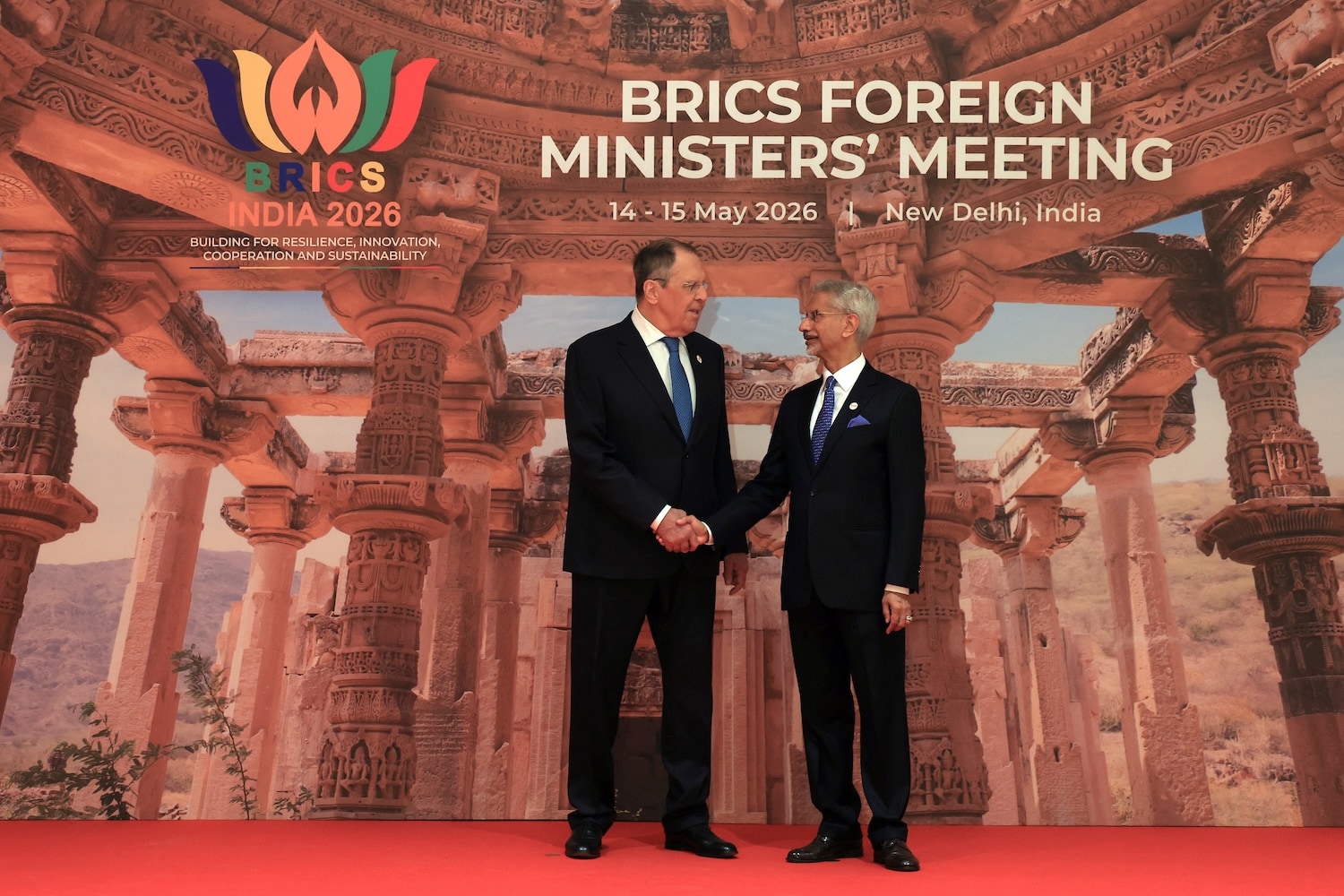
But something has changed. The old ways of settling scores—or even just preventing them from becoming bloodbaths—are failing. The traditional mediators, those Western powers that once held the keys to every locked room, are no longer viewed as neutral observers. They are participants. When the referee starts wearing one of the team’s jerseys, the game falls apart. This is the friction point where Professor Hamed Mousavi places his finger. He suggests that the solution isn't found in the old West, but in the rising collective of the BRICS nations.
Consider a small business owner in Shiraz. Let’s call him Reza. Reza doesn't care about the grand theories of international relations. He cares about the price of raw materials for his textile shop. He cares that his daughter’s asthma medication has tripled in price because of banking restrictions that make no sense to him. To Reza, the standoff between Washington and Tehran isn't a chess match. It is a slow, suffocating fog. He is one of millions caught in the "maximum pressure" vice, waiting for someone—anyone—to find a way to let the air back into the room.
The Broken Mechanism of the West
For years, the blueprint for peace was a Western one. We looked to London, Paris, or Berlin to bridge the gap. But these capitals are tethered to the American orbit by a thousand economic and military threads. When the United States walked away from the nuclear deal, the European powers stood on the sidelines, wringing their hands but unable to act. They were paralyzed by their own financial systems, terrified of the secondary sanctions that would follow if they dared to trade with Iran.
The trust is gone. You cannot mediate a dispute if one side believes you are merely the messenger for the other. This isn't just a political hurdle; it is a structural dead end. The West has become a participant in the very conflict it seeks to resolve. Because of this, the diplomatic machinery has rusted shut. We are left with a vacuum, and history teaches us that vacuums in the Middle East are never filled with anything good.
This is where the BRICS nations—Brazil, Russia, India, China, and South Africa—enter the frame. They represent a different gravity. They are not a monolith, and they certainly don't agree on everything. However, they share a singular, powerful trait: they are the primary customers and partners of the future. They are the ones who need the oil to flow, the trade routes to remain open, and the region to stabilize, not for the sake of abstract democracy, but for the sake of their own survival and growth.
A New Table for a New World
Mediation requires more than just a nice room and a carafe of water. It requires leverage. True leverage isn't just the threat of a bomb; it is the promise of a market. China is now Iran’s largest trading partner. India has deep historical and energy ties to the region. Brazil and South Africa bring a perspective of the "Global South" that resonates with nations tired of being lectured by the former colonial powers.
Imagine a negotiation where the person across the table isn't threatening to freeze your bank accounts, but is instead offering to build a railway. That changes the chemistry of the conversation. It shifts the focus from what you must give up to what you stand to gain. This is the "human-centric" diplomacy that Mousavi advocates for, even if he uses more academic terms. It recognizes that Iran is a country of eighty-five million people who are tired of being isolated, and the United States is a superpower that is increasingly weary of "forever wars" and the endless drain on its resources.
The BRICS platform offers a way for Iran to step back from the ledge without looking like it has surrendered to Western demands. It provides a face-saving exit. In the high-stakes world of Persian diplomacy, "prestige" and "respect" are not just words; they are the currency of the realm. A solution brokered by Beijing or New Delhi feels like a partnership among equals. A solution brokered by Washington feels like a dictate.
The Invisible Stakes of Inertia
What happens if we do nothing? What happens if we stay on the current path, relying on the same tired channels that have failed for forty years? The answer is written in the history books of the twentieth century. Small miscalculations lead to large tragedies. A drone in the wrong airspace, a misidentified tanker, a hot-headed commander on a patrol boat—these are the sparks that turn a cold war into a hot one.
When Professor Mousavi speaks about BRICS stepping up, he isn't just talking about a change in personnel. He is talking about a change in philosophy. He is arguing for a world where the security of the Middle East is managed by those who actually live and trade there, rather than those who view it as a strategic map to be manipulated from thousands of miles away.
There is a visceral reality to this. Every time a new round of sanctions is announced, the value of the Rial drops. In Tehran, elderly pensioners watch their life savings evaporate in a single afternoon. In the United States, the price of gasoline ticks upward, and more billions are diverted from crumbling infrastructure into the bottomless pit of Middle Eastern defense spending. The cost of this stalemate is paid in the currency of human potential.
The Multi-Polar Reality
The world is no longer a two-player game. We are living through a messy, complicated transition into a multi-polar reality. This scares people. It is easier to understand a world with one or two bosses. But a world with multiple centers of power is actually more stable, provided those centers can talk to each other.
BRICS is the only entity with the economic muscle and the political distance to tell both sides the truth. They can tell Tehran that its regional ambitions are creating a wall of hostility it cannot afford to maintain. They can tell Washington that its policy of isolation has only served to push Iran closer to the very competitors the U.S. fears most.
They have the "skin in the game." If the Strait of Hormuz is closed, the lights go out in Shanghai and the factories stop in Mumbai. That is a far more powerful incentive for peace than any speech delivered at a podium in New York.
The Long Walk to the Center
Getting there won't be easy. BRICS is not a formal alliance like NATO. It is a loose collection of interests. There is no "BRICS Army" to enforce a peace treaty. But that might be its greatest strength. It is a coalition of the willing, focused on the pragmatism of the ledger rather than the dogma of the ideology.
We have to stop looking for a "grand bargain" that solves every grievance since 1979. Those don't exist. Instead, we need a series of small, concrete steps that reduce the temperature. BRICS can provide the framework for these steps—agreements on maritime security, energy cooperation, and regional trade that slowly weave Iran back into the fabric of the global economy.
The alternative is a slow-motion car crash that we all see coming but refuse to steer away from. We have spent forty years waiting for the "regime to change" or for the "Great Satan" to disappear. Neither has happened. Instead, we have a generation of young Iranians who are connected to the world through the internet but disconnected from it by policy. We have a generation of Americans who are skeptical of any intervention, yet find their country perpetually on the brink of another one.
There is a moment in every long-standing feud where both parties are exhausted. They want out, but they don't know how to leave without losing their pride. They need a bridge that doesn't look like a bridge. They need a neutral ground that isn't owned by their enemy.
The BRICS nations are currently building that ground. It is made of trade routes, currency swaps, and infrastructure projects. It is a world built on the cold logic of mutual interest, which is often a far more reliable foundation for peace than the shifting sands of political goodwill.
The clock is ticking. Every day that passes without a new diplomatic architecture is a day where the chance of an accidental war increases. We can continue to rely on the ghost of twentieth-century diplomacy, or we can look at the map as it actually exists today. The power has shifted. The center of gravity has moved. It is time the peace process moved with it.
Somewhere in a hospital in Isfahan, a doctor is looking at an empty cabinet where a specific, life-saving drug used to be. Somewhere in a port in the UAE, a sailor is looking at the horizon, wondering if today is the day the missiles fly. These are the people who pay for our failure to adapt. They don't need another speech. They need a mediator who can actually deliver. They need the world to stop picking sides and start picking solutions.
The room is ready. The chairs are empty. All that remains is for the new powers to realize that their own prosperity depends on their willingness to sit down and lead.