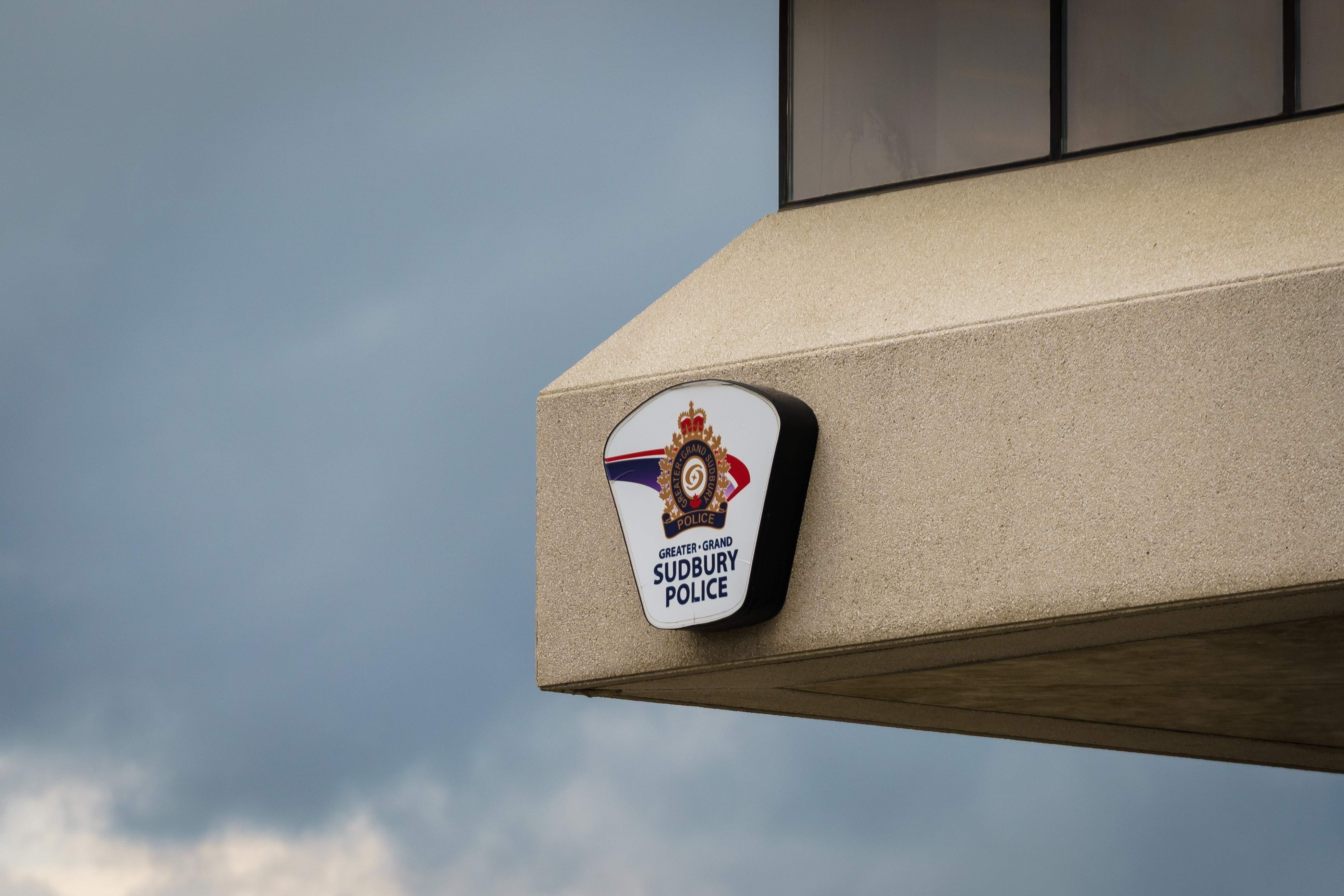
Two police officers in Sudbury, Ontario, face criminal charges for obstructing justice following a man's fatal carbon monoxide poisoning, an incident that exposes deep systemic vulnerabilities in how law enforcement handles routine wellness checks and investigates its own failures. When emergency responders arrive at a scene involving an invisible, odorless killer like carbon monoxide, split-second protocols and honest post-incident reporting are the only barriers between a preventable tragedy and a cover-up. The criminal charges brought against the Sudbury officers following a Special Investigations Unit (SIU) probe reveal a troubling friction between frontline policing realities, institutional self-preservation, and public oversight.
To understand how a routine call can spiral into criminal obstruction charges, you have to look at the mechanics of police oversight in Ontario and the unique environmental hazards of a carbon monoxide emergency. Most local news reports stop at the surface facts. They list the charges, name the oversight agency, and summarize the press release. That approach misses the structural anatomy of the failure.
The Anatomy of a Wellness Check Gone Wrong
A wellness check is one of the most common, yet operationally ambiguous, calls a municipal police service receives. Someone—a relative, a neighbor, an employer—notices an unexplained absence and dials dispatch. The officers sent to the door are rarely stepping into an active crime scene. They are stepping into an unknown environment.
Carbon monoxide changes the physics of that environment completely. Because the gas is colorless, odorless, and tasteless, it leaves no immediate sensory clues for responding officers unless they are carrying personal gas detection equipment or unless fire services arrive simultaneously with calibrated monitors. In northern Ontario, where cold winters mean sealed homes, idling vehicles in attached garages, and heavy reliance on fuel-burning furnaces, carbon monoxide buildup is a documented seasonal hazard.
When an individual succumbs to carbon monoxide inside a residence or garage, the timeline of discovery matters enormously. If officers arrive while the victim is still alive, immediate extraction and high-flow oxygen can reverse the carboxyhemoglobin binding in the bloodstream. If the officers fail to enter, fail to check the premises thoroughly, or clear the call prematurely without verifying the occupant's status, the window for survival slams shut.
The human error of missing a victim during a cursory check is a tragedy. It is usually an administrative matter—a failure of training, a lapse in judgment, or an under-resourced shift rushing from call to call. It does not automatically become a crime.
The crime happens afterward.
How Administrative Mistakes Become Obstruction of Justice
Under Section 139 of the Criminal Code of Canada, obstructing justice occurs when an individual willfully attempts in any manner to obstruct, pervert, or defeat the course of justice. In the context of policing, this charge rarely stems from the initial operational mistake. Instead, it arises from the paperwork, the radio logs, and the statements given once the severity of the outcome becomes clear.
Consider a hypothetical example of how this dynamic unfolds in practice. Imagine two officers respond to a check-well-being call at a residential address. They knock on the front door, peer through a frosted window, see no movement, and clear the call as "unfounded" or "unable to locate" without checking the rear entrance or an attached garage. Hours later, family members force entry and find the occupant dead from carbon monoxide poisoning. Suddenly, that five-minute call is no longer routine. It is the focal point of an external death investigation.
If those officers subsequently alter their duty notes, omit details about what they actually checked, or provide misleading accounts to investigators to shield themselves from internal discipline under the Community Safety and Policing Act, they cross the line from negligence into criminal obstruction.
Watchdog investigators look specifically for discrepancies between physical evidence and officer narratives. Modern policing leaves an exhaustive digital trail that makes old-school cover-ups nearly impossible to sustain under scrutiny. Investigators cross-reference multiple independent data streams:
- Computer-Aided Dispatch (CAD) timestamps showing the exact second a cruiser arrived on scene and the exact second the officers cleared the call.
- GPS telemetry from patrol vehicles and portable radios, proving whether an officer walked the perimeter of a property or remained seated in the cruiser.
- Body-worn camera footage and audio buffers, which often capture pre-event ambient audio even before an officer manually triggers the recording button.
- Residential security cameras and smart doorbells, which frequently contradict claims that doors were knocked on or windows were inspected.
When those digital footprints clash with an officer's sworn statement or official occurrence report, the oversight agency does not just see a bad memory. They see intent.
The Role of Ontario's Special Investigations Unit
In Ontario, any incident involving police that results in death, serious injury, allegations of sexual assault, or the discharge of a firearm falls under the jurisdiction of the Special Investigations Unit (SIU). Established in 1990 as an independent civilian oversight agency, the SIU exists specifically to remove the conflict of interest inherent in police forces investigating their own personnel.
When a man dies of carbon monoxide poisoning after police have recently interacted with the scene or failed to intervene during a wellness check, the local police service is legally required to notify the SIU immediately. Once the SIU invokes its mandate, a rigid legal firewall drops between the subject officers and the witness officers.
This distinction is critical to understanding why obstruction charges emerge from these probes.
Subject Officers vs Witness Officers
Under Ontario's Special Investigations Unit Act, officers involved in an incident are designated into one of two categories, each carrying vastly different legal obligations:
- Witness Officers are legally compelled to cooperate with the SIU. They must hand over their duty notes and submit to recorded interviews. While their statements cannot be used against them directly in criminal proceedings, lying to the SIU or withholding notes exposes them to severe criminal and disciplinary penalties.
- Subject Officers are those whose conduct appears to have caused the death or serious injury. Because they face potential criminal liability, they retain the constitutional right against self-incrimination. They are not required to turn over their notes, nor are they required to sit for an SIU interview.
Obstruction charges typically materialize when officers—whether initially designated as witnesses or subjects—attempt to sanitize the record before the SIU arrives on the scene, or when witness officers coordinate their accounts to protect a partner. The blue wall of silence is rarely a grand conspiracy. More often, it is a series of small, panicked decisions made in a station locker room or over encrypted messaging apps in the hours immediately following a fatality.
The Operational Blind Spots in Carbon Monoxide Responses
Beyond the legal fallout in Sudbury, this case highlights a persistent operational blind spot in municipal emergency response. Police officers are trained extensively in use-of-force, de-escalation, and criminal procedure. They are not trained as hazardous materials technicians or paramedics.
Yet, because police cruisers are mobile and constantly patrolling, officers are almost always the first emergency workers to arrive at a medical or environmental distress call.
In a carbon monoxide emergency, standard police instincts can actually work against survival. Officers are trained to look for signs of forced entry, violence, or acute medical distress visible through windows. Carbon monoxide leaves no blood, no broken glass, and no signs of a struggle. A victim succumbing to the gas often appears to be simply sleeping on a couch or sitting in a parked car.
If an officer looks through a window and sees a person slumped over, they might assume intoxication or deep sleep rather than acute toxic asphyxiation. Without a personal carbon monoxide detector clipped to their uniform—a piece of gear that costs less than a single shift of overtime—an officer has zero way of knowing the air inside that structure is lethal.
Some progressive police services across North America have begun issuing single-gas carbon monoxide monitors to patrol officers. These devices clip onto a vest or radio strap and emit an audible alarm at 35 parts per million (ppm), alerting the officer to an invisible threat before they even reach the front door. In many jurisdictions, however, patrol officers still rely entirely on dispatch information and visual cues. When dispatch has no reason to suspect a gas leak—because the caller only knows their loved one hasn't answered the phone—the responding officers walk in blind.
Why Police Culture Struggles with Honest Failure
The most damaging aspect of the Sudbury charges is not the operational failure that preceded the death, assuming such a failure occurred. The public generally understands that emergency responders work under immense pressure with incomplete information. Juries and oversight bodies routinely give police officers wide latitude for good-faith mistakes made in the field.
What destroys public trust is the reflexive instinct to cover up the mistake.
Policing culture places an extraordinary premium on infallibility. From the academy onward, recruits are conditioned to project absolute control and certainty. Admitting that you rushed a call, forgot to check a side door, or misread a situation carries heavy social stigma inside a precinct, alongside the threat of formal discipline, docked pay, or stalled promotions.
That internal pressure creates a perverse incentive structure. An officer who admits an honest error faces a predictable administrative penalty. An officer who tweaks a timeline in their notebook hopes to avoid any penalty at all.
When that gamble fails, the consequences are catastrophic. An administrative misstep that might have resulted in a reprimand or retraining transforms into a criminal indictment for obstructing justice—a charge that carries a maximum sentence of up to ten years in prison under Canadian law and permanently ends a policing career.
Systemic Accountability and the Path Forward
Criminal charges against two officers do not fix the underlying mechanics that produce these failures. Prosecution is a reactive tool. It punishes individuals after a life has already been lost and a cover-up has already been attempted.
To prevent the next fatal wellness check from ending in a courtroom, police services and oversight bodies have to address both the technical gaps on the street and the cultural rot in the reporting room.
First, municipal police boards must standardize wellness check protocols. A wellness check cannot be cleared based on an unanswered knock at the front door. Clear policy mandates should require officers to check all accessible perimeters, look into ground-floor windows, check attached garages, and verify utility indicators—such as exhaust vents or running engines—before clearing a scene. If reasonable grounds exist to believe an occupant is inside and incapacitated, forced entry protocols must be clearly defined and backed by command staff so frontline officers do not hesitate out of fear of property damage claims.
Second, personal carbon monoxide detectors should be standard-issue equipment on every patrol belt, alongside tourniquets and naloxone kits. Equipping officers to detect the invisible hazards they routinely encounter protects both the public and the responders themselves.
Third, police leadership must separate honest operational errors from intentional misconduct. Until departments create a safety-first reporting culture—similar to the non-punitive error reporting systems used in commercial aviation and healthcare—officers will continue to view transparency as a career threat rather than a professional duty.
You cannot legislate integrity into a patrol cruiser, and you cannot prosecute your way out of a broken workplace culture. Every time an officer chooses a fabricated note over an uncomfortable truth, the badge loses another piece of the public trust it depends on to function.


