The air in Tehran during the transition of seasons feels heavy, not just with the smog of a sprawling metropolis, but with the weight of decades. On the other side of the world, in a gilded room in Florida or a high-rise in New York, the talk is of "deals" and "leverage." But for the person walking down Vali-e-Asr Street, the geopolitics of uranium isn't a headline. It is the price of bread. It is the availability of medicine. It is the terrifying, silent possibility of a sky turned to fire.
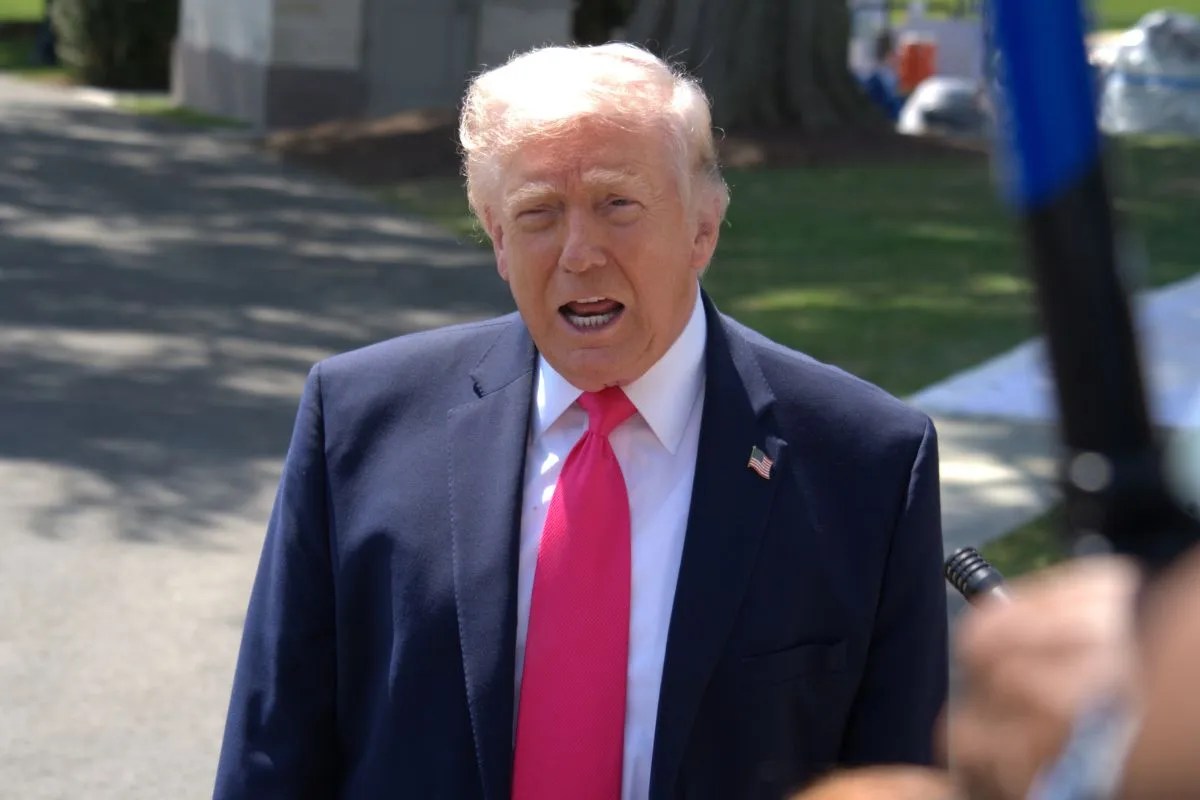
Donald Trump recently sent a shockwave through this delicate atmosphere. He claimed, with his signature brand of certainty, that Iran is ready to hand over its uranium. To give it all up. To walk away from the centrifuge halls and the heavy water dreams that have defined its international identity for a generation. Read more on a related issue: this related article.
The Atomic Ghost in the Room
To understand why this claim feels like a tectonic shift, we have to look past the spreadsheets of enriched isotopes. Think of a scientist working in the Natanz facility. For years, this individual has lived a life of shadows. They know the hum of the IR-6 centrifuges like a heartbeat. In their world, uranium isn't just an element; it’s a symbol of sovereignty. It’s the "forbidden fruit" that has kept their nation at the center of the global stage, for better and mostly for worse.
When a leader like Trump suggests a total surrender of this material, he isn't just talking about a logistics operation. He is describing a psychological collapse. Or, perhaps, a desperate pivot. Further reporting by NBC News explores comparable perspectives on this issue.
The reality of uranium enrichment is a game of percentages. Power plants need low-enriched uranium, around 3.5% to 5%. To build a weapon, you need to push that number toward 90%. Iran has been hovering in the gray zone, enriching to 60%. This is the nuclear equivalent of standing with one foot over a ledge while looking the world in the eye. It is a position of immense danger and immense power.
The Art of the Impossible Claim
Trump’s assertion came just as the world braced for a second round of high-stakes talks. His rhetoric suggests that the "maximum pressure" of his previous term, combined with the current global instability, has finally cracked the foundation. But why would a nation that has endured decades of sanctions suddenly decide to empty its pockets?
Consider the hypothetical perspective of a young Iranian entrepreneur. Let’s call her Sara. Sara runs a small tech startup in Tehran. She is brilliant, fluent in three languages, and hasn’t been able to update her software or import necessary hardware for years because of banking restrictions. For Sara, the uranium in those underground bunkers is a wall. If that uranium leaves, the wall might crumble.
But the "if" is doing a lot of heavy lifting.
History tells us that nations rarely give up their ultimate insurance policy for nothing. When Libya’s Muammar Gaddafi handed over his nuclear program in 2003, the world cheered. A few years later, his story ended in a drainage pipe. That image is burned into the retinas of every strategist in the Middle East. It creates a paradox: the very thing that makes you a target is often the only thing you believe keeps you safe.
The Invisible Stakes of 60 Percent
When we talk about Iran "handing over" uranium, we are talking about tons of material. This isn't a briefcase of glowing rocks. It is a massive, complex chemical and physical inventory.
The technical reality is even more jarring. If Iran were to ship its 60% enriched stockpile to a third party—say, Russia or a neutral European hub—it would effectively reset the "breakout clock." This clock measures how long it would take to produce enough weapons-grade material for a single bomb. Right now, that clock is measured in days or weeks. If the stockpile leaves, the clock resets to months or years.
[Image of the nuclear fuel cycle]
This is the "human element" that often gets lost in the news cycle. A reset clock means a father in Tel Aviv sleeps a little better. It means a mother in Isfahan doesn't worry about a pre-emptive strike hitting a facility near her home. The stakes aren't just diplomatic; they are biological.
The Trump Factor
Trump’s claim operates on a specific frequency. He isn't interested in the slow, grinding work of the International Atomic Energy Agency (IAEA) inspectors who spend their days peering into cameras and checking seals. He is interested in the "Grand Bargain."
His narrative suggests that the Iranian leadership is exhausted. And in some ways, they are. The economy is a bruised, battered thing. Inflation has turned life savings into pocket change. The "Invisible Stakes" here are the survival of a regime versus the survival of a people.
But there is a disconnect between a candidate's claim and a diplomat's reality. To "give up" uranium is to admit that the last twenty years of sacrifice—the assassinations of scientists, the cyber-attacks like Stuxnet, the crippling poverty—was for a chip that was eventually traded away. That is a hard pill to swallow for a government built on the rhetoric of resistance.
The Mechanics of a Potential Handover
If this were to happen, how would it look? It wouldn't be a surrender. It would be framed as a "Technical Exchange."
- The Inventory: Every gram would be measured. The 60% material would likely be converted into a form that is harder to enrich further, or shipped out under heavy guard.
- The Verification: IAEA inspectors would need unfettered access, something they haven't had in a long time. They are the detectives in this story, looking for the ghost of a missing gram of U-235.
- The Quid Pro Quo: This is where the narrative hits the ground. Iran wouldn't do this for a handshake. They would want the "Big Bang" of sanctions relief. They want to be able to sell oil in dollars again. They want Sara to be able to buy her servers.
The friction lies in trust. Trust is a dead language in this region. The U.S. remembers the 1979 embassy crisis; Iran remembers the 1953 coup and the 2018 withdrawal from the JCPOA. When Trump says they are "ready to give it up," he is betting that their hunger for economic survival has finally outweighed their memory of betrayal.
The Silence Between the Headlines
As the second round of talks approaches, the world is holding its breath. It is a strange, quiet tension. You can find it in the markets of Dubai, where traders wonder if the oil lanes will remain open. You can find it in the halls of the Pentagon, where maps are marked with the locations of Fordow and Natanz.
We often think of nuclear diplomacy as a chess match. But in chess, the pieces don't feel pain. In this story, the pieces are millions of people whose futures are tied to the purity of a heavy metal.
If the uranium is handed over, it will be the most significant de-escalation of the 21st century. It would mean that diplomacy, however fractured and loud, found a way to bridge an impossible gap. If it is a bluff, or a misunderstanding of the Iranian psyche, then the path forward leads into a dark, narrow canyon where the only options are escalation or catastrophe.
The truth probably lies in the middle. Iran might be willing to "park" its material, to move it just far enough away to get the boots off its neck, while keeping the knowledge of how to make it tucked safely in the minds of its scientists. You can ship away the atoms, but you cannot ship away the expertise.
The sun sets over the Alborz mountains, casting long shadows across Tehran. Somewhere, a technician is logging a final reading for the day. Somewhere else, a politician is preparing a speech that will either set the world at ease or set it on fire.
We are all just spectators to a conversation happening in rooms we will never enter. We watch the flickering lights of the headlines, trying to read the code. Is the uranium moving? Is the deal real? Or are we just listening to the echoes of a master salesman pitching the ultimate closing act?
The answer isn't in the claim. It’s in the silence that follows. It's in the way the world waits for the next move, knowing that in this game, there are no small mistakes. Only history.



