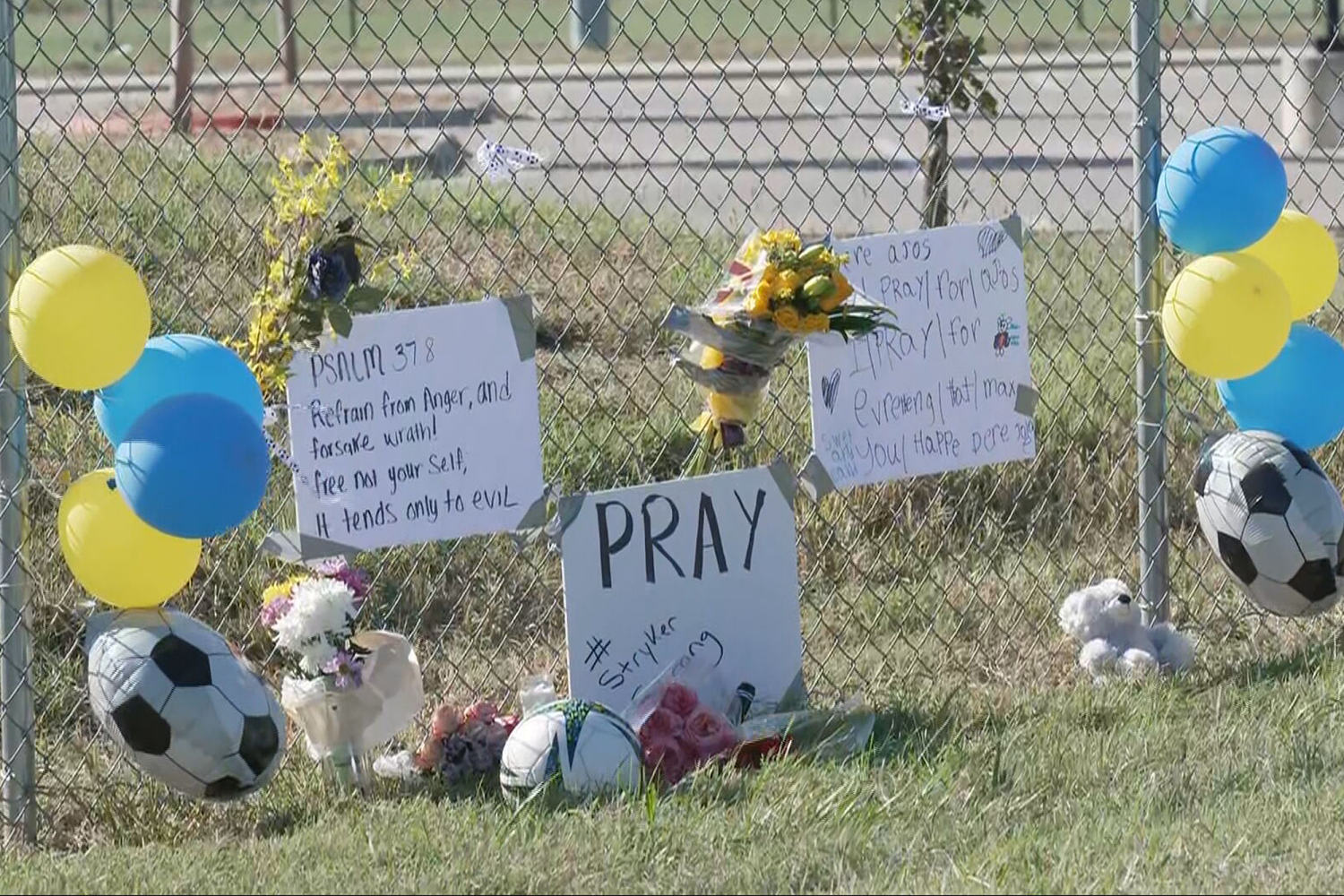
Two people died on a Saturday afternoon at Wichita's Stryker Sports Complex. Ten more were hurt. For more than thirty eyewitnesses who watched a pickup truck roll across a curb and tear into a youth soccer game on October 17, 2026, the sheer speed and improbability of the crash felt surreal. Almost a month later, Sedgwick County District Attorney Marc Bennett announced there would be no criminal charges against the driver.
To people standing on the sidelines that day, that decision can sound maddening. A six-year-old boy from McPherson named Cole Adrian and a 35-year-old Navy veteran and father from McPherson named Nicholas Schafer were killed. Five children and five adults suffered injuries ranging from minor to hospital-worthy, with victims aged five to 68. When a heavy truck hits a crowded field, people expect a villain, a drunk driver, a mechanical defect, or an unmistakable act of recklessness.
Here, investigators found none of those things. And that gap—between the horror witnesses saw and the narrow legal standard for criminal culpability—is what makes this case so hard to process.
What Witnesses Saw and What the Investigation Found
When you've spent years around youth sports complexes, you get used to certain rhythms: folding chairs, coolers, referees blowing whistles, parents yelling encouragement from the touchline. Nothing prepares a crowd for a 2021 Chevrolet Silverado moving where trucks aren't supposed to be.
According to the district attorney's 28-page report and news conference remarks, the driver had left Garden City around 7 a.m. that morning—a roughly 200-mile trip—driving her husband's pickup to Wichita for her children's soccer games. After spending hours at Stryker Sports Complex, running out for two fast-food stops and an errand, and returning, she pulled into a parking stall facing a field around 2:36 p.m. She told detectives she believed she put the truck in park, reclined her seat to nap because she was exhausted, and let a child put sunshades up over the windshield.
At 3:22 p.m., the truck went over the curb and onto the field.
Bystanders who reached the vehicle right away described the driver as sleepy, disoriented, and sobbing, repeating that she didn't know what had happened and asking what she had done. Witnesses who observed her near the scene noted she didn't appear intoxicated and cooperated with police. Toxicology tests backed that up, showing no evidence of impairing drugs or alcohol. Meanwhile, General Motors technicians inspected the Silverado and found no mechanical malfunction or system failure.
Investigators couldn't pinpoint the exact sequence of how the truck ended up in gear while she slept. Still, Wichita Police Chief Joe Sullivan emphasized that detectives interviewed more than 30 witnesses and refused to fill evidentiary gaps with guesses or speculation.
Why Prosecutors Ruled Out Criminal Charges
Honestly, when people hear "no charges filed" after a fatal crash, they often assume prosecutors took the easy way out. Usually, the reality is much drier and much stricter.
In criminal law, causing a death doesn't automatically equal a crime. To bring a charge like involuntary manslaughter or reckless homicide, prosecutors generally need proof beyond a reasonable doubt of a specific mental state—such as criminal negligence or a conscious disregard of a substantial and unjustifiable risk.
Bennett laid out that exact distinction bluntly. Thinking a truck is in park and lying back to take a nap in a parking stall—even with kids in the vehicle—isn't the same thing as consciously disregarding a massive, obvious danger to spectators on a field. If a sleeping person somehow knocks a shifter or triggers movement inadvertently without prior reckless conduct, Bennett argued there is no criminal intent or culpable mental state under Kansas law to sustain a prosecution.
That's a tough pill to swallow when two people are dead. A mistake with devastating consequences still feels, in everyday moral terms, like someone ought to pay. Yet criminal courts aren't designed around moral outrage alone; they're bound by statutory elements and evidentiary proof.
The Difference Between Criminal Guilt and Civil Liability
One mistake people frequently make after high-profile tragedies is treating a prosecutor's charging decision as the final word on accountability. It isn't.
Criminal prosecution is brought by the state to punish an offense against the public, requiring proof beyond a reasonable doubt. Civil litigation is brought by injured individuals or grieving families to seek compensation for wrongful death or personal injury, usually under a lower "preponderance of the evidence" standard.
Bennett explicitly noted that the matter could still be pursued in civil court. Even without criminal charges, civil claims can examine whether reasonable care was exercised, how a stationary vehicle came into motion, and what insurance coverage applies. That distinction doesn't bring back a six-year-old boy or a Navy veteran father, nor does it erase what witnesses watched unfold on the grass. It simply means legal accountability doesn't end the moment a district attorney closes a criminal file.
What Sideline Safety and Witness Trauma Actually Look Like
Public complexes like Stryker Sports Complex are built for high volume: hundreds of kids, parents, siblings, coaches, and spectators moving between parking lots and fields all weekend. Most of the time, low curbs and open sightlines feel convenient.
When a vehicle crosses from a parking stall onto an active field, those same open layouts offer almost no physical barrier. Low curbs are meant to nudge tires, not stop a multi-ton pickup if something goes wrong. At the same time, putting heavy bollards around every perimeter edge of a massive sports complex creates its own trade-offs—cost, maintenance, emergency vehicle access, and impact hazards if someone hits a post directly. There's no magic, cost-free fix that makes outdoor sports complexes completely immune to stray vehicles.
What gets overlooked just as often is the aftermath for bystanders. Eyewitnesses to sudden, violent events—especially involving young children—can experience acute stress, intrusive memories, sleep trouble, or guilt over not being able to stop what happened. You don't have to be physically injured to be rattled for weeks.
Practical Steps After a Traumatic Sideline Event
If you or someone in your family ever witnesses a sudden emergency or crash at a youth event, a few practical steps can help you get through the immediate shock and the days that follow:
- Give police accurate, unembellished facts: Stick strictly to what you directly saw or heard, and don't guess about cause or intent.
- Watch for delayed stress reactions: Trouble sleeping, replay loops in your head, irritability, or feeling numb over the next few weeks are common stress responses; talk with a healthcare professional or counselor if those symptoms linger or disrupt daily life.
- Support kids without forcing details: Let children ask questions at their own pace, keep routines steady, and watch for changes in sleep, play, or school behavior.
- Check venue safety practices: If you organize or attend youth tournaments, pay attention to parking lot flow, speed discipline near walkways, and emergency access lanes—and speak up constructively with facility managers when hazards stand out.
Mystery Surrounds Deadly Vehicle Crash at Youth Soccer Game provides visual context on the Wichita incident and the community reaction surrounding the crash.



