The coffee in the breakroom at the Belfast facility was always slightly too bitter, but at six in the morning, nobody cared. Arthur wrapped his calloused hands around the ceramic mug, listening to the low, rhythmic hum of the assembly floor below. For thirty-two years, Arthur had fit titanium fasteners into wings that would eventually carry strangers across oceans. To him, an aircraft wasn't a spreadsheet or a political bargaining chip. It was a promise. A promise that thousands of pieces of metal, engineered to the thousandth inch, could defy gravity and bring a father home to his daughter.
Then came the threat from across the Atlantic.
A sudden, sharp announcement echoing through the television screens on the wall transformed his quiet morning into a waiting game of anxiety. Donald Trump, eyeing the aerospace chess board, took direct aim at Bombardier, the Canadian aviation giant. The rhetoric was fierce, painting the company as an unfair player subsidized by foreign governments, dumping cheap planes onto the American market.
Arthur didn't know much about trade tariffs. He knew about rivets. He knew about the smell of aviation fuel and the precise torque required to secure a wing spar. But he understood enough to realize that the wings he built weren't just Canadian. They were American, too.
That is the great paradox of modern manufacturing that politicians rarely admit in a soundbite. We have spent half a century weaving an industrial web so tight, so intricate, that when you pull a single thread in Montreal or Belfast, a shockwave rattles the floorboards of Wichita and Seattle.
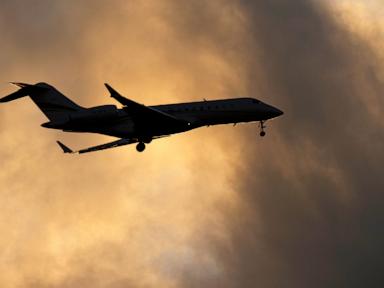
Consider the anatomy of a modern commercial airliner. It is not born in a single nation. It is a mosaic of global labor, a testament to what happens when borders become less important than shared engineering brilliance. When Bombardier set out to build its C Series—later rebranded as the Airbus A220—they did not build it in a vacuum.
Let us look at the footprint. On paper, Bombardier is proudly Canadian, headquartered in the crisp air of Quebec. Yet, if you trace the supply chain with a red pen, you quickly discover that a massive chunk of the aircraft's lifeblood pumps straight through the veins of the United States. Pratt & Whitney, an American icon based in Connecticut, builds the engines that scream to life on the runway. Honeywell provides critical avionics from states like Arizona. Parker Hannifin supplies flight control systems engineered by workers in Ohio.
Thousands of American jobs depend on the success of this supposedly foreign jetmaker. When a threat lands on Bombardier, it is not just a Canadian headache. It is an American migraine.
Arthur’s cousin, a machinist named Marcus who lived outside Wichita, knew this reality intimately. Marcus spent his days machining engine components that would eventually find their way onto the very same aircraft lines that Washington politicians were threatening to penalize with crushing tariffs. When Marcus heard the news reports about looming duties and trade wars, he didn't cheer for protectionism. He looked at his mortgage, looked at his teenage son's college fund, and felt a cold knot form in his stomach.
Protectionism sounds noble in a speech. It paints a picture of reclaiming past glories, of hammering steel on domestic soil exclusively for domestic hands. But the logistics of twenty-first-century industry have evolved past the simple logic of flags. You cannot easily un-invent a global supply chain without breaking the machine entirely.
The conflict began in earnest when Boeing, the American aerospace titan, filed a petition with the U.S. Department of Commerce. Boeing argued that Bombardier was selling its C Series jets to Delta Air Lines at absurdly low prices—well below the cost of production—thanks to massive, unfair subsidies from the Canadian provincial and federal governments. Boeing claimed it was being squeezed out of its own backyard by a foreign competitor backed by a foreign treasury.
The legal machinery ground into motion. Bureaucrats in Washington pored over thousands of pages of financial ledgers. Tariffs as high as three hundred percent were proposed. The intent was clear: protect American manufacturing jobs by pricing the intruder out of the market.
But markets are stubborn things. They do not bend easily to political willpower.
Delta Air Lines did not buy the Bombardier jets because they wanted to hurt American workers. They bought them because the aircraft filled a specific, vital operational niche. It was a narrow-body marvel, incredibly fuel-efficient, quieter than its aging predecessors, and capable of flying regional routes that larger Boeing planes couldn't service profitably. Delta needed those planes to keep regional air travel affordable and connected.
If you penalize the plane out of existence, you do not automatically force Delta to buy a Boeing alternative. Sometimes, you simply force airlines to fly older, dirtier planes longer, or you raise ticket prices for the everyday traveler. The ripple effect spreads outward, touching the vacationer in Chicago, the business traveler in Atlanta, and the line worker in Belfast.
Economics is often taught as a science of cold numbers, supply curves, and equilibrium points. But behind every data point is a human being holding a coffee mug, wondering if their skill set will still be valued tomorrow.
Arthur watched the political drama unfold over months. The headlines swung wildly from day to day. One morning, it looked like a full-scale trade war was inevitable. The next, a plot twist emerged that nobody in Washington's inner circles had fully anticipated.
Airbus, the European aerospace colossus, stepped into the fray. Sensing vulnerability and recognizing the undeniable brilliance of the C Series design, Airbus struck a deal to acquire a majority stake in the program. Suddenly, the Canadian jet was going to be assembled not just in Mirabel, but also in Mobile, Alabama.
Let that sink in.
An aircraft targeted by American politicians for being unfairly subsidized was suddenly going to be built by American workers on American soil in the heart of the American South.
The irony was thick enough to cut with a milling machine. Hundreds of new manufacturing jobs were planted in Alabama. Local workers who had never set foot in Canada were suddenly bolting together the very fuselage panels that had sparked an international trade war.
The geopolitical chessboard shifted overnight. How do you slap a punitive tariff on an airplane built by American hands in Alabama using engines built in Connecticut? You can try, but the logic begins to unravel upon inspection.
Arthur felt a strange mix of relief and lingering unease when he heard the news about the Alabama facility. Relief, because it proved that the plane was too good to kill, too vital to the future of aviation to be legislated out of existence. Unease, because he knew that political winds change faster than weather patterns over the Atlantic.
What we often forget in the theater of trade disputes is that innovation does not respect national boundaries. Ideas travel faster than shipping containers. A brilliant engineer in Montreal collaborates with a software designer in Seattle and a metallurgist in Sheffield. They are part of an invisible community bound together by physics, mathematics, and the shared ambition of human flight.
When politicians draw lines in the sand, they are attempting to freeze a fluid world into rigid shapes. They want simple narratives: us versus them, domestic versus foreign, victory versus defeat. But reality refuses to cooperate with those tidy categories.
Consider what happens when a trade barrier goes up. It is rarely a surgical strike. It is a blunt instrument that crushes everything in its radius. A tariff meant to punish a corporate boardroom ends up squeezing the supplier in a small town who employs twenty people. It forces a regional airline to delay fleet modernization. It drives up the cost of a ticket for a grandmother trying to visit her newborn grandchild across the country.
The threat against Bombardier was a stark reminder of our fragile interdependence. We have built a world where prosperity is a collective endeavor, yet our political language remains stuck in an era of isolated fortresses.
Back on the assembly floor, the shift change siren sounded. The sharp, metallic blare cut through the air, signaling the arrival of the afternoon crew. Marcus was already stepping up the metal stairs, his safety glasses tucked into his pocket, nodding to Arthur as they crossed paths.
They didn't talk about trade deficits or presidential speeches. They talked about tolerances, alignment, and the new batch of wing ribs that had just cleared quality control. They focused on what they could control: the precision of their hands, the integrity of their work, and the silent trust they placed in one another across thousands of miles of ocean.
The planes they built would eventually leave the hangar, rolling down the tarmac into the blinding sun, lifting off into the blue. They would carry millions of people to places they had never been, bridging divides that politics spent so much energy widening.
The threats would come and go. Politicians would posture, headlines would scream, and tariffs would rise and fall like the tide. But the metal remembers. The engineering endures. And high above the noise of the trade wars, the wings keep cutting through the sky, carrying the weight of a world that cannot afford to pull itself apart.