Good news on climate headlines can feel like a warm cup of tea on a cold morning. You read that global deforestation fell in 2025, take a quiet breath, and let your shoulders drop an inch. For a few seconds, the math looks almost merciful.
Then you look closer.
Dropped.
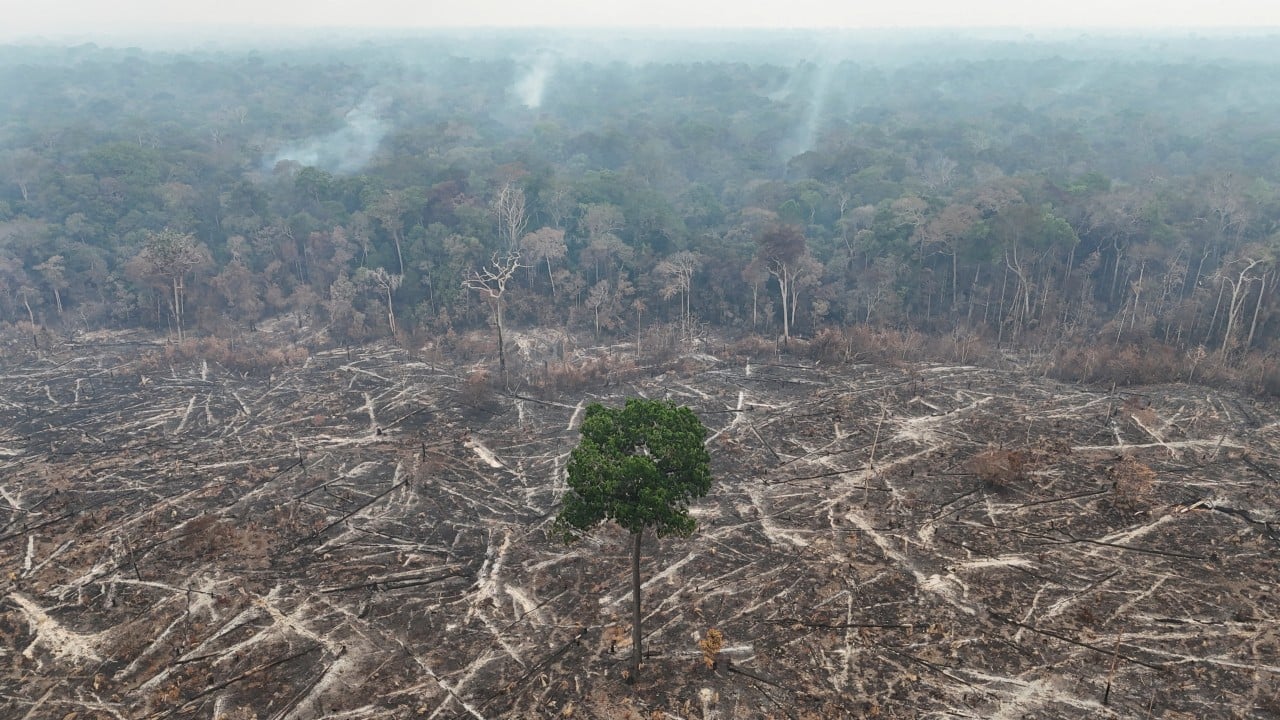
The global total went down in 2025, easing off the record highs that rattled scientists and policymakers in recent years, yet the Congo Basin saw forest losses surge in a way that should make anyone paying attention sit straight up in their chair. When the world’s largest tropical rainforest belt—the second-largest on Earth after the Amazon—starts bleeding faster just as global averages look calmer, celebration is premature. It is like cheering that a house fire is smaller overall while the flames leap into the load-bearing timber of the living room.
I have spent years standing at edges where green walls meet raw red earth, listening to cicadas drown out human voices before dawn and watching morning mist rise off wet leaves like steam off a kettle. You learn quickly in humid forest air that numbers on a screen flatten everything that makes a place real. A hectare is a neat rectangle on a spreadsheet. On the ground, it is a tangle of lianas, a patch of cool shade where a mother can rest her basket, a tree whose roots hold the hillside together when the afternoon downpour hits.
Sometimes I wonder if we have become too addicted to tidy summaries. A single global dip gives comfort fast, and comfort is a strong drug when the news usually brings dread. Still, comfort can blind us to where the pressure is shifting. While some regions slowed their clearing in 2025, central Africa’s vast green heart absorbed a sharp jump in losses, exposing how uneven our progress really is and how easy it is to mistake a statistical pause for a turning point.
The Illusion of a Quiet Year
Numbers have a way of smoothing over jagged truths. When reports show global deforestation dropping in 2025 compared to the scorching spikes of 2023 and 2024, the headline writes itself: progress. Markets react, speeches get drafted, and people who care about the planet look for signs that decades of warnings are finally taking hold.
Yet global averages work like averages anywhere else. If your bank account has a sudden windfall in one currency while another account drains quietly in the background, the combined total might look steadier than the reality underneath. In 2025, declines in forest loss in several prominent hotspots helped pull the global tally down, even as clearing accelerated across the Congo Basin.
Consider what happens next: we start judging the health of Earth’s lungs by a single blended score instead of checking each chamber. A rainforest is not a generic commodity pool where a saved acre in one continent cancels out a lost acre in another. The Amazon, Southeast Asia, and the Congo Basin each carry distinct weather patterns, carbon stores, and biodiversity that cannot be swapped out like spare parts.
Let me use a metaphor here—a deliberate one, so we do not confuse poetry with measurement. Think of the global forest system as a grand old orchestra where different sections carry different melodies. If the brass quiets down slightly while the percussion starts pounding twice as hard, the overall volume might stay in a familiar range, yet the music has changed into something harsher and more urgent.
Even as a seasoned observer of environmental reporting, I find myself tripped up by how confusing these shifts can be. One year a country posts steep reductions after policy crackdowns or shifts in rainfall and fire; the next year, economic pressures or new roads push clearings upward somewhere else. It is exhausting to keep recalibrating our hope. Anyone who feels whiplash from reading climate updates has every right to feel tired.
Beneath the Canopy of the Congo Basin
To understand why a surge in the Congo Basin hits so hard, you have to picture what is actually under that green roof. Spanning countries like the Democratic Republic of the Congo, the Republic of the Congo, Cameroon, Gabon, the Central African Republic, and Equatorial Guinea, this basin holds immense stores of carbon—both in towering hardwood trees and in vast peatlands locked beneath waterlogged soil.
To ground this in human reality, let me introduce a hypothetical character—someone invented to stand in for real people living along these forest margins, not a real person with a named biography. Call her Maman Henriette, a woman living near a secondary road in Equateur province in the Democratic Republic of the Congo.
For Henriette, the forest is not an abstract carbon sink discussed in air-conditioned conference rooms thousands of miles away. It is where she gathers firewood before the sun gets too high, where wild yams and forest greens supplement cassava when prices spike, and where the air feels ten degrees cooler than the open clearing. Her morning begins with the slap of bare feet or worn sandals on damp red clay, the smell of woodsmoke curling from neighboring huts, and the heavy, rhythmic thud of a machete or axe in the distance.
Why did clearing pick up in places like hers during 2025? There is rarely just one villain in these stories. Rapid population growth, rural poverty, limited access to reliable electricity or affordable alternatives to charcoal, and the steady push of small-scale farming and access tracks all press against the tree line. When a family needs food today or cash to pay for medicine and school fees, distant climate targets feel very far away.
At the same time, larger forces also tug at the edges of the basin—infrastructure projects, timber and mining interests, and shifting trade demands. Often, a new track or road opens up forest that used to be too remote to reach easily, and once access arrives, small clearings multiply along the corridor like sparks catching dry grass.
Why Small Axes Add Up to Giant Shifts
Here is a detail that surprises people who picture deforestation strictly as giant bulldozers mowing down thousands of acres in a single afternoon: in much of the Congo Basin, a huge share of forest loss happens through smaller, scattered clearings that nibble at the forest edge and slowly chew through the interior.
Think of it like water dripping onto a stone step. One drop does nothing you can see. Ten thousand drops over a season carve a groove you cannot ignore.
When satellite analysts track forest loss in 2025, they pick up both big scars and thousands of smaller openings where canopy cover disappears. In the Congo Basin, those scattered clearings—driven heavily by shifting agriculture, fuelwood and charcoal demand, and local livelihoods—add up fast across an enormous landscape. Because the basin is so vast, even a jump that looks modest as a percentage can represent hundreds of thousands of hectares of lost forest in a single year.
Let’s trace another hypothetical scenario to make the math tangible—again, an illustrative model meant to clarify how incremental choices compound, not a record of a specific household. Suppose three neighboring families each clear a small plot of secondary forest to grow food for the year. Each clearing looks minor on its own. Multiply that across dozens of villages along a single stretch of river or dirt track over several seasons, and the continuous canopy breaks into fragments.
Fragmentation changes the forest’s microclimate. Edges dry out faster. Sunlight hits soil that was meant to stay shaded and cool. Dry leaves and deadwood ignite more easily if fire is used to clear brush, turning a controlled agricultural burn into something that creeps farther than intended.
And what is lost when those trees go? Not just timber, though people often fixate on wood. You lose habitat for forest elephants, bonobos, gorillas, and countless bird and insect species. You lose the sponge-like ability of intact forest to hold moisture and feed rivers and rainfall patterns across the region. And in the Congo Basin’s peatlands, draining or disturbing the ground risks releasing ancient carbon that has stayed locked away for millennia.
The Gap Between Global Pledges and Local Reality
For years, international summits have produced grand promises to halt and reverse forest loss by 2030. Targets sound crisp on paper. A date like 2030 gives speeches a neat finish line.
Yet promises do not plant crops, pave safe roads, or give a young person a steady paycheck without cutting down a tree. If global headlines celebrate a dip in overall deforestation in 2025 while the Congo Basin surges, there is a real danger that wealthier nations and global institutions will pat themselves on the back and shift attention elsewhere.
That would be a costly mistake.
We know from history how conservation efforts often stumble when they treat local communities as obstacles rather than central partners. Top-down rules that ban clearing without offering viable alternatives—like better crop yields on existing land, clean cooking energy, fair market access, and secure land rights—rarely hold for long. People have to eat. That is not a flaw in human nature; it is the most basic truth of survival.
I have to admit, there are moments when the sheer scale of the mismatch between global finance and local need feels overwhelming. Billions of dollars are talked about in climate negotiations, yet getting practical, transparent support to the people living right next to the trees often gets bogged down in red tape, intermediaries, and short-term pilot projects that vanish when funding cycles end. It is completely fair to be skeptical when big announcements arrive with lots of fanfare and little follow-through on the ground.
Still, skepticism does not have to mean giving up. It means asking sharper questions. Who actually benefits when money is pledged for forest protection? Are smallholder farmers getting tools to grow more food without expanding into primary forest? Are local voices shaping the plans, or are decisions handed down from capitals far removed from the riverbanks?
Reading the Warning Signs in the Leaves
When we look back at 2025, the lesson is not that global forest efforts are hopeless. Some places did show that coordinated action, stronger enforcement, or changing conditions can push deforestation down. That proves change is possible when the right pieces line up.
The real lesson is simpler and sharper: averages hide danger.
In Maman Henriette’s hypothetical world—and in the very real towns and villages across central Africa—the surge in forest loss during 2025 is a signal that the Congo Basin needs urgent, grounded attention right now, not after other regions look "fixed." Every year we delay real investment in sustainable livelihoods, forest governance, and climate finance that reaches the frontline, the harder and more expensive the recovery becomes.
Think back to that cool morning air under a thick canopy. Step out into the open sun at noon and you feel the difference on your skin within seconds—the heat presses down, the ground feels baked, and the shelter is gone.
Across the Congo Basin in 2025, too much of that shelter gave way. The global numbers may have dipped, offering a brief sigh of relief, yet deep in the green heart of central Africa, the canopy tore wider—and the echo of every falling tree reaches far beyond the forest edge.