A devastating double strike just changed Venezuela forever. On June 24, 2026, two massive earthquakes ripped through the north-central part of the country, happening a mere 39 seconds apart. It was a national holiday, the anniversary of the Battle of Carabobo, so families were gathered at home. Then the ground tore open.
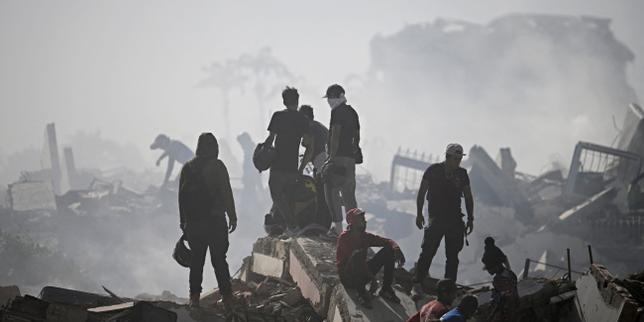
Right now, the official data says 920 people are dead. But that number hides a much darker reality. Over 50,000 human beings are currently registered as missing. The buildings that collapsed were not just old brick homes. High-rise apartment complexes in wealthy Caracas neighborhoods like Altamira and Los Palos Grandes pancaked into dust. Entire families are buried under hundreds of tons of concrete, and the local emergency infrastructure is completely overwhelmed.
If you are looking at the headlines, you are only getting half the story. The true scale of this disaster is unprecedented for modern South America.
Why the Numbers Are Ready to Explode
The official death toll of 920 is a temporary baseline. It only reflects bodies that have been recovered and processed through functioning hospitals. The United States Geological Survey uses a system called PAGER to estimate earthquake impacts. Their models show a terrifying projection. They estimate a very high probability that the final death toll will clear 10,000, and it could easily climb toward 100,000 as rescue teams dig deeper into the rubble.
Why is the missing list so long? The answer lies in how people live in Caracas and La Guaira. High-density residential towers line the valleys and coasts. When a 22-story building completely collapses, it leaves a footprint of compressed debris that requires heavy industrial machinery to clear. Right now, everyday citizens are using their bare hands. They are trying to lift shattered concrete slabs to save their neighbors.
The international community is scrambling to respond. Rescue teams from Mexico, Spain, El Salvador, and Switzerland have touched down. The Swiss Rescue Chain alone brought 80 specialists and eight search dogs. But 871 international rescuers cannot fix a disaster that spans multiple states. The logistical nightmare is just starting to unfold.
The Science Behind the Double Disaster
Seismologists call this a doublet event. It is not an earthquake followed by an aftershock. It is two distinct, massive earthquakes triggering one right after another.
The first shock registered at magnitude 7.2. It struck at 6:04 PM local time near San Felipe in the state of Yaracuy. Before anyone could process what was happening, the second shock hit 39 seconds later. This mainshock was a massive magnitude 7.5. Both occurred along the San Sebastián fault system, a highly active boundary where the Caribbean and South American tectonic plates grind past each other.
The fault ruptured across an area roughly 150 kilometers long and 20 kilometers wide. The shallow depth of the second quake—just 10 kilometers below the surface—meant that the energy did not dissipate into the earth. It slammed directly into the foundations of cities built on soft valley soils. The violent shaking was felt as far away as Bogotá, Colombia, and deep into the Brazilian Amazon, causing high-rise evacuations in cities thousands of miles from the epicenter.
A Broken Infrastructure Meets a Worst Case Scenario
You have to look at the context of Venezuela to understand why this is so bad. The country was already dealing with a severely compromised healthcare system and erratic public utilities. The earthquake instantly cut off the gas supply in Caracas to prevent widespread explosions, which was a smart move, but it left survivors without power or fuel. The Caracas Metro system is completely dark.
In La Guaira, the coastal zone just north of the capital, things are even worse. Acting President Delcy Rodríguez declared it a total disaster zone. More than 250 residential buildings have completely collapsed there. To make matters worse, the Simón Bolívar International Airport suffered heavy structural damage. Runway cracks and control tower failures meant that all initial commercial flights had to be canceled. This makes bringing in foreign medical supplies and heavy search equipment incredibly difficult.
Look at the Petunia Residences in Los Palos Grandes. It was a 20-story building. Fourteen floors simply dropped, leaving only six intact at the top like a hollow shell. People who lived on the lower floors had zero warning and zero escape routes.
How to Help Without Wasting Resources
When a disaster of this scale hits, well-meaning people often make mistakes. They want to send clothes or canned goods, but physical items get stuck in customs or clog up broken transport hubs at the damaged airport. If you want to make an actual impact, you need to focus on organizations that already have boots on the ground and established supply chains.
- Support the humanitarian campaigns: The International Federation of Red Cross and Red Crescent Societies along with Swiss Solidarity have launched targeted fundraising campaigns specifically for this crisis. Cash donations allow teams on the ground to buy fuel, clean water, and medical supplies locally or from neighboring Colombia.
- Trust the specialized agencies: Organizations like World Vision are actively operating inside Venezuela right now. They are focusing on immediate child protection, temporary shelter setups, and clean water distribution in communities outside the capital that the media is ignoring.
- Demand transparency: Keep the pressure on global networks to monitor how international aid is distributed. Venezuela's complex political environment means aid corridors must remain neutral so that supplies reach the citizens digging through the dirt in La Guaira, rather than getting caught in bureaucratic red tape.
The window for finding survivors inside air pockets is closing rapidly. Every hour counts, and the coming days will reveal the true, heartbreaking scale of what happened along the San Sebastián fault.