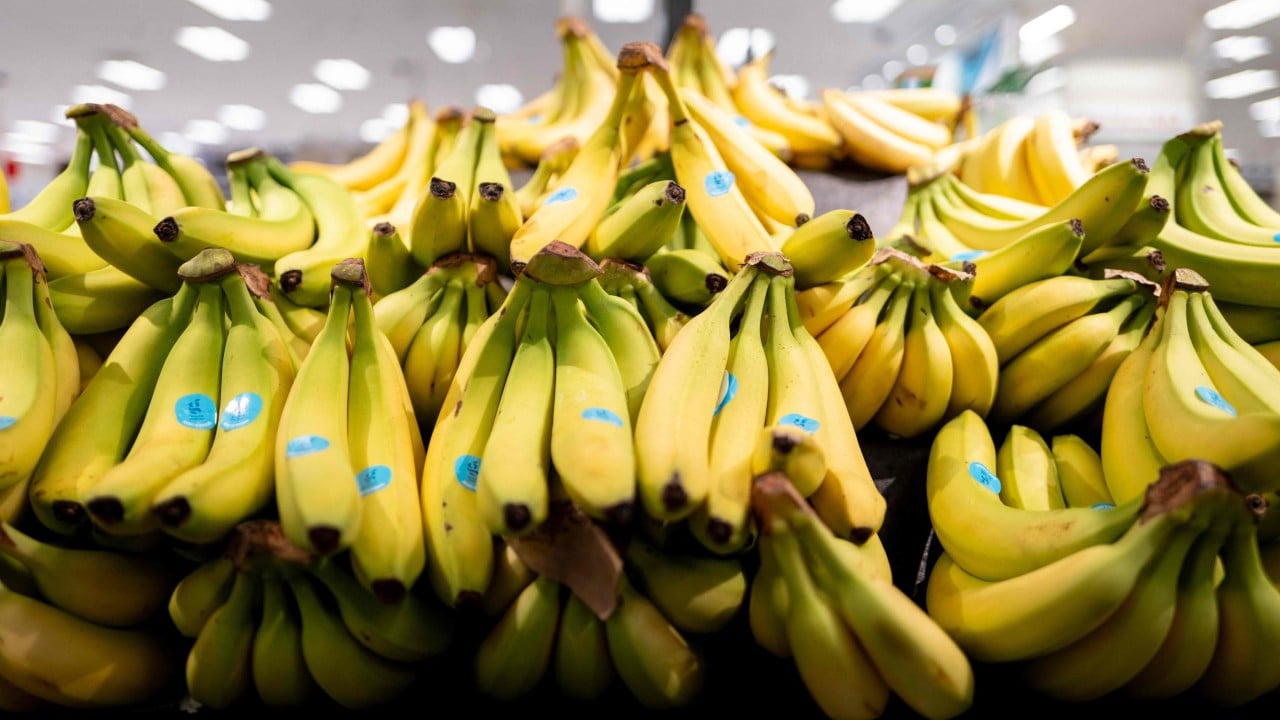
Breakfast in Tokyo is an exercise in quiet ritual. In millions of tight high-rise kitchens, the morning soundtrack is identical: the click of a rice cooker lid opening, the rustle of a newspaper, and the sharp, satisfying snap of a banana being peeled.
It is the most consumed fruit in Japan. It transcends demographics. Salarymen grab one before sprinting to the Yamanote line, toddlers mash them into plastic bowls, and the elderly rely on them as a soft, nutrient-dense staple. Japan imports roughly one million tons of bananas every single year. Nearly all of them arrive exactly the same way. Green. Hard. Completely inedible.
To turn those starchy, green wedges into the uniform, golden fruit that lines convenience store shelves requires a delicate, industrial choreography. It requires a chemical whisperer.
Right now, that whisperer is running out.
Beneath the surface of Japan’s immaculate supply chains, a quiet panic is brewing over a sudden shortage of ethylene gas. Without it, the nation's favorite fruit cannot wake up.
Consider a man named Kenji. He represents the dozens of specialized ripening technicians working in the temperature-controlled warehouses near the ports of Yokohama and Kobe. Kenji does not grow fruit. He does not ship it. His entire professional existence is defined by timing.
When a massive container ship arrives from the Philippines or Ecuador, the bananas are rushed into airtight processing rooms. If you walked into one of these rooms, you would see thousands of crates of vibrant green fruit, completely dormant. Left to themselves in a cold room, they would eventually rot without ever turning sweet.
Kenji’s job is to trigger the metamorphosis. He seals the heavy vault doors and releases a precise, metered dose of ethylene into the air.
Ethylene is a naturally occurring plant hormone, a simple hydrocarbon gas that fruits use to communicate with one another. In nature, when one fruit ripens, it breathes out a tiny puff of ethylene, signaling its neighbors to do the same. In the industrial supply chain, we mimic this natural conversation using synthetic ethylene, derived primarily from petrochemical processing.
For twenty-four hours, the green bananas bathe in this invisible mist. The gas binds to the fruit’s receptors, triggering a cascade of biological alarms. Enzymes awaken. They aggressively dismantle the complex starches inside the pulp, converting them into fructose and glucose. Chlorophyll in the peel breaks down, revealing the bright carotenoid pigments beneath.
It is a violent, beautiful transformation compressed into a matter of days. Kenji monitors the humidity, the temperature, and the gas concentrations with the obsessiveness of an ICU nurse. A degree too warm, and the fruit turns to mush. A day too late, and the supermarkets face empty shelves.
But over the last few weeks, the valves in these ripening rooms have begun to sputter.
The global petrochemical supply chain is experiencing a severe bottleneck. Ethylene production is deeply intertwined with the processing of crude oil and natural gas. When major refineries undergo unexpected maintenance, or when geopolitical tensions disrupt shipping lanes, the shockwaves travel down highly specific, unexpected avenues. A crisis in heavy industry suddenly manifests as a missing breakfast ingredient in Osaka.
The math facing Japanese distributors is brutal. The domestic inventory of ethylene has plummeted to critical levels.
Imagine the logistical nightmare this creates. Bananas are highly perishable. They cannot be stored indefinitely in their green state; eventually, the cold storage units will run out of space as new ships arrive. Yet, if distributors ship the fruit to stores without the ethylene treatment, consumers will be greeted by wooden, bitter, unpeelable green logs.
Supermarket executives are already holding emergency meetings. The phrase "disappearance from dining tables" is no longer hyperbole; it is a live projection.
If you ask the average shopper where their food comes from, they will name a country or a farm. They might point to the Philippines on a map. They understand the visible infrastructure—the giant container ships, the white refrigerated trucks, the grocery store displays.
But we rarely think about the chemical infrastructure. We are blind to the invisible gases, the precise temperatures, and the industrial alchemy that allows a tropical fruit to thrive in a temperate, urban archipelago.
The shortage highlights a profound vulnerability in how modern societies feed themselves. Japan relies on imports for roughly sixty percent of its caloric intake based on food self-sufficiency ratios. This makes the country uniquely sensitive to the micro-fractures of global trade. When a obscure chemical component falters, the entire facade of abundance begins to crack.
But the real problem lies elsewhere. It is the psychological weight of the missing familiar.
During times of economic uncertainty, humans cling desperately to predictable routines. The affordable, perfectly ripe banana is an anchor. It is the cheapest item in the produce section, a reliable constant in a world where the cost of living keeps climbing. When the anchors start vanishing, the collective anxiety of a neighborhood rises.
Kenji stands in his Yokohama warehouse, looking at a gauge that is ticking steadily toward empty. He can adjust the thermostats. He can try to conserve his remaining gas cylinders by stretching the ripening cycles, forcing the bananas to turn yellow over six days instead of four. But these are temporary patches on a dam that is bursting.
If the petrochemical refineries do not stabilize their output soon, the ripening rooms will fall completely silent. The green vaults will stay green.
Tomorrow morning, millions of people across Japan will reach for that familiar yellow fruit, unaware of the frantic, invisible struggle occurring at the docks. They take the sweetness for granted. They don't see the technicians, the sealed vaults, or the dying hiss of the ethylene valves.
They will only notice when the silence reaches the kitchen, and the morning snap is gone.