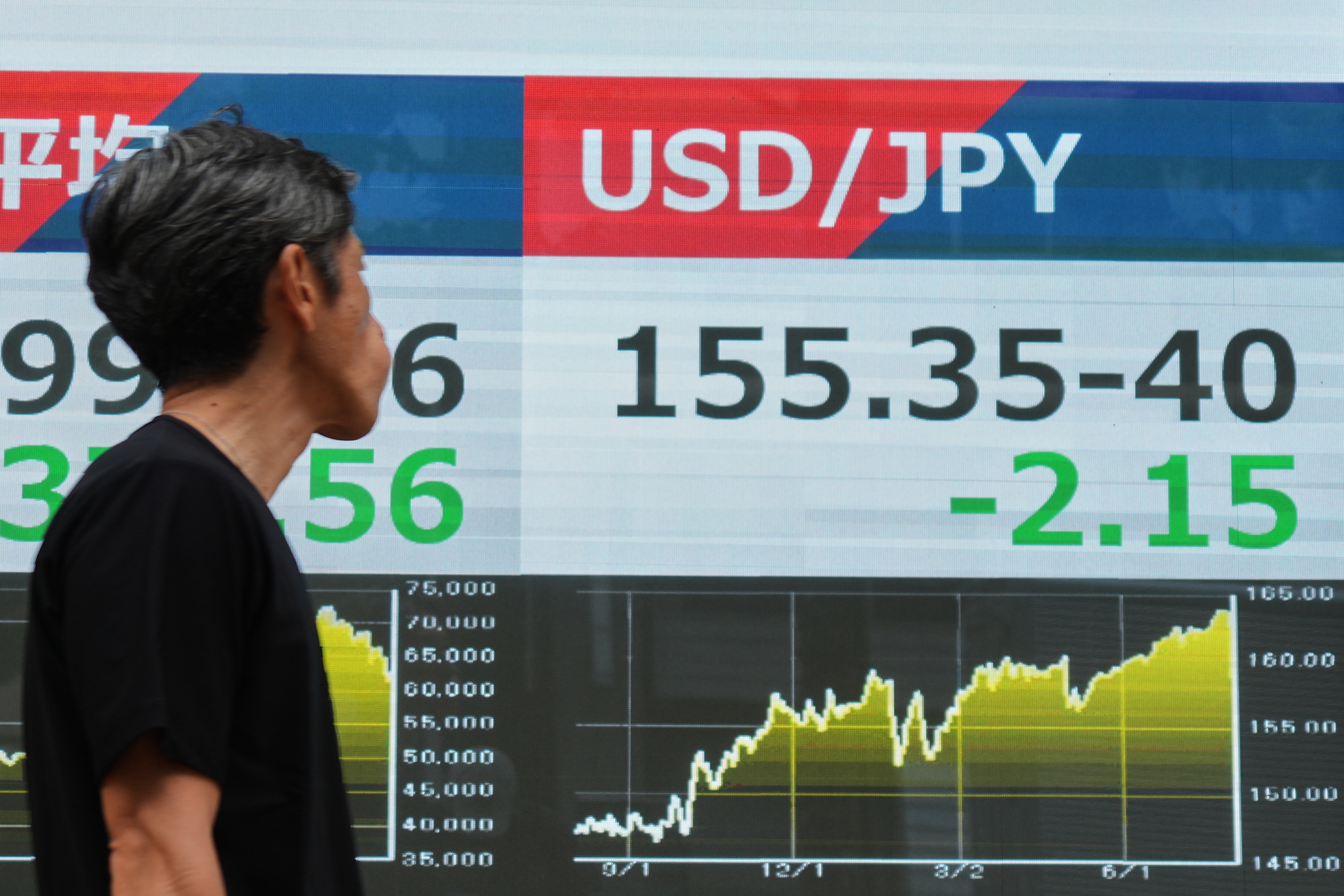
Wall Street loves a good panic. Give the financial media a sudden currency swing, a red arrow, and a murmur about central bank interventions, and they instantly reach for the panic button. The narrative writes itself: the mighty greenback is finally crumbling under its own weight, crushed by Ministry of Finance bureaucrats dropping billions of yen into the open market to rescue a battered currency.
It is a clean story. It is also completely wrong.
I have watched traders chase shadows for decades. I have seen institutional desks blow millions trying to time the bottom of an engineered bounce while ignoring the structural gravity keeping the U.S. dollar pinned to the top of the financial food chain. When the financial press hyperventilates about the dollar weakening sharply against the Japanese yen after a round of market interventions, they are looking at the ripples while missing the tectonic plates shifting beneath their feet.
Let us strip away the headlines and look at what is actually happening.
The Intervention Delusion
Every time Tokyo decides to prop up the yen by selling U.S. Treasuries and buying its own currency, retail traders treat it like the fall of Rome. They see a massive price drop on the chart and assume a structural regime change is underway.
That assumption ignores basic mechanics.
Intervention is a headline event, not a macroeconomic pivot. When a central bank steps in to defend a currency against market forces, it is fighting gravity with a squirt gun. The interest rate differential between the Federal Reserve and the Bank of Japan remains wide enough to drive a cargo ship through. Japanese government bonds yield next to nothing. U.S. short-term paper pays a real, functional return. As long as global capital demands yield, hot money will flow right back out of yen-denominated assets the moment the ink dries on the intervention paperwork.
I have sat on trading floors during these exact flash-crashes. The smart money does not panic; the smart money waits for the artificial spike to exhaust itself, watches the liquidity dry up, and then buys the dollar back at a discount. The intervention does not alter the fundamental architecture of global trade; it merely offers a temporary clearance sale for institutional buyers.
Why the Weakness is a Mirage
To understand why the recent slide in the greenback is an illusion, you have to look past the spot rate and examine global liquidity plumbing.
The U.S. dollar is not just a currency you use to buy coffee in Manhattan or pay rent in Chicago. It is the collateral standard of the entire planet. Overwhelming percentages of global debt, cross-border loans, and trade invoicing are denominated in dollars. When emerging markets need to secure commodities, they do not trade in yen or euros; they trade in greenbacks.
When people talk about the dollar weakening, they usually point to the DXY index. But the DXY is a flawed scorecard. It measures the dollar against a basket of currencies dominated by the euro—an economic bloc burdened by sclerotic growth, structural energy disadvantages, and fractured political governance. Measuring the dollar against the euro or the yen to gauge its fundamental health is like judging the health of a heavyweight fighter by comparing his height to a couple of middleweights.
The real structural strength of the dollar lies in American capital markets. They are deep, liquid, and protected by an unmatched legal framework. When global risk spikes, capital does not flee to Tokyo; it sprints toward U.S. Treasury securities. The yen remains a funding currency for the carry trade precisely because investors trust that they can exit Japanese assets quickly, but they ultimately park their true wealth where safety and depth reside.
The Carry Trade Trap
For years, the macroeconomic consensus treated the yen carry trade as a permanent fixture of financial engineering. Investors would borrow cheap yen, convert them into higher-yielding dollars or emerging market assets, and pocket the spread.
When the Bank of Japan tweaks its yield curve control or hints at normalization, the financial media screams that the carry trade is dead. Traders panic-liquidate their positions, driving the sudden spike in the yen that dominates the news cycle.
Here is the brutal truth that nobody on television wants to admit: the carry trade never truly dies; it just mutates.
Imagine a scenario where a major hedge fund unwinds a multi-billion-dollar yen short position because an intervention hits the wires. The immediate price action looks dramatic. The yen surges; the dollar dips. But look at the underlying balance sheet twenty-four hours later. The structural yield gap has not vanished. Japanese institutional investors—pension funds, insurance giants, life offices—still need to generate returns to pay aging populations. They cannot achieve those returns domestically. The moment the intervention dust settles and volatility drops, those exact same funds quietly creep back into foreign assets, re-establishing their exposure at a better entry price.
The intervention creates a momentary vacuum, and liquidity rushes right back in to fill it.
Dismantling the Popular Myths
Let us address the questions everyone is asking, starting with the premise that is fundamentally flawed from the jump.
- "Is the U.S. dollar losing its reserve currency status?"
No. The data does not support it. Despite endless columns written about de-dollarization and bilateral trade agreements bypassing SWIFT, global central bank reserves remain overwhelmingly anchored in dollars. Share of foreign exchange reserves, invoice currencies, and cross-border bank claims have barely budged over the last decade. Until another nation builds a debt market as deep, liquid, and transparent as the U.S. Treasury market—complete with a rule of law that foreign investors actually trust—the dollar's throne is secure.
- "Should investors dump dollars and buy yen after an intervention?"
Only if you enjoy lighting your portfolio on fire for the sake of tactical adrenaline. Playing against the structural interest rate trend because a central bank artificially moved a price for three trading sessions is a great way to fund someone else's yacht.
What You Should Do Instead
Stop reacting to headline noise and start respecting structural momentum.
When you see sudden, violent currency moves driven by official intervention, recognize them for what they are: political theater designed to soothe domestic populations and punish leveraged speculators who got too comfortable on one side of the boat.
Do not short the dollar based on a headline. Do not treat a central bank intervention as a permanent economic reset. If you are managing international exposure, look at the underlying yield realities and corporate cash flows, not the daily oscillations of a spot exchange rate index.
The greenback is not collapsing. It is just taking a breath while the tourists panic.
The market does not care about your feelings, and it certainly does not care about central bank press releases.
Position accordingly.