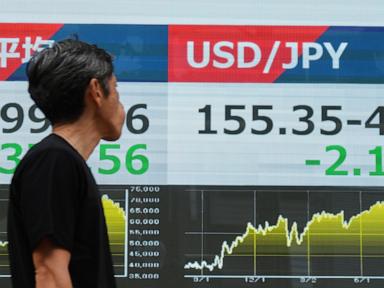
Every financial pundit on television is losing their minds over the latest headline. The narrative is as lazy as it is predictable: Tokyo steps in, currency markets convulse, the dollar drops sharply against the Japanese yen, and the financial press declares the greenback dead in the water.
They love a dramatic intervention story. It gives them something to shout about while filling airtime.
It is also completely wrong.
I have spent the better part of two decades watching traders panic over central bank interventions, and the amateur hour analysis surrounding the yen is reaching peak hysteria. People look at a sudden price spike on a terminal screen and mistake a liquidity blip for a tectonic shift.
Stop looking at the blip. Look at the balance sheet.
The Intervention Delusion
Let us clear up the core misconception right out of the gate. Central bank interventions do not reverse secular trends. They create volatility. They punish leveraged speculators who got too greedy on one side of the trade. But they do not alter the underlying gravity of macroeconomic reality.
When the Japanese Ministry of Finance orders the Federal Reserve to sell dollars and buy yen, financial journalists breathlessly report that the almighty dollar is crumbling. They talk about intervention like it is an atomic bomb dropped on American monetary policy.
It is closer to a bucket of water tossed into an ocean.
I have watched desks blow millions trying to front-run these interventions, treating a policy headline like a permanent structural change. The math never supported the panic. Japan can burn through billions of its foreign exchange reserves, but those reserves are finite. The supply of US dollars is global, deep, and anchored by the deepest capital markets on Earth.
To understand why the dollar shrugs off these episodes, you have to look past the flashing red lights on the trading floor and examine how global trade actually settles its debts.
The Plumbing of Global Finance
The lazy consensus relies on a fundamental misunderstanding of what a currency actually is. People treat the US dollar like a stock in a failing corporation. If the price drops, they assume the underlying asset is rotting.
That is not how fiat works.
The dollar is the operating system of international commerce. More than eighty percent of global trade invoicing happens in greenbacks. When a Brazilian utility company needs to buy liquefied natural gas from Qatar, they do not settle the transaction in yen or pesos. They use dollars. When a European bank needs to plug an overnight liquidity hole in Frankfurt, it borrows dollars.
Japan can intervene until its fingers bleed, but it cannot print the underlying settlement asset of the planet.
This brings us to the real reason why betting against the dollar based on a yen bounce is a fool's errand. The structural interest rate differential between the United States and Japan is not a temporary quirk. It is a canyon. Even after minor policy adjustments by the Bank of Japan, the carry trade remains a gravitational force. Investors borrow cheap yen to chase higher yields in dollar-denominated assets because economic productivity in the United States continues to outpace stagnant domestic growth in Japan.
You can fight the carry trade with political pressure and eleventh-hour currency swaps, but you cannot legislate away the hunt for yield.
Dismantling the Weakness Myth
Let us address the specific panic points dominating financial commentary right now.
- The Rate Cut Fallacy: Commentators scream that the Federal Reserve cutting rates automatically spells doom for the dollar. History says otherwise. The dollar frequently rallies during early-cycle Fed cuts because global liquidity tightens elsewhere, triggering a flight to safety.
- The Debt Ceiling Bogeyman: Every time Washington plays chicken with its borrowing limit, we hear that foreign holders are dumping Treasuries and abandoning the dollar. Foreign holdings of US debt remain remarkably sticky because there is simply no alternative destination of scale that can absorb trillions of dollars in institutional capital.
- The De-Dollarization Myth: BRICS summits generate great photo-ops, but little else. Until a rival economic bloc establishes rule of law, transparent capital controls, and deep, liquid debt markets, talk of replacing the greenback is pure theater.
When you weigh these factors against a temporary spike in the yen driven by official intervention, the reality becomes stark. The recent sell-off in the dollar is not a secular decline. It is a liquidation event for over-extended retail traders who forgot that governments can manipulate prices in the short term, but never values in the long term.
What You Should Do Instead
If you are managing capital based on financial television headlines, you are already dead money.
The playbook for dealing with currency volatility is straightforward, yet almost everyone ignores it because it requires patience rather than adrenaline.
First, stop treating currency pairs as directional bets unless you have institutional hedging capacity. Retail traders trying to scalp intervention headlines are playing a game rigged by algorithmic market makers who see your stop-losses coming a mile away.
Second, price in structural divergence. Japan faces an aging demographic cliff and a structural reliance on imported energy. The United States maintains unmatched technological dominance, energy independence, and demographic resilience relative to other advanced economies. These structural realities dictate long-term currency values, not a sudden phone call from Tokyo to the New York Fed.
Third, look at corporate earnings rather than nominal exchange rates. Multinational corporations domiciled in the US routinely weaponize currency fluctuations to their advantage, hedging their exposure long before a central bank pulls the trigger on an intervention.
The next time a sudden central bank headline sends shockwaves through the ticker tape and the pundits start writing eulogies for the dollar, take a deep breath.
The currency isn't dying. The commentary is.