Western diplomats love talking about isolating Moscow. Yet when Ukrainian President Volodymyr Zelenskyy looks for someone who can actually pick up the phone and make Vladimir Putin listen, he looks toward New Delhi.
That's the real story behind Zelenskyy's repeated diplomatic outreach to India. It isn't just polite international theater or a desperate plea for weapons. Kyiv knows India won't send tanks or fighter jets, and honestly, Zelenskyy isn't even asking for them anymore. What Ukraine wants is India's massive diplomatic weight—specifically to help end the Russia-Ukraine war and act as a guarantor for Black Sea grain exports.
If you've been following international news since 2022, this might seem backwards. Hasn't India bought billions of dollars worth of discounted Russian crude oil? Yes. Hasn't New Delhi abstained from almost every major United Nations resolution condemning the invasion? Also yes.
Yet those exact friction points are precisely why Zelenskyy sees Prime Minister Narendra Modi as one of the few leaders on earth capable of brokering a functional deal. You don't hire a mediator who isn't on speaking terms with the other side.
The Geopolitical Reality Behind Kyiv's Pivot to New Delhi
For the first year of the full-scale invasion, Ukrainian officials occasionally expressed frustration with India's neutral stance. Former Ukrainian Foreign Minister Dmytro Kuleba even criticized India's purchases of Russian oil, arguing that every barrel bought by New Delhi carried Ukrainian blood.
That rhetoric vanished. Kyiv grew up fast.
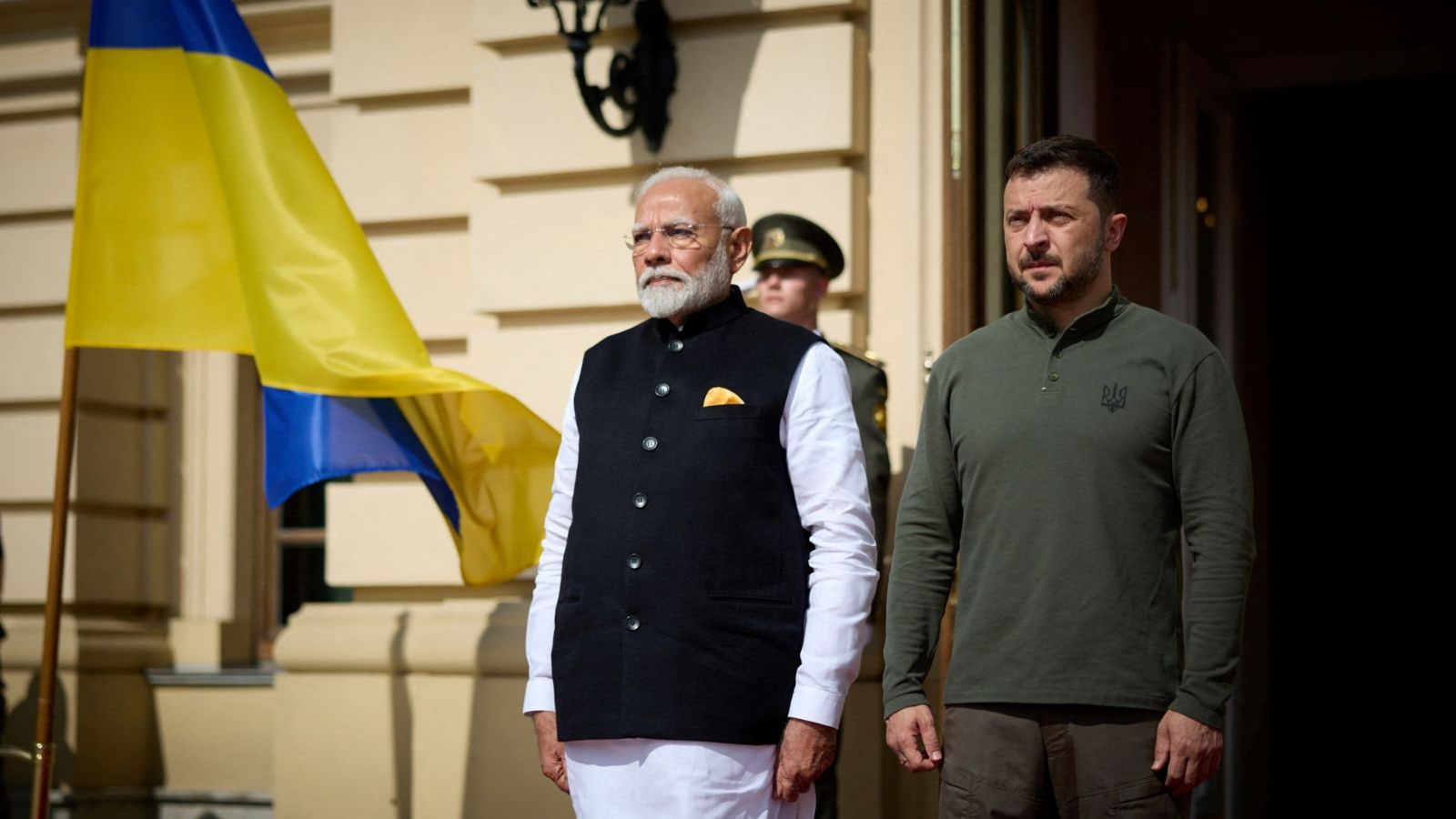
Ukrainian strategists realized that lecturing the Global South wasn't going to win them votes at the UN or security guarantees at peace summits. Instead, Zelenskyy shifted to pragmatic diplomacy. He met Modi in person on the sidelines of G7 summits, hosted Modi in Kyiv in August 2024—the first visit by an Indian prime minister to Ukraine since the country gained independence in 1991—and consistently pushed for India's active involvement in his Peace Formula.
Why? Because Washington and Brussels have zero leverage left with the Kremlin. Sanctions are maxed out. Diplomatic channels are frozen.
India, on the other hand, maintains a decades-old "special and privileged strategic partnership" with Russia while simultaneously deepening defense and trade ties with the United States and Europe. When Modi famously told Putin in September 2022 that "today's era is not of war," the line echoed around the world because Putin actually had to sit there and take it. Russia cannot afford to alienate India, especially as Moscow grows increasingly dependent on Beijing and wants to avoid becoming a junior partner to China.
Zelenskyy understands this dynamic better than most Western commentators give him credit for. If India puts its reputation on the line to back a ceasefire framework or a maritime trade corridor, Moscow has to think twice before torpedoing it.
Why Grain Exports Are the Ultimate Pressure Point
You can't separate the war in Ukraine from global food security. Before February 2022, Ukraine was one of the world's breadbaskets, exporting roughly 45 million metric tons of grain annually to global markets. Much of that wheat, corn, and sunflower oil fed developing nations across Asia, the Middle East, and Africa.
When Russia blockaded Ukraine's Black Sea ports, global food prices spiked.
The UN and Turkey brokered the Black Sea Grain Initiative in July 2022, allowing nearly 33 million metric tons of agricultural products to leave Ukrainian ports safely. Then, in July 2023, Russia pulled out of the agreement, complaining that Western sanctions were still blocking its own agricultural and fertilizer exports. Since then, Ukraine has relied on a precarious unilateral shipping corridor hugging the western coast of the Black Sea through Romanian and Bulgarian waters, while Russian drones and missiles routinely target port infrastructure in Odesa.
This is where India enters the equation.
India positions itself as the undisputed voice of the Global South. During its G20 presidency in 2023, New Delhi made food and fertilizer security a centerpiece of its agenda. Rising food inflation hurts developing economies first and hardest, and India knows that prolonged instability in the Black Sea threatens global stability.
By proposing Indian mediation on grain exports, Zelenskyy is handing Modi a diplomatic win that aligns directly with India's own foreign policy goals. If New Delhi helps negotiate a revived maritime safe-passage agreement, India gets to claim credit for feeding the developing world while protecting its own domestic economic interests.
What Indian Mediation Would Actually Look Like
Nobody expects Indian naval destroyers to patrol the waters off Odesa. That's not how New Delhi operates.
Instead, Indian mediation on grain exports relies on backchannel guarantees and economic leverage. Think about how the 2022 grain deal worked, and where it broke down. Russia walked away because it felt its own export demands were ignored by Western financial institutions. India, which conducts massive trade with Russia using non-dollar mechanisms and maintains open banking channels with Moscow, sits in a unique position to help troubleshoot those exact logistical bottlenecks.
A realistic Indian-backed grain framework would likely involve three core elements:
- Diplomatic verification and monitoring. Indian officials could participate in joint inspection mechanisms—similar to the Joint Coordination Centre previously based in Istanbul—to assure Moscow that cargo ships entering Ukrainian ports aren't carrying Western weapons.
- Protection of port infrastructure. A formal commitment from Russia not to strike grain silos, terminals, and commercial vessels operating under the agreement, backed by India's diplomatic weight.
- Reciprocal trade assurances. India using its influence in Washington and Brussels to ensure legitimate global agricultural and fertilizer shipments face fewer insurance and payment hurdles.
It's messy. It requires compromises that hardliners in both Kyiv and Western capitals hate. Yet without a neutral guarantor that Moscow trusts, any maritime ceasefire remains wishful thinking.
The Trust Deficit and India's Tightrope Walk
Let's not pretend this is easy for New Delhi. There's a reason Modi hasn't jumped up and declared himself the chief mediator of the Russia-Ukraine conflict.
Indian foreign policy is built on strategic autonomy—a stubborn refusal to get dragged into other people's wars unless India's core national interests are directly threatened. Taking on formal mediation carries massive risk. If India brokers a deal and Russia violates it a month later, New Delhi looks weak. If India pressures Russia too hard, Moscow could retaliate by slowing down critical spare parts for the Russian-made fighter jets, tanks, and air defense systems that still make up roughly 60% of India's military hardware.
There's also a lingering trust gap with Kyiv. While Zelenskyy publicly courts Modi, many Ukrainians remain deeply skeptical of India's neutrality. Watching India become one of the largest buyers of Russian seaborne crude oil—saving billions of dollars while Western nations severed energy ties—left a bitter taste in Eastern Europe.
Indian officials argue, quite reasonably, that their purchases kept global oil prices from hitting $150 a barrel, which would have wrecked the global economy. They also point out that Europe happily bought refined petroleum products made from that very same Russian crude in Indian refineries. Both things can be true at the same time. India acted in its own economic self-interest, and Ukraine paid the price for a war it didn't start.
Overcoming that friction requires careful choreography. Zelenskyy has stopped demanding that India pick a side morally, focusing instead on shared practical outcomes. He knows India won't join Western sanctions. He just needs India to stop sitting on the sidelines when negotiations eventually happen.
What Most Commentators Miss About Peace Summits
If you want to understand why Zelenskyy keeps pushing for India's involvement, look at what happened at the June 2024 Ukraine Peace Summit in Switzerland.
Over 90 countries showed up. Dozens of Western leaders signed a joint communiqué affirming Ukraine's territorial integrity and demanding the safe return of deported Ukrainian children and nuclear safety at Zaporizhzhia.
India attended, sending a senior diplomat rather than Modi himself. And when the final communiqué was published, India refused to sign it.
Most Western media outlets framed India's refusal as a setback for Zelenskyy. They missed the point entirely. India's representative explained that New Delhi didn't sign because Russia wasn't in the room, arguing that lasting peace requires dialogue between both parties to the conflict.
Zelenskyy didn't attack India for refusing to sign. Instead, he pushed to hold a subsequent peace conference—and openly floated the idea of India hosting it.
Why would Ukraine want a summit hosted by a country that refused to sign its own peace declaration? Because a summit without Russia is just a rally of Ukraine's existing allies. You don't negotiate peace with your friends; you negotiate it with your enemies. If India hosts or co-chairs future talks, Russia can't dismiss the gathering as a Western trap. Moscow would face immense pressure from the Global South to actually show up and put real terms on the table.
The China Factor Nobody Talks About Enough
There is another massive reason Zelenskyy wants India deeply involved in ending the war, and it has nothing to do with grain. It has everything to do with Beijing.
China has positioned itself as a potential peacemaker, releasing its own 12-point position paper and sending special envoy Li Hui on shuttling missions across Europe. Yet Kyiv deeply distrusts Beijing. China's "no limits" partnership with Moscow, combined with intelligence reports from the US and Europe showing Chinese exports of dual-use microelectronics, machine tools, and optics propping up Russia's defense industrial base, makes China an unacceptable referee in Ukraine's eyes.
Ukraine does not want a peace settlement dictated by Beijing, because any deal brokered by China will inevitably favor Moscow and reward territorial conquest.
India is China's primary strategic rival in Asia. The two nuclear-armed neighbors fought a deadly border clash in the Galwan Valley in 2020 and remain locked in tense military standoffs along the Himalayas. New Delhi has zero interest in letting China dominate Eurasian geopolitics or become the sole power broker capable of ending Europe's largest war since 1945.
By inviting India into the center of peace and grain negotiations, Zelenskyy is actively playing Delhi against Beijing. He's giving India a chance to step onto the global stage as a true great power—one that solves global crises rather than fueling them. For Indian diplomats who spend their lives trying to counter Chinese influence across the developing world, that's an offer that's hard to ignore.
The Hard Limits of Indian Influence
Still, you have to stay realistic about what diplomacy can achieve when neither warring party thinks it has lost.
India can open doors. It can pass messages between Kyiv and Moscow without leaks. It can host summits, verify grain shipments, and provide face-saving off-ramps when both sides are exhausted.
What India cannot do is force Vladimir Putin to abandon occupied Ukrainian territory if he believes Russia can outlast Western military aid. Nor can New Delhi force Zelenskyy to sign away sovereign Ukrainian land if the Ukrainian public views it as a betrayal. Mediation only works when the combatants reach a hurting stalemate and actually want a way out.
Right now, the most realistic entry point isn't a comprehensive peace treaty that resolves the status of Crimea or the Donbas. It's a targeted, verifiable ceasefire in the Black Sea focused on commercial shipping and energy infrastructure.
Grain exports are the ultimate test case. If India can help broker a deal that keeps Ukrainian grain flowing to global markets without Russian missile strikes—and gives Russia enough assurances on its own agricultural trade to keep Moscow from walking away—it builds the baseline trust needed for bigger talks down the road.
Watch New Delhi's diplomatic calendar over the coming months. Pay attention to high-level visits between Indian national security advisors and their counterparts in Kyiv, Moscow, and Washington, alongside any quiet shifts in Black Sea shipping insurance rates. Those technical details will tell you far more about whether an Indian-brokered breakthrough is actually happening than any public speech at the United Nations ever could.