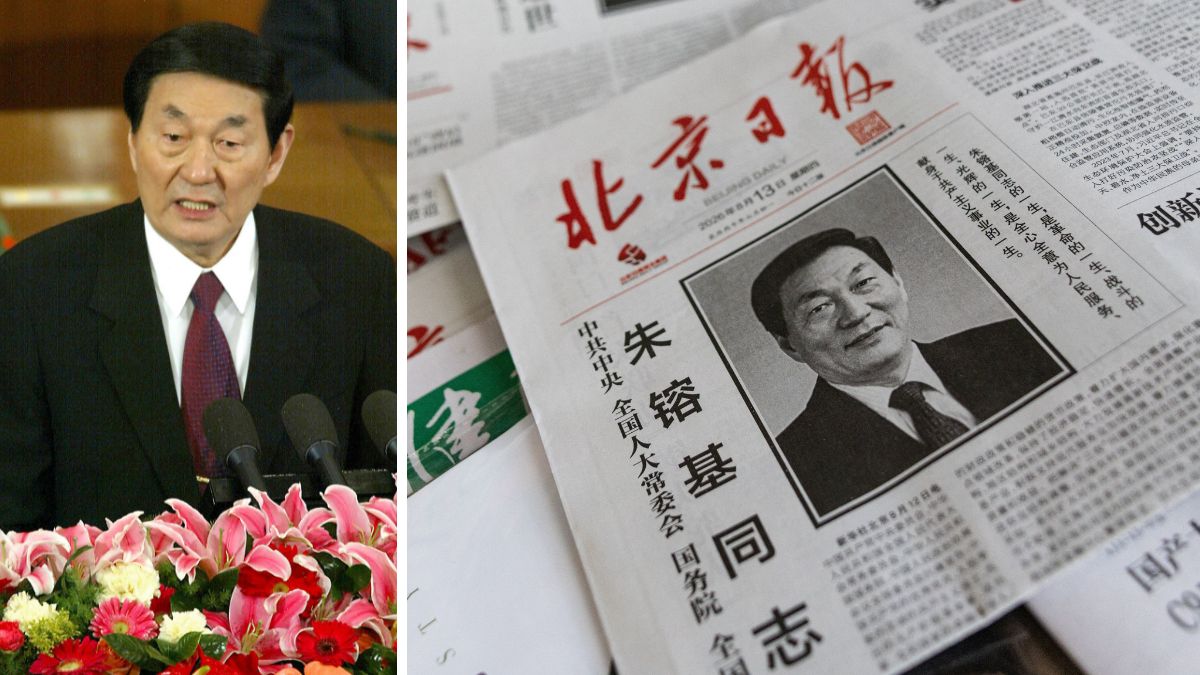
Western commentary on China follows a predictable script. Take any structural earthquake from the past thirty years, run it through a blender of moral panic, and output the standard diagnosis: growth came at too high a cost, inequality exploded, and someone should have prioritized social harmony over brute-force economics.
The primary target of this whining is always Zhu Rongji. Meanwhile, you can find other events here: The Structural Anatomy of Zhu Rongji Reforms and Macroeconomic Engineering.
The lazy consensus writes him off as an economic butcher who traded human capital for GDP points, leaving behind a polarized superpower crippled by debt and hollowed out by state-sponsored ruthlessness. Critics love to frame his 1990s tenure as a zero-sum heist. They point to the dismantling of the iron rice bowl, the state-owned enterprise bloodbath, and the fiscal centralization reforms as sins against the working class.
They are missing the entire point. To explore the complete picture, we recommend the detailed article by The Economist.
Zhu did not build a broken nation that happened to get rich. He built a functioning superpower by refusing to let a dying system drag a billion people down with it. If he had listened to the moralizers who wanted a slow, gentle transition, China would not be an economic titan today. It would be a nuclear-armed Argentina.
The Myth of the Gentle Transition
Let us dismantle the core falsehood sitting at the center of every mainstream take on late-twentieth-century Chinese reform: the idea that there was a painless middle path.
Critics weep over the tens of millions of state workers laid off during the restructuring of the nineties. They talk about the shuttered factories and the sudden evaporation of cradle-to-grave welfare as if Zhu woke up one morning and decided to ruin lives for sport.
Here is the reality seasoned macroeconomists understand but polite commentators ignore: the state sector was already bankrupt. The iron rice bowl was not a social safety net; it was a slow-motion national suicide pact. Factories were producing mountains of useless inventory that nobody wanted, piling bad debt onto state banks until the entire financial architecture was a house of cards ready to collapse under its own weight.
When Zhu took the knife to dead-weight enterprises, he wasn't crushing a thriving worker paradise. He was performing emergency triage on a patient bleeding out from arterial neglect.
Imagine a house engulfed in a grease fire. The people standing outside screaming about water damage to the vintage wallpaper are the modern critics of his fiscal reforms. Zhu didn't cause the crisis; he stopped the total evaporation of the building. By cutting off life support to zombie firms, he forced capital, talent, and energy out of the bureaucratic mud and into the private sector where actual wealth generation could happen.
The Tax Raid That Saved the Center
You cannot understand modern China without looking at the 1994 tax-sharing reform, arguably the most audacious piece of bureaucratic engineering in modern history. Before Zhu, the central government was practically begging local provinces for pocket change. Local authorities collected the taxes, kept what they wanted, and tossed Beijing a few crumbs. The central state was functionally impotent, unable to fund national infrastructure, military modernization, or macroeconomic stabilization.
Zhu rewrote the rules overnight. He instituted a revenue-sharing system that aggressively tilted tax collection back toward Beijing.
Local officials screamed bloody murder. Provincial bosses flew to the capital to threaten him. Zhu didn't flinch. He reportedly packed a coffin when he toured the provinces to push the reforms, signaling that he was ready to die for the policy.
That centralization of capital is the exact engine that financed the high-speed rail networks, the deep-water ports, and the massive urban expansions that define modern China. Without that brutal fiscal power grab, China would be a loose federation of warring economic fiefdoms, perpetually hamstrung by local corruption and unable to execute long-term industrial policy.
Critics call it authoritarian overreach. History calls it state-building.
Inequality Was the Fee for Admission
The second pillar of the standard critique focuses on the widening gap between the gleaming coastal megacities and the lagging interior. The narrative goes like this: Zhu created an oligarchy, enriched the urban elite, and left the rural poor behind.
This critique commits the cardinal sin of economic analysis: comparing a messy reality to an impossible utopia instead of the realistic alternative.
The alternative to unequal growth in China was not equal prosperity. The alternative was equal starvation.
Under the pre-reform command economy, equality was absolute and grinding. Everyone was equally poor, equally restricted by the household registration system, and equally vulnerable to the whims of local party bosses. By unleashing market forces, even in a heavily state-managed environment, Zhu created an economic gradient. Gravity dictates that water flows downward, and capital flows toward productivity.
You cannot lift a billion people out of absolute subsistence overnight without letting some sprint ahead first. The coastal zones became testing grounds for global trade, generating the capital surplus necessary to eventually fund massive poverty alleviation campaigns decades later. To blame Zhu for the initial wealth gap is like blaming the first person who climbs out of a trench for leaving the others in the mud. He built the ladder. The fact that some climbed faster than others is a feature of human agency, not a design flaw in the blueprint.
The Structural Debt Ghost Story
Today, Western financial journalists love to hyperventilate about China's debt-to-GDP ratio, real estate meltdowns, and local government financing vehicles. They trace a direct line from Zhu's reforms to the current property bubble.
This is intellectually lazy.
The 1994 tax reform inadvertently created a massive fiscal mismatch for local governments. Stripped of their revenue sources but still responsible for providing public services and driving local GDP growth, local municipalities turned to land sales to fund their budgets. That dynamic birthed the real estate obsession that haunts Beijing today.
Did Zhu create a ticking time bomb? Partly. But let us look at the alternative. If he hadn't centralized state revenues, local governments would have run wild printing money and borrowing uncontrollably through chaotic, unmonitored channels a decade earlier. The financial risks China faces now are the complex growing pains of an advanced, industrialized credit economy. The risks it faced in 1994 were the primitive, terminal rot of a command economy running out of grain.
I would rather manage the headache of a massive balance-sheet recession in a $17 trillion industrial powerhouse than try to revive a bankrupt agrarian state where nobody has running water or shoes.
The Real Lesson of the Iron Chancellor
Zhu Rongji understood a fundamental truth that modern technocrats are too cowardly to face: transformation requires breaking things.
In democratic systems, leaders are trapped in electoral cycles, terrified of inflicting short-term pain for long-term gain. They tinker around the margins, offer subsidies, and kick structural crises down the road until the system rots from the inside out. Zhu operated without that democratic safety valve, and he used his insulation to force bitter medicine down the throat of an unwilling nation.
He wasn't a saint. He was an uncompromising, sharp-tongued bureaucrat who believed that economic survival superseded sentimental attachments to failed socialist dogmas. He dragged a sleeping giant into the modern global economy kicking and screaming, accepting the collateral damage of inequality and displacement as the unavoidable price of entry.
Stop evaluating his legacy through the lens of modern comfort and moral purity. Look at what was on the chopping block. Look at what survived.
Zhu didn't ruin the nation. He forged it in the fire because he knew the alternative was turning to ash.