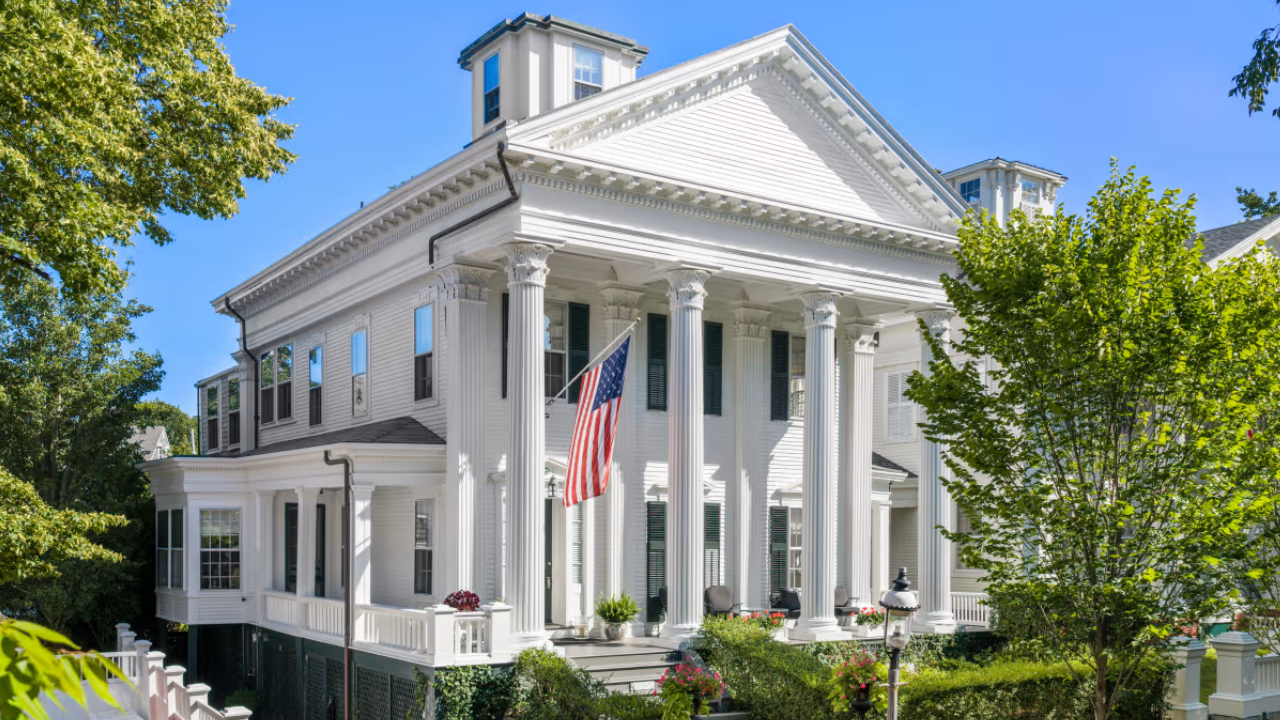
Fifteen million dollars buys a lot of glass and steel in Miami, or a sprawling modern compound in Aspen. Yet on Nantucket, an 1840s mansion just closed for $15.25 million—and it didn't need floor-to-ceiling sliding walls or a rooftop infinity pool to command that price.
You might think ultra-wealthy buyers want brand-new builds with zero maintenance headaches. They don't. Not on an island where history is the actual currency. This historic Nantucket mansion sale proves that authentic, preserved 19th-century architecture holds an economic moat that new construction simply can't replicate.
Let's look at why old wood, hand-planed trim, and strict local preservation rules keep pushing Nantucket real estate into the stratosphere.
The Economics Behind the Historic Nantucket Mansion Sale
When an 1840s home fetches $15.25 million, casual observers call it crazy. Real estate veterans call it basic supply and demand.
Nantucket isn't making any more land, and it certainly isn't making any more whaling-era mansions. During the 1830s and 1840s, Nantucket was one of the wealthiest towns in America, fueled by the global sperm whale oil trade. Ship captains and merchants built grand Federal and Greek Revival homes along streets like Main Street, Orange Street, and Cliff Road. Many of those structures still stand today, largely because the island's economy collapsed after the Great Fire of 1846 and the rise of kerosene, leaving residents too broke to tear down their old houses and build Victorian replacements.
That accidental time capsule became Nantucket's greatest financial asset.
Today, buyers aren't just purchasing square footage. They're buying provenance. You can hire the best architect in New England to build a reproduction Greek Revival house from scratch, using reclaimed heart pine and custom-milled moldings, and it will still feel like a replica. Buyers at the $15 million-plus tier know the difference immediately. They want the original wide-plank floorboards worn down by two centuries of footsteps, the hand-blown wavy window glass, and the authentic proportions that modern building codes make nearly impossible to duplicate.
Why Scarcity Hits Different on an Island
In most luxury markets, high prices trigger a wave of new development. Developers buy up teardowns, subdivide lots, and flood the upper tier with shiny spec homes until prices plateau.
That playbook fails completely in Nantucket's historic districts. Over 800 pre-Civil War structures sit within the Old Historic District, and the town's Historic District Commission (HDC) guards them with legendary strictness. You can't just knock down an 1840s house because the ceilings feel low or the kitchen doesn't open onto a massive deck.
Because tearing down historic inventory is off the table, the supply of authentic 19th-century estates is permanently capped. Every time one trades hands and gets restored to museum-grade condition, the remaining pool of unrenovated properties shrinks even further.
How the Historic District Commission Protects Property Values
If you've ever owned a home governed by a historic preservation board, you probably have a love-hate relationship with the approval process. On Nantucket, that relationship is intense.
Established in 1955—making it the second-oldest historic district commission in the United States, right behind Charleston—the Nantucket HDC regulates every exterior detail visible from a public way. Paint colors, roof shingles, window muntins, fencing, and even exterior lighting require formal sign-off. Vinyl siding is banned. Plastic windows are out. Even the weathered gray cedar shingles the island is famous for must meet specific material standards.
Homeowners often complain about the delays and carrying costs while waiting for HDC hearings. Honestly, the bureaucracy can test anyone's patience. You might spend six months debating the exact profile of a wood shutter or the placement of an HVAC condenser.
Yet those exact headaches are why a historic Nantucket mansion sells for $15.25 million.
The Regulatory Moat
Think of the HDC as an invisible protective barrier around your equity. In unregulated luxury neighborhoods, you can spend $12 million restoring a classic estate, only for your neighbor to build an ultra-modern concrete box right next door that ruins your sightlines and clashes with the entire streetscape.
On Nantucket, that risk practically vanishes. When you buy an 1840s home on a historic lane, you know the street will look virtually identical twenty years from now. Your neighbor isn't going to paint their facade neon white or install a modernist glass facade. That visual consistency preserves the entire neighborhood's atmosphere, which in turn protects every individual homeowner's investment.
Preservation restrictions don't depress values at the top of the market. They supercharge them.
What Modern Buyers Actually Want Inside an 1840s Home
There's a common misconception that buying a historic home means living like a 19th-century sea captain—drafty rooms, tiny closets, and a dark kitchen tucked away in the back.
Nobody paying $15.25 million wants to live like that.
The properties hitting record prices on Nantucket aren't untouched relics with failing plumbing and knob-and-tube wiring. They're architectural hybrids. The exterior and primary formal rooms maintain strict historical integrity, while the infrastructure and rear living spaces get quietly engineered for 21st-century comfort.
If you're evaluating a historic property—either to buy or to renovate—here's where the real value sits:
- Invisible mechanical upgrades. Geothermal heating, concealed high-velocity air conditioning, radiant floor heating under original wide-plank pine, and whole-house dehumidification systems keep historic woodwork from cracking while giving modern comfort.
- Restored primary facades and formal rooms. Original plaster crown moldings, hand-carved fireplace mantels, and authentic Federal staircases must stay intact. Stripping these out to create an open-concept floor plan is the fastest way to destroy resale value in a historic market.
- Thoughtful rear additions. The HDC is far more flexible with additions at the back of a house that aren't visible from the street. Smart owners add bright, modern chef's kitchens, family rooms, and primary suites toward the rear garden while keeping the historic core untouched.
- Authentic period materials. Using true divided-light wood windows, solid brass hardware, and cedar roofs signals quality to discerning buyers. Cheap shortcuts stick out immediately against 180-year-old craftsmanship.
Done right, you get the soul of an 1840s landmark paired with the effortless comfort of a brand-new custom home.
Common Mistakes That Ruin Historic Property Value
I've watched plenty of well-intentioned buyers overpay for historic houses and then immediately make renovation choices that tank their resale appeal. Money doesn't automatically translate to good stewardship.
The biggest mistake is over-modernizing the interior. Buyers from New York or Boston sometimes try to force a sleek, minimalist Tribeca loft aesthetic inside a Greek Revival shell. They rip out interior walls, paint over historic unpainted woodwork, and install recessed canister lights across every original plaster ceiling. When they try to sell five years later, preservation-minded buyers walk in, cringe at the lost architectural details, and mentally deduct millions for the cost of putting it all back.
Another costly error is underestimating restoration timelines and specialized labor. You can't hire a standard tract-home contractor to repair 1840s horsehair plaster or custom-mill curved mahogany handrails. On an island thirty miles off the coast of Cape Cod, skilled preservation carpenters are booked out years in advance, and barging materials across Nantucket Sound adds serious overhead to every line item.
Buyers who skip thorough pre-purchase structural inspections also get burned. A gorgeous facade can hide powder-post beetle damage in the sill beams, failing brick foundations, or centuries of moisture intrusion. Always bring in a structural engineer who specializes in pre-1900 timber framing before waiving contingencies.
What This Sale Means for the Broader Luxury Real Estate Market
Nantucket sits at the extreme upper end of American coastal real estate, so a $15.25 million closing naturally grabs headlines. Still, the underlying lesson applies far beyond Massachusetts.
Across the country—from Charleston's South of Broad and Savannah's Historic District to Georgetown in Washington, D.C., and Pasadena's Craftsman neighborhoods—preserved historic architecture consistently outperforms generic new luxury builds during market slowdowns.
Why? Because wealthy buyers increasingly crave authenticity. In an era where luxury goods feel mass-produced and every high-end suburban neighborhood features the same white-painted brick modern farmhouses, true historical character stands out. You can't manufacture 180 years of history. You can't fake the patina of old-growth timber that was harvested before industrial logging wiped out virgin forests.
Even when interest rates fluctuate or broader housing markets cool down, trophy historic homes stay resilient. Buyers in this bracket rarely rely on traditional mortgages, and they view irreplaceable architecture as a generational store of wealth—closer to buying a blue-chip painting than a typical residential house.
Practical Takeaways If You're Investing in Historic Real Estate
You don't need a $15 million budget to apply the principles behind this Nantucket sale. Whether you're looking at a Victorian townhouse, a mid-century modern gem, or a 19th-century farmhouse, the same rules govern long-term value.
Start by researching local preservation ordinances before making an offer. Read past meeting minutes from the local historic commission to see what they approve and what they reject. Knowing the rules upfront saves you from buying a property with renovation plans that will never get permitted.
Next, prioritize structural integrity over cosmetic perfection. Ugly wallpaper and dated bathrooms are easy fixes; compromised foundations, rotting sill plates, and butchered exterior trim require massive capital to correct. Look for homes where the "bones" and original architectural details survived intact, even if the decor looks stuck in 1978.
Finally, respect the house's original era when you renovate. Work with an architect who has a proven portfolio of historic restorations rather than someone who only designs contemporary builds. Lean into the character that made the house special in the first place, upgrade the mechanical systems behind the walls, and let the authentic craftsmanship speak for itself.