Funerals had already begun in Kathmandu. Relatives shaped an effigy out of kusha grass, lighting incense and chanting prayers for a life they believed was completely lost to the raging waters. Then came a faint sound from the sludge.
When flash floods tore through the Bhotekoshi river basin on August 26, 2026, they left absolute devastation in their wake. Entire communities vanished under massive waves of mud, rocks, and debris. Amid the staggering tragedy, stories of survival against impossible odds began to surface. The most astonishing of these involved 64-year-old Chandrika Shrestha, who emerged alive after spending eleven days trapped inside the remains of her buried home in Betrawati, Nuwakot.
When Hope Faded After the Flood
The disaster struck without warning. Chandrika was inside her family's four-and-a-half-storey house when the violent wall of water hit. The sheer force of the flood lifted the massive structure and swept it roughly 100 meters, eventually lodging it near the banks of the Trishuli River. Three and a half floors of the home were completely swallowed by suffocating mud and sludge.
Days turned into a grueling search operation. Relatives scoured the banks of the Betrabati and Trishuli rivers, fighting treacherous, swampy terrain where decomposing debris made searching agonizing. After more than a week without a single trace, hope evaporated. Believing Chandrika had perished in the disaster, her family back in Kathmandu gathered to perform traditional death rituals. They built a symbolic body from sacred grass because they had nothing to bury.
The Accidental Discovery on Day Eleven
The miracle happened purely by chance on the eleventh day. An Armed Police Force team, originally dispatched to the area simply to clear roads and manage infrastructure repair, walked past the wreckage of the buried home.
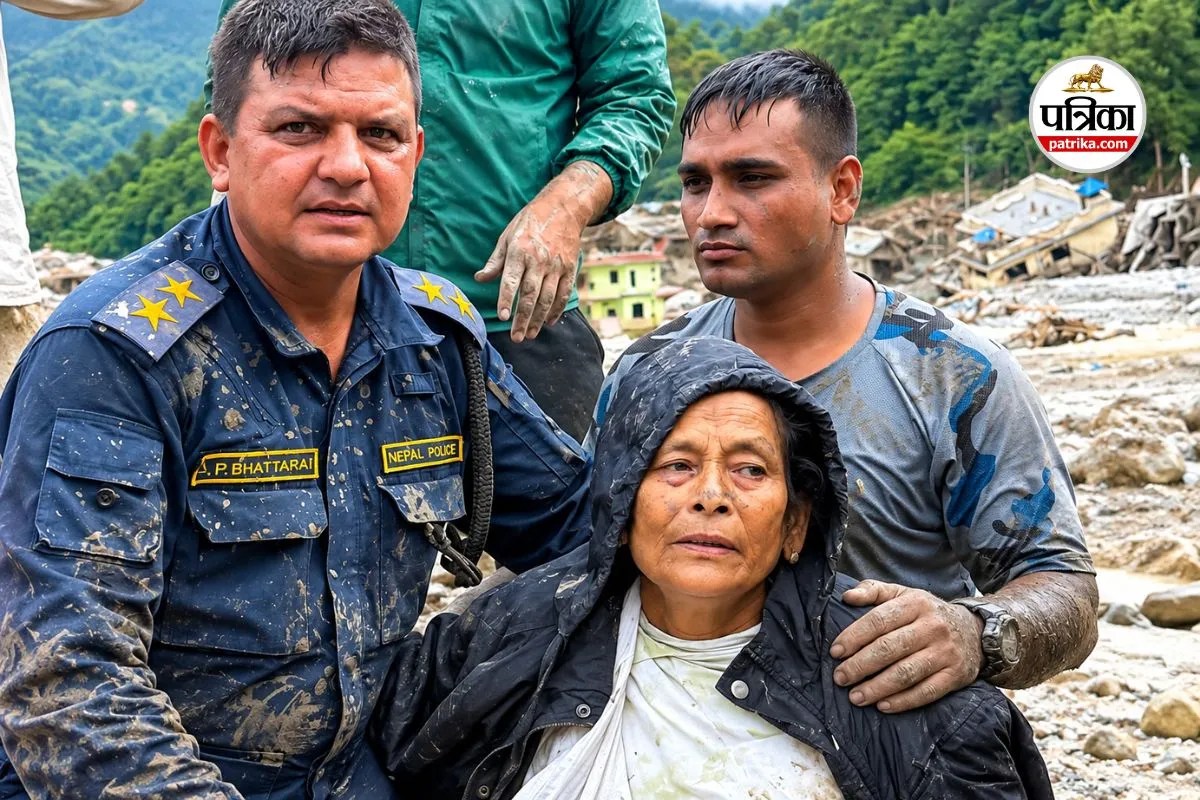
Officers heard a faint human cry emerging from the sludge. They stopped, listened, and immediately dropped their tools to dig by hand. Working frantically through the thick mud, the rescue crew smashed through a window of the upper floor that had somehow remained partially clear of the debris.
Inside, they found Chandrika in a semi-conscious condition. She was frail, dehydrated, and trapped, but she was breathing.
Rescuers quickly provided initial medical aid on-site before calling in a Nepal Army helicopter. She was airlifted out of the disaster zone, first moving to a local military barracks and then directly to Birendra Hospital in Kathmandu for intensive medical care.
A Wider Context of Survival
Chandrika's recovery wasn't an isolated miracle during those grueling weeks. Rescue teams across Nepal's disaster zones experienced a sudden wave of late breakthroughs. Just days prior, workers trapped deep inside hydropower tunnels in the region—including a Chinese national and local project workers—were pulled out alive after spending days underground in pitch blackness.
Yet, these glimmers of hope stand against a grim backdrop. The August floods rank among the worst recent natural disasters to hit Nepal, leaving behind a staggering death toll and thousands of missing persons whose families are still waiting for answers.
When news of Chandrika's survival reached her relatives, the shock was total. Her young grandson, who had spent the previous day singing prayers through his tears, rushed to the hospital alongside other family members. Doctors initially restricted visitors to let her stabilize, but the sheer disbelief turned quickly into profound relief.
Disaster response teams continue to comb through the thick layers of mud using drones and manual excavation, searching for anyone else who might still be holding on against all odds.