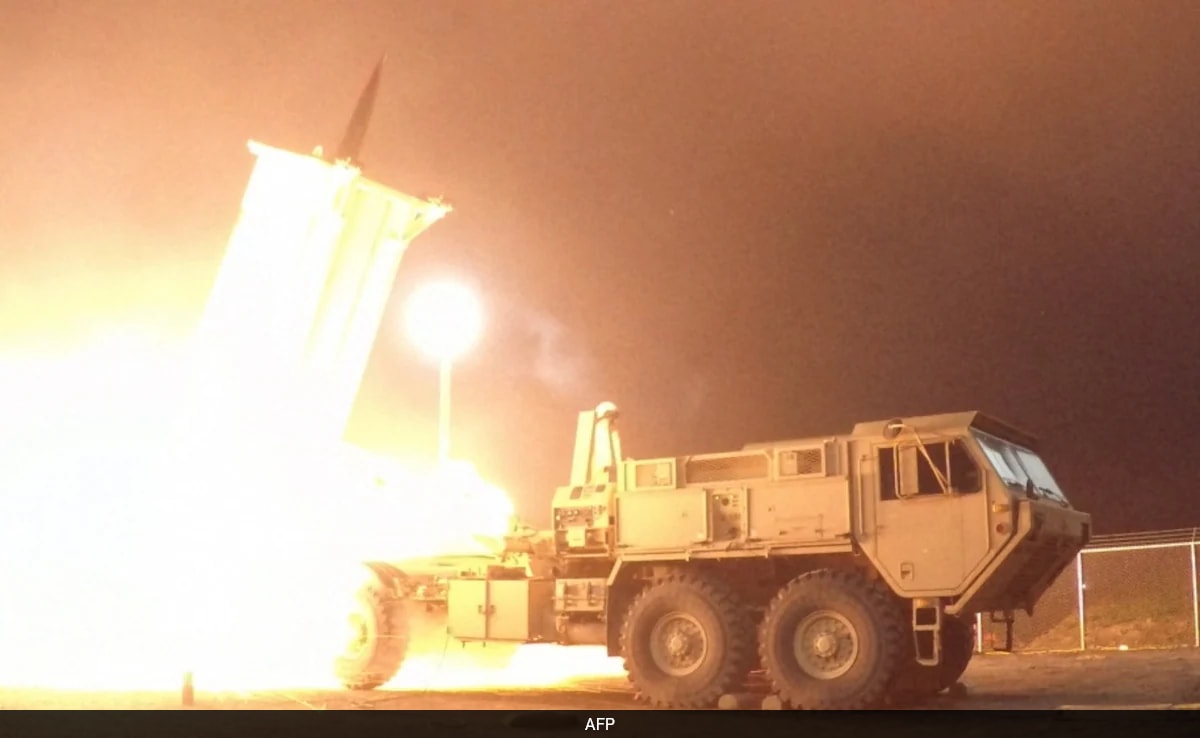
The recent claims regarding the destruction of a Terminal High Altitude Area Defense (THAAD) radar system represent more than just a momentary shift in regional power dynamics. They signal a profound crisis in how we value and protect the eyes of the modern military. While initial reports focused on a $300 million price tag, the reality of the hardware is far more expensive and the logistical tail far more fragile. A single THAAD battery, including its TPY-2 radar, interceptors, and support vehicles, carries a price tag closer to $800 million. Losing the radar doesn’t just cost money; it renders the entire battery a collection of very expensive, very stationary metal tubes.
Modern warfare has entered an era where the cost-exchange ratio is fundamentally broken. We are currently attempting to defend against $50,000 "suicide" drones and $100,000 ballistic missiles using interceptors that cost $2 million to $12 million per shot. When a radar system like the TPY-2 is targeted, the attacker isn't just looking for a kinetic kill. They are looking to bankrupt the defender's tactical options.
The Glass Giant Problem
The TPY-2 radar is a marvel of engineering. It is an X-band, high-resolution, phased-array system capable of tracking objects the size of a baseball from hundreds of miles away. It is also, by its very nature, a massive "kick me" sign in the electromagnetic spectrum.
To track a ballistic missile, the radar must emit an incredible amount of energy. This emission is a beacon. In the intelligence community, this is known as a "high-signature asset." Once that radar is turned on, every electronic intelligence (ELINT) sensor within a thousand-mile radius knows exactly where it is. The challenge for the U.S. and its allies isn't just the physical hardening of these sites, but the fact that you cannot hide a sun in a dark room.
If a THAAD radar is lost, the battery is blind. It cannot see the incoming threats, and it cannot guide its interceptors to their targets. The transition from a state-of-the-art shield to a decorative paperweight happens in the millisecond it takes for a warhead to impact the antenna face. This vulnerability is the "glass giant" problem: the more powerful the sensor, the more vulnerable it becomes to detection and suppression.
The Logistics of a Long Term Failure
Replacing a destroyed TPY-2 isn't as simple as ordering a new part from a warehouse. These systems are not mass-produced on an assembly line like pickup trucks. Each unit is a bespoke piece of high-precision equipment with a manufacturing lead time that can stretch into years.
If a system is "obliterated," as some reports suggest, the gap in the defensive line remains open for the foreseeable future. There is no "hot standby" for an $800 million asset sitting in a garage nearby. This creates a strategic vacuum. Adversaries understand that they don't need to win a war; they only need to punch a hole in the sensor net and then exploit that hole before a replacement can be moved from half a world away.
- Manufacturing bottlenecks: The specialized semiconductors and Gallium Nitride (GaN) components used in these radars have incredibly tight supply chains.
- Training deficits: The crews required to operate these systems are highly specialized. A kinetic strike on a radar site often results in the loss of the human capital required to run it, which is harder to replace than the hardware.
- Geopolitical ripple effects: Moving a replacement system usually requires stripping defense from another high-tension area, such as the Indo-Pacific or Eastern Europe.
Saturation and the End of Invincibility
For decades, the narrative surrounding American missile defense was one of near-total invincibility. The THAAD, alongside the Patriot and Aegis systems, was marketed as an impenetrable dome. That narrative is currently being dismantled by the math of saturation.
Every missile defense system has a "leak rate." No system is 100% effective, especially when faced with a coordinated, multi-axis attack. If an adversary launches 50 missiles and 100 drones simultaneously, the defense system must prioritize targets. This is where the TPY-2 becomes the primary target of interest. By flooding the zone with low-cost decoys and "dumb" munitions, an attacker forces the radar to work overtime, revealing its exact frequency hopping patterns and physical location.
The math is brutal. If the defender has 48 interceptors and the attacker sends 60 projectiles, at least 12 things are going to hit the ground. If just one of those 12 is directed at the radar, the game is over.
The Economic Attrition Strategy
We are seeing a shift toward "Economic Attrition Warfare." Iran and its proxies have mastered the art of using cheap, indigenous technology to threaten the most expensive assets in the Western arsenal.
Consider the cost of a single THAAD interceptor. We are talking about roughly $12 million per missile. In a high-intensity conflict, a battery could exhaust its entire magazine in less than ten minutes. To replenish that magazine costs hundreds of millions of dollars and requires months of logistical coordination. Meanwhile, the factory producing the "cheap" threats is still running at full capacity, churning out airframes for the cost of a mid-sized sedan.
This isn't just a military failure; it's a budgetary catastrophe. The United States cannot maintain a global posture if it costs $100 million to defend against a $1 million attack. The destruction of a radar system is the ultimate exclamation point on this lopsided balance sheet.
Technical Vulnerabilities Nobody Mentions
While the physical impact of a missile is the most dramatic way to kill a radar, it isn't the only way. The TPY-2 is susceptible to several forms of "soft kills" that are often overlooked in mainstream reporting.
Electronic Interference and Jamming
While the TPY-2 has advanced electronic counter-countermeasures (ECCM), it is not immune to high-power stand-off jamming. If an adversary can put enough "noise" into the X-band frequency, the radar’s effective range drops significantly. It might still be "working," but it can no longer see far enough to give the interceptors time to launch.
Cyber-Kinetic Integration
Modern radars are essentially giant computers connected to a network. A cyber attack that degrades the data link between the radar and the launchers is just as effective as a physical bomb. If the information can't get from the "eye" to the "fist," the system is broken.
Thermal Signatures
The cooling requirements for a phased-array radar are immense. These systems generate a massive amount of heat. This makes them incredibly easy to track for infrared-guided munitions, even if the radar attempts to go silent or use frequency-hopping to avoid radio-frequency detection.
The Myth of the Point Defense
A common misconception is that THAAD is a "point defense" system like the Phalanx CIWS seen on ships. It isn't. THAAD is designed to protect broad areas against high-altitude threats. This means it is often positioned further back from the "front line."
However, the rise of hypersonic glide vehicles and low-flying cruise missiles has changed the geometry of the battlefield. These threats can stay below the radar's horizon for the majority of their flight, popping up only at the last moment. This reduces the reaction time from minutes to seconds. If the radar is positioned to look for high-altitude ballistic threats, it may be completely blind to a cruise missile hugging the terrain.
The Strategic Pivot
If the reports of THAAD degradation are accurate, it forces a total re-evaluation of how ground-based interceptors are deployed. We can no longer assume that the "shield" will stay intact throughout a conflict.
Future doctrines will likely have to move away from these massive, centralized, multi-hundred-million-dollar targets. The move toward distributed sensing—using many smaller, cheaper radars linked together—is the only logical path forward. If you have 50 small radars and lose five, you still have a picture. If you have one giant TPY-2 and lose it, you are blind.
The era of the "unhittable" asset is over. The reality of 2026 is that anything that emits a signal can be found, and anything that can be found can be killed. The $300 million (or $800 million) question is whether the Pentagon is willing to stop putting all its eggs in such expensive, fragile baskets.
The focus must shift from "How do we make this radar invincible?" to "How do we maintain the mission when this radar is inevitably destroyed?" Until that question is answered with hardware and not just theory, every THAAD battery in the field is a high-stakes gamble with diminishing odds of success.
Look at the current procurement cycles for the next generation of Lower Tier Air and Missile Defense Sensors (LTAMDS). These are supposed to be more resilient, but they still follow the same philosophy of high-cost, high-capability concentration. The military-industrial complex prefers building one billion-dollar "super-system" over ten thousand $100,000 "good enough" systems. In a war of attrition, "good enough" in high volume beats "perfect" in single digits every time.
Check the replacement timelines for the current TPY-2 fleet and compare them to the production rates of tactical ballistic missiles in the Middle East.