The Shiny Object Trap
Western defense analysts are obsessed with the catalog. They scroll through spec sheets for the Blue Sparrow, the Lucas Drone, and the PrSM (Precision Strike Missile) like they’re browsing a luxury car brochure. They see a Mach 3 interceptor or a long-range ballistic missile and assume the side with the most expensive toy wins.
They are wrong.
The Middle East is currently a graveyard for "game-changing" hardware that failed to account for the democratization of mass. We are witnessing the High-Cost Collapse. When you fire a $2 million interceptor at a $20,000 fiberglass drone, you aren't winning the war. You are subsidizing your own bankruptcy. The "Blue Sparrow" and its ilk are technical marvels and strategic liabilities.
The Math of Kinetic Failure
Let’s look at the physics of the failure. Most analysis focuses on "intercept rates." This is the wrong metric. The only metric that matters in a modern war of attrition is the Cost-Exchange Ratio.
$$R = \frac{C_{d}}{C_{a}}$$
In this equation, $C_{d}$ represents the cost of the defense (the missile, the radar hours, the personnel) and $C_{a}$ represents the cost of the attack. When $R > 100$, the defender has already lost, regardless of whether the target was hit.
The PrSM is a masterpiece of engineering. It can strike targets 500 kilometers away with terrifying accuracy. But in the current Middle Eastern theater, the "targets" are shifting. We aren't fighting static Soviet tank divisions anymore. We are fighting distributed networks that use the "Lucas Drone"—or even simpler, off-the-shelf Iranian Shahed variants—to saturate airspace.
If you use a PrSM to take out a launch site that consists of a wooden rail and a pickup truck, you have traded a multi-million dollar asset for a $5,000 vehicle. That isn't "shaping the war." That is hemorrhaging blood and treasure for a headline.
The Blue Sparrow Myth
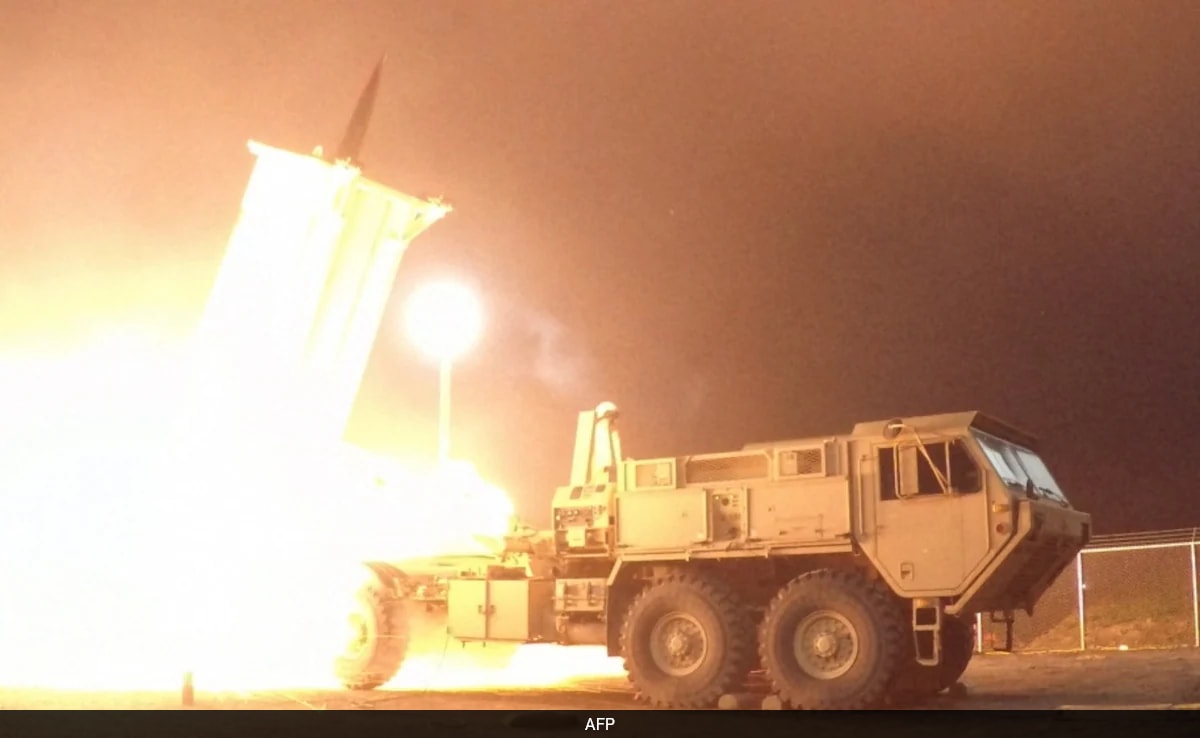
The Blue Sparrow is often touted as the ultimate "target" missile, designed to mimic the signature of advanced ballistic threats. It’s a simulation tool turned into a psychological security blanket.
The "lazy consensus" suggests that better simulation leads to better defense. I’ve spent years watching procurement officers justify billion-dollar budgets based on successful Blue Sparrow tests. Here is the reality: Testing in a vacuum is a form of industrial theater.
The Blue Sparrow simulates a clean, predictable ballistic trajectory. Modern asymmetric warfare is anything but clean. It is messy, low-slow, and swarming. The threat isn't a single high-speed missile; it’s 400 slow drones arriving simultaneously from twelve different vectors.
Our current systems, including the highly-touted Patriot and THAAD batteries, were built for a world that no longer exists. They were built to kill "The Big One." They are psychologically incapable of dealing with "The Many Small."
Why Precision is the New Weakness
We have been conditioned to believe that "Precision" is the ultimate virtue. If a missile can hit a postage stamp from three countries away, we applaud.
But precision is expensive.
- Lucas Drones utilize GPS-denied navigation and optical flow. They don't need to hit a postage stamp. They just need to hit a refinery, a power plant, or a crowded port.
- Precision weapons require exotic sensors, cooled infrared seekers, and hardened processors.
- Dumb weapons require a lawnmower engine and a basic flight controller.
By chasing precision, we have priced ourselves out of the volume game. You cannot defend against a swarm of 1,000 drones with 50 precision interceptors. The math doesn't work. The logistics don't work. The war is lost before the first shot is fired because the "insiders" are still buying swords when the enemy is using a swarm of bees.
The Procurement Racket
The reason the media focuses on the Blue Sparrow and PrSM is simple: Follow the money. Defense contractors cannot make a massive profit margin on a $10,000 drone. There is no "lifecycle maintenance" on a disposable plastic wing. There is, however, an immense profit margin on a PrSM.
I’ve sat in rooms where "innovation" was defined as "adding a more expensive sensor to a missile that already worked." This is the Sunk Cost Fallacy at a geopolitical scale. We continue to iterate on 20th-century concepts because the 21st-century reality—that cheap, mass-produced, semi-autonomous systems have neutralized our high-end assets—is too terrifying for the Pentagon to admit.
The Misunderstanding of "Air Superiority"
The competitor article claims these weapons are "shaping the war." They aren't. They are reacting to it.
True air superiority in 2026 isn't about owning the sky with an F-35. It’s about denying the sky to the enemy at a lower cost than they can afford to fly.
If an insurgent group can shut down a multi-billion dollar shipping lane using three-thousand-dollar drones, they have air superiority. They don't need a Blue Sparrow. They just need persistence.
- Traditional View: Buy more interceptors.
- Contrarian Reality: Abandon the interceptor model entirely.
The only way to win the Middle East drone war is to stop trying to "shoot them down" with missiles. We need directed energy (lasers) and high-power microwave (HPM) systems that have a "cost-per-shot" measured in cents, not millions. But HPM systems aren't "sexy." They don't look like the PrSM in a promotional video. So, they get sidelined while we continue to buy gold-plated bullets to kill flies.
The "Lucas Drone" Paradox
The Lucas Drone is a fascinating example of Western hubris. It’s an attempt to do "cheap" the "expensive" way.
By the time you add Western-grade encryption, "ethical" AI sub-routines, and MIL-SPEC components to a small drone, it is no longer cheap. It becomes a $150,000 asset.
The enemy isn't using MIL-SPEC. They are using components found in a teenager’s racing drone. Their failure rate might be 20%, but when you have 5,000 units, a 20% failure rate is a rounding error. When our $150,000 Lucas Drone fails, it’s a Congressional inquiry.
The Lethal Bureaucracy
This is the "battle scar" of anyone who has worked in defense tech: We are being out-paced by the speed of the commercial market.
The PrSM took decades to develop. In that same timeframe, drone technology has gone through twelve generations of evolution.
- Manual flight.
- GPS waypoints.
- First-Person View (FPV) kamikaze.
- AI-based target recognition.
- Swarm coordination.
While we were perfecting the metallurgy of a missile casing, the "low-end" threat learned how to think.
Stop Asking "Which Weapon Wins?"
People always ask: "Which of these new weapons is the most effective?"
That is the wrong question. It assumes the war is a duel between two noble knights. It isn't. It’s a street fight between a knight in full plate armor and 10,000 angry wasps.
The knight has the "best" equipment. The knight is a "technological marvel." The knight is also dead.
The Middle East isn't being "shaped" by the Blue Sparrow or the PrSM. It is being shaped by the realization that Exquisite Hardware is a Liability. ### The Real Strategic Shift
If you want to actually "shape" a conflict in this region, you don't build a better missile. You build a better factory.
The winner of the next decade won't be the nation with the "Lucas Drone" (Version 2.0). It will be the nation that can produce 10,000 attritable units per month at a price point that makes the enemy's $2 million interceptor look like a joke.
We are currently the joke.
We are celebrating "precision strikes" while the very concept of a "target" is dissolving into a cloud of low-cost, high-impact noise. The Blue Sparrow isn't a weapon of the future; it’s a monument to a past where we could afford to be inefficient.
Stop looking at the spec sheets. Start looking at the ledger.
Burn the brochures and buy a million lawnmower engines. That is how you win a war in 2026. Anything else is just expensive fireworks for a dying empire.