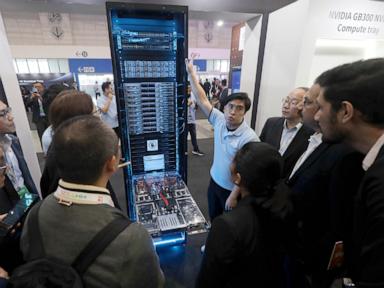
Geopolitical trade restrictions fail not at the point of legislative drafting, but at the point of logistical execution. When Taiwanese prosecutors charged nine individuals—including personnel from Nvidia and Super Micro Computer—for allegedly diverting high-end artificial intelligence hardware to mainland China, the action exposed structural vulnerabilities in the hardware supply chain. At the center of the indictment are 130 units of restricted graphics processing units housed within advanced server configurations, specifically B300 accelerators.
The incident maps the exact mechanics of how regulatory arbitrage operates when high-value, highly restricted manufacturing nodes concentrate in a single geographic jurisdiction.
The Logistics of Hardware Diversion
To understand how restricted equipment crosses sanctioned borders, one must examine the cost-benefit structure of the gray market. A single high-end AI server rack represents millions of dollars in compute density, creating an enormous financial gradient between restricted jurisdictions and unconstrained buyers.
The indictment details a specific operational footprint:
- Out of 130 targeted servers, 74 successfully reached mainland China.
- The diversion routes utilized multi-jurisdictional triangulation, routing shipments through Indonesia, Japan, and Hong Kong.
- Intermediary shell entities and falsified end-user documentation masked the final destination of the physical assets.
[Primary Manufacturer] ---> [Local Shell Entity (Taiwan)]
                                   |
           +-----------------------+-----------------------+
           | (Transit Routing)                             | (Intercepted)
           v                                               v
[Indonesia / Japan / Hong Kong]                   [Taiwan Storage Node]
           |
           v
[End Destination: Mainland China]
This routing architecture demonstrates that export compliance breaks down when verification relies on static paper trails rather than continuous physical tracking. When a shipment clears initial domestic inspection under the guise of local deployment, the marginal cost of transshipment through secondary ports falls well below the gray-market markup of restricted silicon.
The Principal-Agent Fracture in Compliance
Corporate compliance frameworks assume that internal corporate policies align perfectly with employee incentives. The Taiwan indictments reveal the failure mode of this assumption: the principal-agent problem within multinational technology firms.
An employee or mid-level manager possesses operational clearance to authorize hardware releases, yet bears a fraction of the enterprise risk associated with regulatory violations. In this specific case, prosecutors identified an Nvidia manager who allegedly authorized the release of restricted B300 units while utilizing fabricated corporate fronts and dummy websites.
The structural incentive for insider corruption relies on asymmetric information:
- Verification Friction: Compliance departments mandate physical on-site checks for orders exceeding specific volume thresholds (such as eight units).
- Access Abuse: Individuals embedded within the logistics or authorization chain can manufacture compliance artifacts, such as fake inspection reports or false end-user certificates, satisfying internal audits without triggering automated flags.
- Temporal Lag: The time delta between physical shipment diversion and regulatory audit allows intermediaries to liquidate compute capacity long before enforcement agencies can intervene.
Consequently, compliance programs that rely on self-reporting and trusted internal actors remain highly vulnerable to localized malicious intent.
Systemic Friction Points in Semiconductor Chokepoints
Taiwan functions as the physical bottleneck for global artificial intelligence infrastructure. Because advanced wafer fabrication and server assembly concentrate heavily on the island, it operates as the primary inspection point for international trade controls.
When regulatory bodies like the United States Bureau of Industry and Security enforce restrictions on architecture classes—such as limiting high-performance graphics processors—they externalize enforcement burdens onto local Taiwanese authorities and manufacturers. However, local legal frameworks often lag behind geopolitical mandates. As observed in prior enforcement actions, Taiwan has historically lacked specific domestic criminal statutes targeting the unauthorized export of dual-use technology, forcing prosecutors to rely on peripheral charges like document falsification and fraud.
This regulatory mismatch creates a systemic vulnerability:
- Jurisdictional Hand-off: American trade policy dictates the restriction parameters, but Taiwanese judicial infrastructure must prosecute the infraction using local commercial laws.
- Verification Resource Constraints: Monitoring thousands of enterprise-grade server assemblies requires intensive auditing power that exceeds standard customs operations.
- Component Disaggregation: Separation between chip designers (e.g., Nvidia) and system integrators (e.g., Super Micro) creates accountability gaps where neither entity maintains end-to-end custody visibility once the hardware leaves the factory floor.
Strategic Countermeasures for Supply Chain Integrity
To eliminate gray-market leakage, organizations must transition from trust-based compliance to cryptographic and hardware-level enforcement mechanisms. Enterprises managing restricted computational assets must implement a zero-trust hardware lifecycle.
- Mandatory Telemetry Binding: High-performance accelerators must require persistent, cryptographically signed heartbeat signals tied to authorized geographical IP blocks and verified facility coordinates. If a server disconnects from its designated validation node or registers foreign network telemetry, automatic firmware locks should disable the tensor cores.
- Independent Custody Verification: Third-party auditing entities—entirely decoupled from the manufacturer's internal sales and logistics management—must maintain custody chains from fabrication lines to final deployment sites.
- Algorithmic Traceability: Embedding unique hardware-level cryptographic identifiers into the silicon substrate ensures that even if a server is physically disassembled and rerouted through shell companies, the core processing units remain permanently inert outside verified operational boundaries.
The recent indictments in Taipei signal the end of passive export control enforcement. Future security paradigms will judge semiconductor firms not by the strength of their written compliance guidelines, but by the cryptographic immutability of their hardware tracking systems.