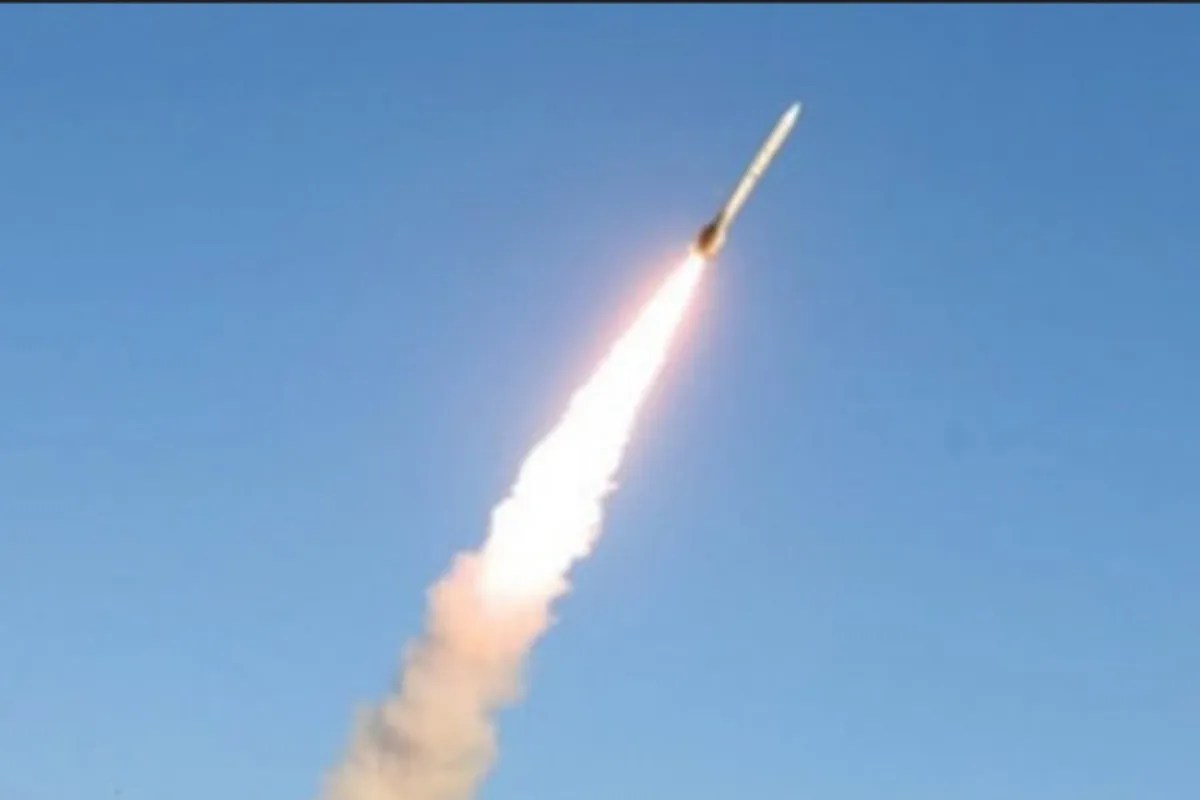
An emergency landing by a fourth-generation multirole fighter following an engagement with asymmetric air defense networks demonstrates the critical divergence between kinetic interception and mission-kill outcomes. When Iranian air defense units target a U.S.-built F-16 Fighting Falcon and force a precautionary or emergency recovery, the operational reality extends far beyond binary classifications of shoot-downs versus clean escapes. The physics of proximity-fuzed fragmentation warheads, electronic warfare saturation, and airframe redundancy dictate that modern aerial combat increasingly resolves in the gray zone of degraded capability. Evaluating this incident requires stripping away partisan information warfare to examine the mechanical failure modes of the F-16 airframe, the sensor-to-shooter kill chain of Iranian integrated air defense systems (IADS), and the aerodynamic thresholds that govern emergency diversion protocols.
The Anatomy of a Non-Catastrophic Engagement
Standard military reporting treats aerial engagements as binary events: either an aircraft is destroyed, or the intercept fails. This framework ignores the primary design mechanism of surface-to-air missiles (SAMs) and anti-aircraft artillery (AAA). Air defense warheads rarely rely on direct kinetic impact—commonly referred to as hit-to-kill—to neutralize high-speed tactical jets. Instead, they utilize continuous-rod or pre-fragmented high-explosive warheads triggered by active radar or laser proximity fuzes. For a different perspective, consider: this related article.
When a missile detonates within its lethal radius, typically between 10 and 30 meters depending on warhead mass, high-velocity tungsten or steel fragments create a localized cone of kinetic damage. If the detonation occurs slightly outside the optimal lethal envelope due to late-stage evasive maneuvering or electronic countermeasures, the aircraft survives the initial blast wave while sustaining peripheral structural or system damage. This creates a "mission kill." The aircraft is forced to abort its primary objective, jettison external stores to reduce wing loading, and execute an immediate diversion to the nearest friendly runway.
For the F-16, a single-engine platform powered by either the Pratt & Whitney F100 or General Electric F110 turbofan, the margin for catastrophic failure is narrower than in twin-engine counterparts like the F-15 Eagle or F/A-18 Hornet. However, the F-16 compensates through quadruple-redundant digital fly-by-wire (FBW) flight control systems and segregated hydraulic circuits. A proximity detonation that severs a single hydraulic line or punctures an external fuel tank will trigger immediate cockpit master caution warnings, compelling the pilot to declare an in-flight emergency (IFE) without necessarily causing a loss of control. Related insight regarding this has been published by The Washington Post.
Deconstructing the Iranian Sensor-to-Shooter Kill Chain
To force an F-16 into an emergency landing, an air defense network must execute a four-stage kill chain against an agile target equipped with advanced self-protection suites. Iranian air defense doctrine relies heavily on mobile, road-portable systems designed to survive Suppression of Enemy Air Defenses (SEAD) campaigns by minimizing electromagnetic emissions.
- Passive and Low-Probability-of-Intercept Detection: Rather than operating high-power search radars continuously—which immediately reveals emitter coordinates to anti-radiation missiles—Iranian networks utilize passive electro-optical/infrared (EO/IR) tracking systems and low-frequency VHF/UHF early warning radars. While VHF radars lack the resolution to guide a missile to a target, they provide general azimuth and elevation cues to optical trackers.
- Electro-Optical Target Acquisition: Systems such as the indigenous Sevom Khordad or upgraded Russian-origin Tor-M1 platforms integrate thermal imaging and laser rangefinders. Because EO/IR tracking is entirely passive, the F-16’s AN/ALR-56M Radar Warning Receiver (RWR) detects zero radio-frequency (RF) illumination during the initial tracking phase. The pilot receives no electronic warning that a firing solution is being generated.
- Terminal Guidance and Pop-Up Illumination: If the system employs semi-active radar homing (SARH) or command guidance, the fire-control radar illuminates the target only seconds before missile impact. Alternatively, infrared-guided interceptors—including air-to-air missiles adapted for surface launch, such as the R-73 or AIM-9 derivatives—require zero radar emission throughout the entire flight profile.
- Endgame Kinematics: At terminal closure speeds exceeding Mach 3, the F-16 pilot has a reaction window measured in single-digit seconds. Executing a high-G break turn while deploying chaff and flares degrades the missile's proportional navigation logic, shifting the intercept point from the fuselage center of mass to the aft section or wingtip.
Failure Modes Driving Emergency Diversion Protocols
When an F-16 sustains non-lethal battle damage or experiences severe system anomalies during an evasion maneuver, the pilot evaluates aircraft state through three strict operational thresholds: propulsion integrity, flight control authority, and fuel state.
Propulsion anomalies represent the most acute threat to a single-engine fighter. High-G defensive maneuvers at low-to-medium altitudes can induce compressor stalls if airflow into the intake is disrupted, particularly if debris from a nearby detonation is ingested. Foreign Object Damage (FOD) to the fan blades alters engine vibration profiles and exhaust gas temperatures (EGT). Even if the engine continues producing thrust, rising EGT or fluctuating oil pressure mandates an immediate throttle reduction to preserve the powerplant until touchdown, eliminating the excess thrust required to maintain combat altitude or outrun secondary threats.
Flight control degradation occurs when shrapnel damages the leading-edge flaps, flaperons, or horizontal stabilizers. The F-16 is aerodynamically unstable by design—a feature known as relaxed static stability—which enhances maneuverability but makes the jet entirely dependent on its flight control computer to remain airborne. If two of the four fly-by-wire channels fail, or if hydraulic pressure drops in System A or System B, the flight control system automatically reverts to digital backup modes. In this state, angle-of-attack limits are strictly capped, prohibiting aggressive maneuvering and forcing a straight-in, high-speed approach to an airfield equipped with arresting gear.
Fuel starvation is the third primary driver of emergency landings following an engagement. An F-16 operating in full afterburner during a defensive engagement consumes fuel at a rate exceeding 60,000 pounds per hour. When combined with a punctured wing tank or internal fuselage bladder, fuel quantity can drop below the "Bingo" threshold—the exact fuel state required to reach the primary recovery base—within minutes. Pilots must immediately jettison external drop tanks and air-to-ground ordnance over unpopulated areas to reduce drag and lower landing weight, extending glide ratio and minimizing touchdown speed.
The Strategic Value of the Mission Kill in Information Warfare
In asymmetric conflicts, the strategic utility of forcing an emergency landing frequently rivals that of an actual shoot-down, particularly when evaluated through the lens of cost-exchange ratios and operational tempo.
From a purely economic standpoint, launching a $500,000 surface-to-air interceptor to damage a $30 million to $65 million fighter jet (depending on the F-16 block configuration) yields a favorable asymmetric cost ratio, even if the airframe is eventually repaired. The damaged aircraft is removed from the air tasking order (ATO) for weeks or months while depot-level maintenance teams conduct non-destructive inspections, replace structural spars, and recalibrate avionics.
Information operations amplify this kinetic effect. In the absence of verifiable wreckage—the traditional proof of an aerial victory—military press offices frame an emergency landing as a tactical triumph. Conversely, the operating force routinely attributes emergency diversions to "technical malfunctions" or "bird strikes" to deny the adversary propaganda victories and obscure vulnerabilities in their electronic warfare suites. Because the exact cause of an in-flight emergency occurs inside an opaque operational environment, both narratives remain plausible to external observers until satellite imagery of the recovery airfield or leaked maintenance logs confirm structural damage.
Limitations of Open-Source Verification
Analyzing claims of aerial engagements without access to classified telemetry or crash-site forensics exposes severe analytical bottlenecks. Open-source intelligence (OSINT) relies on three primary indicators to verify an engagement: Automatic Dependent Surveillance-Broadcast (ADS-B) anomalies, high-resolution commercial satellite imagery, and localized eyewitness media.
Tactical fighters disable ADS-B transponders prior to entering contested airspace, rendering commercial flight-tracking platforms useless during the engagement itself. Analysts instead monitor secondary indicators, such as the sudden diversion of aerial refueling tankers (KC-135 or KC-46) toward forward operating bases, or the unexpected deployment of Combat Search and Rescue (CSAR) assets. However, tankers frequently alter tracks for routine weather avoidance or dynamic tasking, creating high false-positive rates in OSINT reporting.
Commercial synthetic aperture radar (SAR) and electro-optical satellites can identify an F-16 parked on a distant ramp surrounded by emergency response vehicles or towed into a hardened aircraft shelter. Yet satellite revisit rates create temporal blind spots. If an aircraft executes an emergency landing at night and is towed inside a hangar before dawn, overhead imagery will show an empty runway, leaving zero physical confirmation of the event.
Tactical Recommendations for Contested Airspace Operations
Operating fourth-generation fighters within the engagement envelope of modern, passively cued air defense networks requires immediate adjustments to mission planning and electronic warfare employment.
Force planners must cease deploying non-stealthy fourth-generation platforms into airspace defended by electro-optically guided SAMs without dedicated stand-in jamming support. Relying solely on onboard RWR suites creates a fatal blind spot against passive infrared and optical tracking chains. All strike packages operating near contested perimeters must integrate towed decoys—such as the AN/ALE-50 or AN/ALE-55 fiber-optic towed decoy—prior to entering the threat ring, rather than waiting for an active radar lock warning that may never arrive. Simultaneously, recovery protocols must pre-position mobile arresting gear and rapid battle-damage repair teams at secondary divert airfields, ensuring that a damaged single-engine fighter can recover safely without bottlenecking primary forward operating bases.