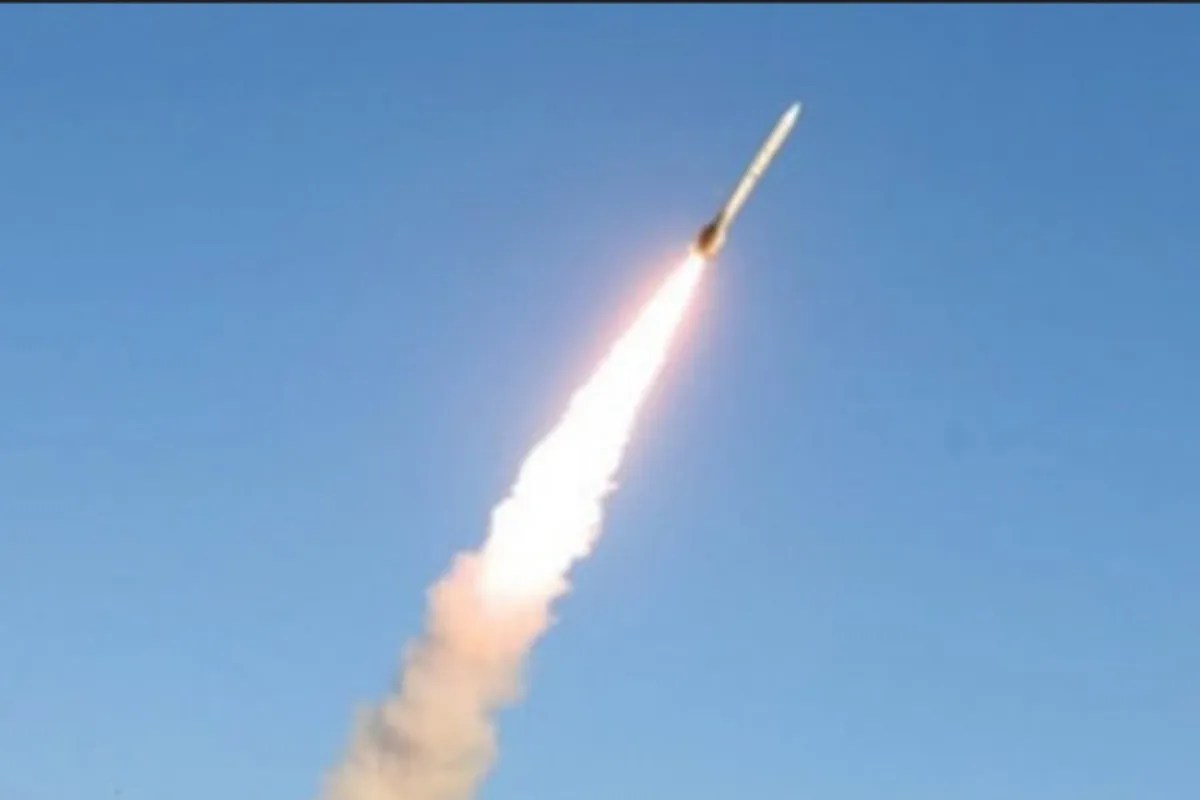
Tehran wants the world to believe its missiles blinded American air defenses in the Persian Gulf. Yet when Iran claims an attack on US Patriot systems in Bahrain, the actual evidence tells a far murkier story of information warfare, strategic posturing, and the brutal physics of modern missile defense.
No verified independent intelligence, commercial satellite imagery, or Pentagon casualty reports have confirmed the destruction of a US Patriot battery in Bahrain. Instead, these recurring assertions represent a calculated psychological operation designed to erode regional confidence in American security guarantees while masking the limitations of Iranian strike capabilities. For a different perspective, consider: this related article.
To understand why these claims surface—and why they rarely match battlefield reality—you have to look at the geography of the Gulf, the mechanics of the MIM-104 Patriot system, and the desperate calculus driving Tehran’s messaging machine.
The Anatomy of a Mirage in the Persian Gulf
Bahrain is not just another dot on the map for the United States military. The island kingdom hosts Naval Support Activity Bahrain, the headquarters of the US Navy’s Fifth Fleet, alongside forward-deployed air defense detachments tasked with guarding critical maritime chokepoints. Similar analysis on this trend has been shared by Associated Press.
Because Bahrain sits less than 150 miles across the Persian Gulf from the Iranian coast, the flight time for a ballistic missile or a low-flying cruise missile launched from southern Iran is measured in single-digit minutes. That compressed timeline leaves zero margin for error.
When Iranian state-affiliated media or aligned Telegram channels broadcast claims that Revolutionary Guard aerospace forces targeted or neutralized Patriot batteries on the island, they are exploiting a very real geographic vulnerability. The proximity makes the threat plausible on paper.
Plausibility, however, is not proof.
In modern warfare, destroying an active air defense battery leaves an unmistakable signature. A Patriot firing unit is not a single vehicle parked in an open field; it is a dispersed, multi-component network spread across hardened positions. Taking it out requires penetrating layered radar coverage, surviving kinetic interception, and landing direct hits on high-value nodes that burn hot enough to be spotted by commercial thermal satellites within hours.
When those thermal signatures and crater patterns fail to appear on commercial imagery from providers like Planet Labs or Maxar, the narrative shifts. Iranian channels routinely pivot from claiming physical destruction to asserting "electronic blinding" or "psychological deterrence," leaving no falsifiable wreckage for analysts to inspect.
How a Patriot Battery Actually Survives a Saturation Attack
To appreciate the gap between Tehran's rhetoric and operational reality, you have to understand what an attacker actually faces when targeting a MIM-104 Patriot site.
A standard battery relies on four primary elements working in concert.
- The AN/MPQ-65 phased-array radar, which scans the sky, tracks dozens of incoming threats simultaneously, and guides interceptors to their targets.
- The Engagement Control Station, the armored nerve center where human operators monitor threat trajectories and authorize launches.
- Launching stations, typically mounted on heavy trailers, carrying either older fragmentation warheads or newer hit-to-kill PAC-3 MSE interceptors.
- Dedicated power generation and communications relays that keep the grid alive under heavy electronic jamming.
Hitting one launcher does not kill the battery. Even damaging a radar does not guarantee a blind spot if neighboring batteries—or Aegis-equipped destroyers patrolling just offshore in the Gulf—are linked into the same integrated air and missile defense network.
Suppose, as a hypothetical example, an adversary launches a mixed salvo of twelve one-way attack drones alongside four medium-range ballistic missiles toward a coastal installation. The drones arrive first at low altitude, attempting to force the radar to look down and expend interceptors, while the ballistic missiles plunge from the upper atmosphere seconds later.
In that scenario, the Patriot radar prioritizes targets based on velocity and trajectory, ignoring slow-moving decoys that pose no threat to defended assets while dedicating hit-to-kill interceptors to the high-speed ballistic warheads. Meanwhile, naval radar pickets in the Gulf feed tracking data directly into the shore-based fire control network, allowing the battery to engage threats before its own radar even illuminates them.
The Economics of Asymmetric Exhaustion
If Tehran knows its claims of destroying Patriot batteries in Bahrain do not hold up under satellite scrutiny, why keep making them?
The answer lies in the ledger book.
Iran does not need to physically vaporize an American radar to achieve a strategic victory; it only needs to convince Gulf rulers and Western taxpayers that the shield is leaking. Every time an alarm sounds in Manama or an interceptor leaves its canister, the asymmetric math tilts slightly in Tehran’s favor.
Consider the cost asymmetry at play in the Gulf. A single PAC-3 MSE interceptor costs roughly four million dollars. An Iranian-designed Shahed-series drone or a short-range liquid-fueled ballistic missile costs a tiny fraction of that sum, often between twenty thousand and a few hundred thousand dollars.
By fabricating or exaggerating strikes against US air defenses in Bahrain, Iranian information strategists accomplish three distinct goals without risking a full-scale retaliatory strike on their own soil.
Eroding Host-Nation Resolve
Bahrain’s leadership walks a perpetual tightrope. Hosting the Fifth Fleet provides an essential security umbrella, yet it also turns the small island nation into a lightning rod during every regional crisis.
When Tehran claims it can strike US assets on Bahraini soil at will, the message is aimed directly at Manama’s royal court. It is a quiet warning that American hardware cannot guarantee total immunity, subtly pressuring Gulf states to restrict how Washington uses their bases during regional flare-ups.
Masking Domestic Vulnerabilities
Information warfare is frequently a mirror of internal anxiety. Whenever Iran’s own air defense network suffers embarrassment—whether from foreign covert operations, stealth aircraft incursions, or failures among its Russian-supplied S-300 systems—state media surges coverage of alleged hits on American Patriot batteries.
Projecting offensive dominance abroad helps the regime maintain an aura of invincibility among its domestic hardliners and regional proxy networks, even when its actual kinetic options are constrained by fear of overwhelming US naval and air retaliation.
Forcing Defensive Dispersal
Even an unverified threat forces military planners to react. Rumors of imminent or ongoing targeting against fixed air defense sites compel commanders to reposition radars, rotate frequencies, increase combat air patrols, and burn through maintenance hours.
That operational friction wears down crews and equipment over months of high-alert deployments.
The Fog of Electronic Warfare and Decoy Tactics
Not every report of an incident near a Patriot site is pure fiction from start to finish. Sometimes, a kernel of tactical friction gets inflated into a triumphant press release.
Across the Persian Gulf, electronic warfare is a daily, invisible reality. GPS spoofing, radar jamming, and high-altitude reconnaissance drone flights routinely test the outer edges of Allied air defense identification zones.
When a Patriot radar detects an anomalous electronic signature or tracks a high-speed drone skirting international waters near Bahrain, the system’s automated protocols trigger defensive posturing. Radars shift to wartime frequencies. Crews scramble to battle stations.
To an observer monitoring open-source aviation trackers or local social media chatter in Manama, sudden radar emissions or the sound of fighter jets scrambling from nearby bases can look like the aftermath of an attack. Iranian media monitors seize on those real-world ripples—a sudden flight diversion at Bahrain International Airport, a spike in maritime VHF radio traffic, or a routine live-fire naval exercise—and stitch them together into a coherent narrative of a successful strike.
The brilliance of this tactic is its deniability. If Western officials ignore the claim, Iranian outlets declare silence as proof of a cover-up. If the Pentagon issues a formal denial, Tehran amplifies the statement to keep the story alive in regional news cycles for another forty-eight hours.
Why Legacy Air Defense Reporting Gets the Story Wrong
Mainstream coverage of missile defense clashes often falls into a binary trap: either the shield is an impenetrable dome, or a single claimed hit proves the entire system is obsolete. Both framings miss how modern air defense actually operates.
Air defense is a game of probabilities, geometry, and magazine depth. No system on earth—not Patriot, not THAAD, not Aegis—offers a 100 percent guarantee against a determined, multi-axis saturation attack. Engineers design these systems to attrit incoming salvos, protect critical command nodes, and buy time for offensive air power to destroy the enemy’s launchers at their source.
Yet when reporters treat every unverified Telegram post about Bahrain as breaking military fact, they inadvertently validate the exact illusion Tehran is trying to build. Without corroborated visual evidence—such as geolocated impact craters, damaged radar arrays, or official casualty notifications—claims of destroyed Patriot systems belong in the realm of psychological operations, not kinetic battle damage assessments.
The Real Vulnerability in the Gulf
If you want to find the true pressure point for US Patriot batteries in Bahrain and across the Middle East, stop looking for smoking craters on satellite maps and start looking at supply chains.
The genuine threat to American air defense in the region is not a lucky Iranian missile slipping through the net. It is interceptor magazine depth.
Global demand for Patriot interceptors has surged dramatically over the past several years, driven by high-intensity conflict in Eastern Europe and simultaneous deterrence requirements in the Indo-Pacific and the Middle East. Lockheed Martin and Raytheon have worked to expand production lines for PAC-3 MSE missiles and AN/MPQ-65 radar components, yet manufacturing precision seekers and solid-rocket motors takes months, not days.
Every battery deployed to protect Bahrain draws from the same finite global stockpile. If Tehran can keep US forces on a hair-trigger footing across multiple theaters—forcing defenders to maintain maximum readiness from the Red Sea to the Strait of Hormuz—it strains logistics, maintenance cycles, and interceptor reserves without ever landing a decisive blow.
Watching the Persian Gulf requires separating the noise of Tehran's propaganda from the quiet mechanics of deterrence. Until commercial satellites show scorched earth where a phased-array radar once stood, claims of fallen Patriot batteries in Bahrain remain exactly what they were designed to be: ammunition for a war of perception.