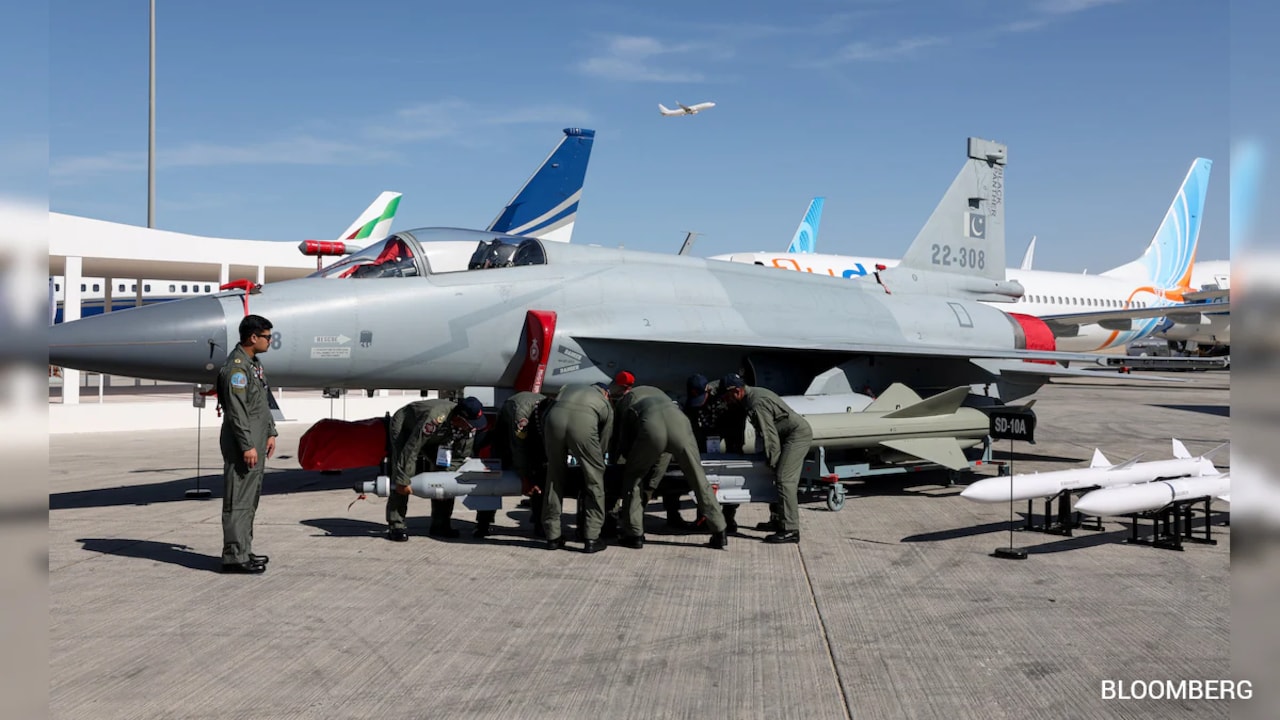
Beijing is executing a low-cost, high-yield containment strategy against New Delhi by systematically upgrading Pakistan’s military-industrial and operational capabilities, effectively forcing India into a permanent two-front resource trap without firing a single shot. Rather than viewing Sino-Pakistani defense cooperation as a series of isolated arms sales, strategic planners must analyze it as an integrated architecture of asymmetric force multiplication. By transferring multi-domain kill-chain components, dual-use logistics infrastructure, and autonomous strike platforms to Rawalpindi, China is altering the conventional deterrence equation in South Asia. The operational result is a sustained erosion of India’s qualitative military edge, compelling New Delhi to divert capital expenditure away from maritime power projection in the Indo-Pacific toward continental attrition along the Himalayas and the western border.
The Architecture of Sino-Pakistani Force Multiplication
Traditional military assessments often measure balance of power by counting hull numbers, squadron strengths, and tank divisions. That accounting method fails when evaluating the current transformation of the Pakistan Armed Forces. Beijing is not merely selling hardware to an ally; it is exporting a synchronized operational doctrine designed to neutralize India’s conventional superiority through systems confrontation.
This strategic integration rests on three distinct pillars:
- Sensor-to-Shooter Network Synchronization: Hardware loses exponential value when operated in isolation. China has provided Pakistan with integrated air defense networks (such as the HQ-9P and LY-80 systems), airborne early warning and control platforms (ZDK-03), and access to the military-grade signals of the BeiDou satellite navigation constellation. By linking Pakistani fighter aircraft, ground-based radars, and naval vessels to a unified data link, Beijing has compressed Pakistan’s observe-orient-decide-act (OODA) loop. In a high-intensity conflict, Pakistani commanders can theoretically cue long-range munitions using target acquisition data generated by Chinese-built space and aerial assets, bypassing the limitations of localized radar horizons.
- Defense-Industrial Co-Production and Indigenization: Pure arms imports create supply-chain vulnerabilities during wartime attrition. To mitigate this, China shifted from off-the-shelf sales to deep co-production agreements. The JF-17 Thunder multi-role combat aircraft program and the Al-Khalid main battle tank series represent the baseline of this model. More recently, the transfer of manufacturing capabilities for the Hangor-class (Type 039A) diesel-electric submarines and Type 054A/P frigates establishes a localized maintenance and assembly ecosystem within Pakistan. This reduces Rawalpindi’s reliance on Western spare parts, insulates its force readiness from international sanctions, and guarantees sustained operational tempo during prolonged engagements.
- Asymmetric Denial and Autonomous Attrition: Recognizing that Pakistan cannot match India’s defense budget dollar-for-dollar, Beijing has prioritized the transfer of cost-imposing technologies. This includes armed unmanned aerial vehicles (UAVs) like the Wing Loong II and CH-4, loitering munitions, and precision-guided rocket artillery (such as the A-100 and SH-15). These systems invert the cost-exchange ratio. An inexpensive drone swarm or long-range artillery salvo forces the Indian military to expend multi-million-dollar surface-to-air missiles and deploy high-value interceptors, draining war reserves before main armored or aerial formations ever make contact.
The Economic Mechanics of the Two-Front Trap
The primary objective of Beijing’s military aid to Pakistan is economic and strategic containment, not territorial conquest by proxy. In defense economics, the cost-imposition strategy seeks to force an adversary into spending disproportionate resources on defensive postures that yield zero offensive leverage.
India faces a structural budget dilemma. Defense allocations must cover three competing priorities: personnel pensions and salaries (revenue expenditure), continental border defense against China and Pakistan, and naval modernization to secure sea lines of communication in the Indian Ocean. Every rupee allocated to counter a newly modernized Pakistani armored division in Punjab or an upgraded air defense sector in Sindh is a rupee stripped from Project 75-India submarines, aircraft carrier battle groups, or long-range maritime reconnaissance assets.
The Mechanics of Budgetary Cannibalization
Consider the operational math of air defense and strike parity. When Pakistan inducts J-10CE 4.5-generation fighters equipped with PL-15 beyond-visual-range air-to-air missiles, the Indian Air Force (IAF) cannot respond merely by maintaining existing squadron strengths. Because the PL-15 possesses an engagement envelope that outranges legacy Indian munitions, the IAF is forced to accelerate the acquisition of high-end counter-systems, upgrade radar suites across older airframes, and maintain forward-deployed combat air patrols along both the Line of Control (LoC) and the Line of Actual Control (LAC).
This creates a compounding operational tax:
- Accelerated Airframe Fatigue: Continuous high-altitude patrolling along the LAC and heightened alert postures along the western front burn through flight hours at an unsustainable rate, bringing forward major overhaul cycles and increasing maintenance costs per flight hour.
- Logistics Redundancy: Fighting on two fronts with divergent geographies—high-altitude mountain warfare in Ladakh versus mechanized desert and riverine warfare in Rajasthan and Punjab—requires maintaining two distinct supply chains, specialized ammunition stockpiles, and non-interchangeable cold-weather versus heat-shielded equipment.
- Capital Expenditure Stagnation: As operational and maintenance costs rise to meet immediate border threats, the capital acquisition budget shrinks as a percentage of total defense spending. Modernization timelines slip, widening the capability gap against the People’s Liberation Army (PLA).
Dual-Use Infrastructure and the CPEC Vector
Military hardware requires physical arteries to sustain combat operations. The China-Pakistan Economic Corridor (CPEC), often analyzed strictly through the lens of sovereign debt and commercial trade, functions simultaneously as a strategic military logistics network. Under the doctrine of Military-Civil Fusion, Beijing mandates that overseas infrastructure projects built by Chinese state-owned enterprises meet dual-use specifications capable of supporting PLA and allied military operations.
Port facilities at Gwadar provide the most visible example of this structural reality. While currently lacking the heavy defensive fortifications of a dedicated naval base, Gwadar’s deep-water berths, heavy-lift cranes, and fuel storage capacities are engineered to accommodate PLA Navy (PLAN) logistical replenishment vessels and submarines. Establishing a persistent Chinese naval presence in the Arabian Sea threatens India’s western seaboard and maritime trade routes, effectively opening a third, maritime front in any regional conflict.
Inland, the expansion and hardening of the Karakoram Highway, alongside the development of fiber-optic communication cables running from Xinjiang to the Arabian Sea, creates a secure overland logistical and data bridge. In a scenario where the Indian Navy successfully blockades the Strait of Malacca—a core pillar of New Delhi’s maritime deterrence strategy against Beijing—this overland corridor provides China with an alternative energy and supply transit route, while enabling rapid resupply of munitions and spare parts to the Pakistan Army without traversing contested waters.
Tactical Integration and Intelligence Sharing
Beyond hardware and concrete, the most destabilizing shift in the Sino-Pakistani axis is operational synchronization. Historically, the threat of a coordinated two-front war was mitigated by friction: differing command structures, incompatible communications protocols, and divergent political timelines between Beijing and Islamabad. Those barriers are systematically disappearing.
Joint military exercises—such as the Shaheen air force drills and Warrior special forces exercises—have evolved from basic diplomatic signaling into complex, high-end combat simulations. Chinese and Pakistani pilots now train together in simulated contested electromagnetic environments, practicing joint suppression of enemy air defenses (SEAD) and coordinated beyond-visual-range engagements.
Furthermore, real-time intelligence, surveillance, and reconnaissance (ISR) sharing alters the tactical geometry along the northern borders. During the 2020 Ladakh border crisis, the PLA demonstrated a willingness to deploy large-scale forces rapidly along the LAC. If Beijing feeds high-resolution satellite imagery, electronic intelligence (ELINT), and unmanned aerial surveillance data from the Tibetan plateau directly to Pakistani command centers in Rawalpindi, Pakistan gains unprecedented visibility into Indian troop movements, reserve deployments, and logistics hubs deep inside Indian territory. This eliminates strategic surprise, allowing Pakistan to stage localized border escalations precisely when Indian reserves are pinned down in the Himalayas.
Separating Confirmed Capability from Strategic Projection
Rigorous analysis requires stripping away alarmist speculation to distinguish between verified operational capabilities and theoretical risks. While the trajectory of Sino-Pakistani integration is clear, several structural constraints limit its immediate battlefield effectiveness.
Known Operational Realities
- Hardware Parity in Niche Sectors: Pakistan’s induction of the J-10CE, PL-15 missile, and SH-15 self-propelled howitzer is a confirmed reality that gives Rawalpindi localized qualitative parity—and in specific tactical envelopes, superiority—over legacy Indian systems.
- Satellite and Navigation Independence: Pakistan’s full transition to the military-encrypted BeiDou network eliminates its vulnerability to American GPS degradation during a crisis, securing the guidance accuracy of its ballistic and cruise missile arsenals.
- Naval Modernization: The delivery of Type 054A/P frigates and the ongoing construction of Hangor-class submarines undeniably expand the Pakistan Navy’s anti-submarine warfare and area-denial capabilities in the northern Arabian Sea.
Educated Hypotheses and Structural Limitations
- Full Kill-Chain Interoperability: While hardware is shared, seamless real-time battlefield integration between PLA and Pakistani forces remains an educated hypothesis rather than a proven fact. True joint operations require unified command-and-control authority, which runs counter to deeply ingrained sovereignty instincts within the Pakistani military establishment.
- Economic Insolvency as a Brake: Pakistan’s chronic macroeconomic instability acts as a hard ceiling on its military ambitions. Even with concessionary Chinese loans and deferred payment structures, Rawalpindi faces severe fiscal constraints in funding fuel reserves, live-fire training ammunition, and the high operational costs of maintaining complex fourth-generation platforms. A modern air force grounded by fuel shortages or deferred maintenance cannot sustain a high-intensity war of attrition.
- Equipment Reliability: Chinese defense exports, while rapidly advancing in sophistication, remain largely untested in peer-on-peer, high-intensity combat. Early operational reports regarding structural fatigue and engine reliability in systems like the JF-17 suggest that lifecycle sustainment under wartime stress could degrade Pakistan’s theoretical sortie generation rates.
Strategic Countermeasures for New Delhi
Attempting to match the combined defense-industrial output of China and Pakistan through symmetrical force expansion is a losing proposition for India. New Delhi’s gross domestic product and defense budget cannot sustain a dollar-for-dollar arms race on two continental fronts while simultaneously building a blue-water navy.
To break the Sino-Pakistani containment trap, Indian defense planners must shift from symmetrical attrition to asymmetric deterrence and doctrinal decoupling.
First, New Delhi must harden its northern border posture through passive defense, subterranean logistics, and autonomous ISR networks rather than manpower-heavy forward deployments. Reducing the troop density required to hold the LAC frees up capital expenditure for long-range precision strike capabilities—such as hypersonic glide vehicles, extended-range BrahMos variants, and loitering munition swarms—that hold high-value Chinese infrastructure in Tibet at risk without requiring territorial conquest.
Second, India must exploit the maritime vulnerability that Beijing cannot engineer away. While CPEC offers a partial overland bypass, the overwhelming majority of China’s seaborne trade and energy imports still transits the Indian Ocean. Investing heavily in nuclear-powered attack submarines (SSNs), long-range maritime patrol aircraft, and forward operating bases in the Andaman and Nicobar Islands allows India to maintain an asymmetric chokehold on Chinese commercial lifelines, creating strategic leverage that deters Beijing from underwriting Pakistani adventurism.
Finally, New Delhi must accelerate domestic defense-industrial privatization to compress procurement cycles. Relying on slow-moving state-owned ordnance boards guarantees that India’s modernization will always lag behind Beijing’s export timelines. Only by building an agile, indigenous manufacturing base capable of mass-producing low-cost drones, electronic warfare suites, and precision munitions can India invert the cost-exchange ratio and neutralize the military utility of the Sino-Pakistani axis.