Political pundits love a shiny demographic milestone because it lets them write lazy headlines without doing any actual math.
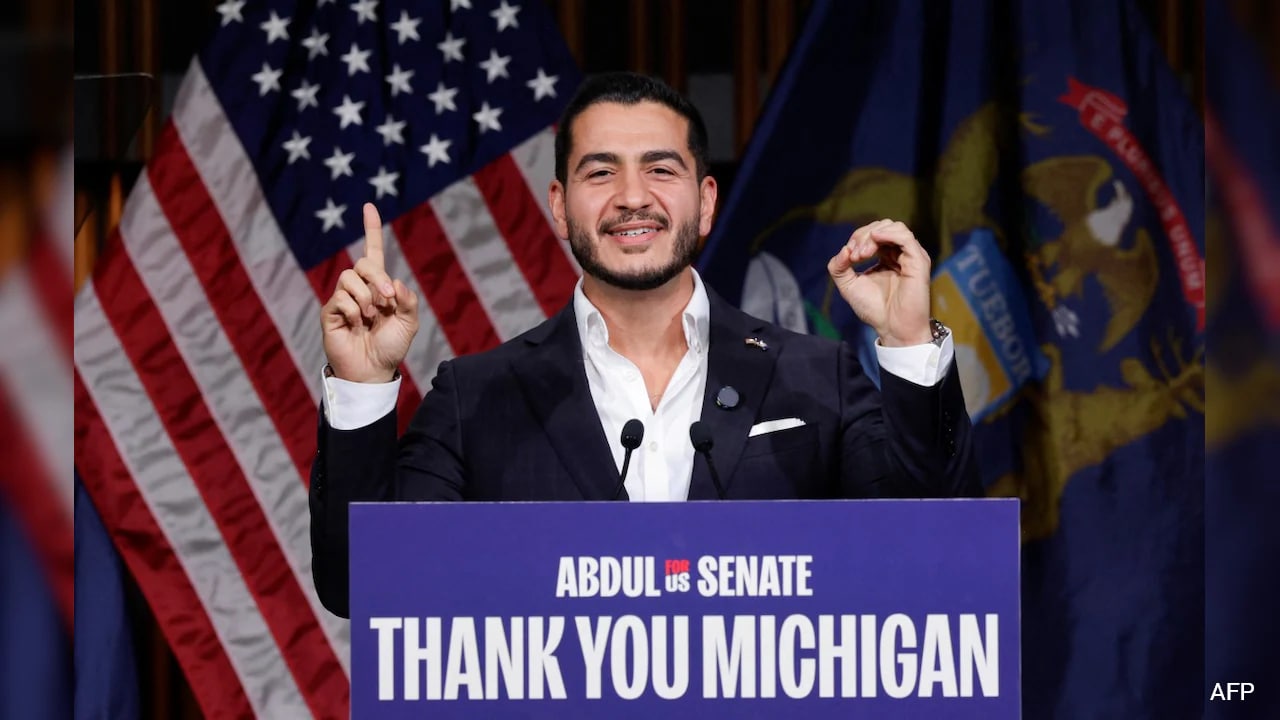
The mainstream coverage surrounding Abdul El-Sayed winning the Michigan U.S. Senate race treats his victory like a simple triumph of identity politics. They frame it as a historic "first" for Muslim Americans and move on to the next news cycle. That superficial framing completely misses the real story. If you think El-Sayed won because Michigan voters suddenly decided to check a diversity box, you fundamentally misunderstand how power works in the Rust Belt.
I have watched national strategists burn tens of millions of dollars on Midwestern campaigns built on coastal demographic assumptions. They treat voters like predictable avatars sorted by race, religion, and zip code. They lose every single time they rely on that playbook. El-Sayed did not win a Senate seat in a critical swing state by running on biography alone. He won because he weaponized populist economics, dismantled traditional party gatekeepers, and exploited a massive blind spot in how both major parties talk to working-class families.
The Identity Politics Trap
Legacy media outlets cannot resist reducing complex elections to demographic scorecards. The competitor narrative treats El-Sayed's faith as the primary engine of his campaign. This is backwards. In a statewide Michigan race, religious identity is a hurdle to clear, not a built-in coalition. Muslim Americans make up roughly two to three percent of Michigan's electorate. You do not win a statewide general election with three percent of the vote.
To win Michigan, a candidate has to pull tens of thousands of votes from non-Muslim, blue-collar workers in Macomb County, suburban moderates in Oakland County, and disaffected rural voters across the western half of the state.
El-Sayed's background as an epidemiologist and former Detroit Health Department director gave him a specific kind of credibility that had nothing to do with identity. When you spend years fighting lead poisoning in public schools and battling corporate polluters in industrial zip codes, voters hear a clear message: this guy fights the system that is making us sick.
The pundit class confused the messenger's background with the message's power. Voters do not care about making history when they cannot afford their electric bill or their insulin. They care about who is willing to break the ribs of the corporate monopolies squeezing them dry.
Why Traditional Political Playbooks Failed Against Him
Establishment consultants operate on a rigid set of rules. Rule one: move to the center in the general election. Rule two: take huge checks from corporate political action committees so you can buy endless television ads. Rule three: never alienate major donors.
El-Sayed threw that manual in a shredder.
Instead of softening his stance on single-payer healthcare and aggressive corporate regulation to appease moderate donors, he doubled down. He treated corporate PAC money like radioactive waste. By refusing corporate cash, he turned a perceived fundraising disadvantage into his sharpest weapon. Every time an opponent attacked him on the airwaves, El-Sayed could point directly to the pharmaceutical, insurance, and utility companies funding the attack ads.
Political scientists like Thomas Ferguson have spent decades documenting the Investment Theory of Party Competition, which argues that political parties are largely controlled by coalitions of major investors rather than ordinary voters. When a candidate steps outside that investor network and funds a statewide operation through small-dollar grassroots donations, the traditional levers of political discipline break down. Party bosses cannot threaten to cut off funding they never provided in the first place.
Consider a thought experiment to see how much this changes the math. Imagine a scenario where a traditional candidate raises twenty million dollars, with seventy percent coming from corporate PACs and wealthy bundlers. That candidate spends half their day in a call center begging rich people for money and the other half watering down their policies so those donors do not revolt. Now compare that to a candidate raising the same amount from hundreds of thousands of teachers, autoworkers, and nurses giving twenty-seven dollars at a time. The second candidate owns their own voice. They can call out price-gouging grocery chains or predatory health insurers by name on live television without worrying about a donor pulling their support the next morning.
That structural independence is what terrified the political establishment far more than any demographic milestone.
The Mechanics of the New Rust Belt Coalition
If you want to understand how a progressive populist wins a statewide race in Michigan, stop looking at cable news panels and start looking at precinct-level voter behavior. The old coalition that carried Democrats in the Midwest for generations—built on passive union endorsements and suburban complacency—fractured years ago.
El-Sayed rebuilt a winning margin by connecting three distinct groups that consultants usually treat as incompatible:
- Urban and inner-ring suburban progressives who demand structural reform on healthcare, climate, and housing costs.
- Arab American and Muslim voters in Dearborn, Hamtramck, and Metro Detroit who felt abandoned by establishment foreign policy and demanded accountability.
- Disaffected working-class voters in industrial towns who usually lean conservative on social issues but despise corporate bailouts, offshoring, and private equity firms gutting local employers.
The secret glue holding this coalition together is materialism. Not philosophical materialism, but kitchen-table economic materialism. When you talk about lowering prescription drug costs, breaking up agricultural monopolies, and holding utility companies accountable for power outages, cultural divides shrink rapidly. A union pipefitter in Warren and a graduate student in Ann Arbor might disagree on a dozen social issues, yet both know they are getting ripped off by the same insurance conglomerates and monopoly utilities.
Dismantling the Common Misconceptions
When an outsider wins a major Senate race, the same tired questions always surface in search engines and newsrooms. Most of them are built on flawed premises.
Does this win mean Michigan has shifted permanently to the far left?
No. Michigan remains a razor-thin swing state where voters regularly split their tickets. Voters did not suddenly adopt an ideological manifesto; they hired a populist disruptor. If El-Sayed governs like a cautious, partisan bureaucrat once he arrives in Washington, those same swing voters will throw him out in six years without blinking.
Did social media virality replace traditional ground game?
Completely false. Viral clips build name recognition, which is useless unless you have field organizers knocking on doors in February snowstorms. El-Sayed's background in public health taught him how to build neighborhood-level infrastructure. You treat voter turnout like an epidemiological intervention: map the precincts, identify the exact barriers keeping people from voting, and deploy trusted local messengers block by block.
Will the Senate establishment absorb and neutralize him?
That is the real risk, and anyone pretending otherwise is naive. The U.S. Senate is engineered to slow down radical change and socialize outsiders into conformity. Committee assignments, legislative procedure, and endless fundraising cycles grind down even the fiercest reformers. Winning the seat was the easy part; surviving the institutional pressure of Washington without becoming just another reliable party vote is where most populists fail.
The Real Lesson for Anyone Trying to Build Power
There is a massive downside to the contrarian model El-Sayed used, and strategists need to be honest about it. It requires total discipline and leaves zero margin for error.
When you swear off corporate money and attack entrenched party leaders, nobody is coming to save you if your message slips. You cannot rely on super PACs to bail out a weak campaign with fifty million dollars of late attack ads. Your message has to be sharp enough to cut through billionaire-funded smear campaigns on its own. If you sound rehearsed, timid, or overly academic, voters will reject you immediately.
El-Sayed succeeded because he translated complex policy mechanics into plain, angry, relatable English. He did not talk about healthcare like a policy wonk reciting white papers; he talked about it like a doctor who watched patients go bankrupt because an insurance clerk denied a life-saving scan.
How to Apply This Playbook Outside Politics
Whether you are running a campaign, launching a challenger brand, or trying to disrupt a stagnant industry, the core lesson from Michigan holds true:
- Attack the industry's sacred cow. Find the practice every incumbent relies on—like corporate PAC money in politics or hidden fees in finance—and make your refusal to participate your primary selling point.
- Focus on shared pain over demographic segmentation. Stop slicing your audience into microscopic identity buckets. Find the universal frustration that unites people across different backgrounds and hammer it relentlessly.
- Build direct distribution. Do not beg legacy gatekeepers for validation. Build a direct relationship with your supporters so you never have to ask permission to speak the truth.
The headlines celebrating a historic religious milestone give Washington insiders a comfortable story they can digest over brunch. They get to pat themselves on the back for progress while ignoring the economic rage that actually drove voters to the polls.
Abdul El-Sayed did not win because Michigan voters wanted to make history; he won because they are furious at the status quo, and Washington is completely unprepared for what happens when that anger gets organized.