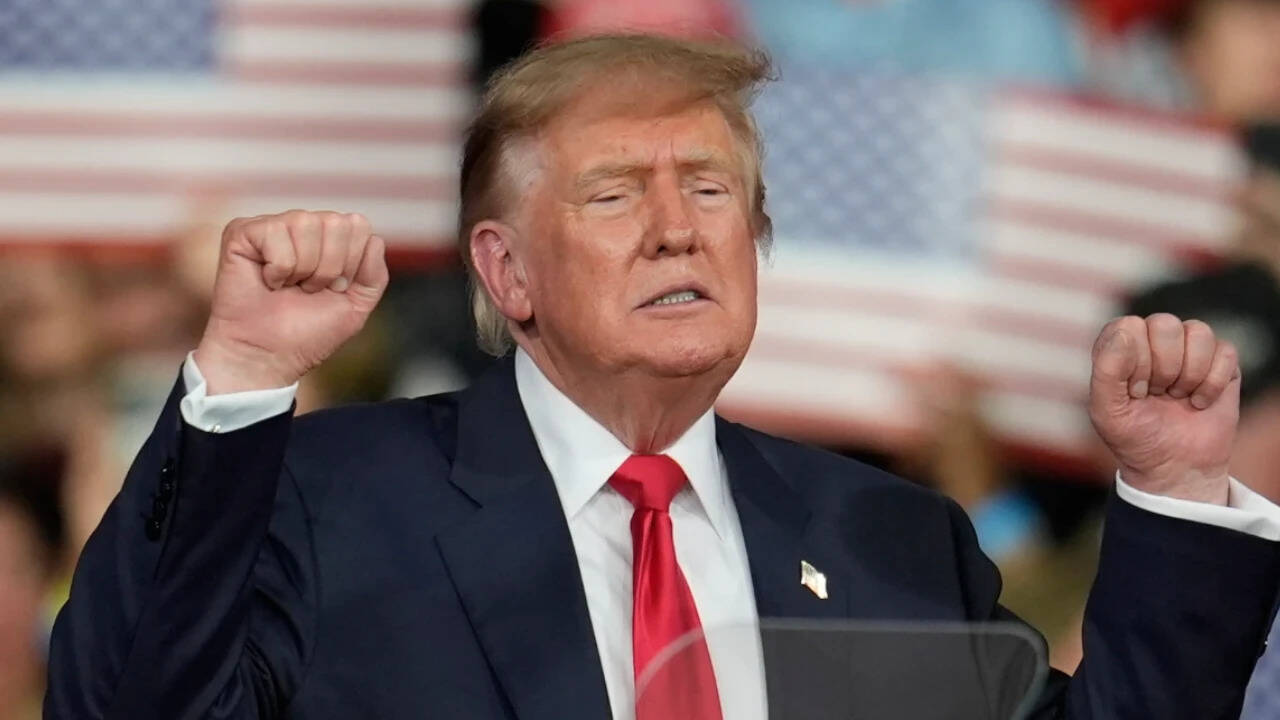
Kinetic decapitation campaigns create a structural paradox for the victorious state: eliminating an adversary's command hierarchy degrades their war-fighting capacity while simultaneously destroying the institutional counterparties required to sign a durable peace. When U.S. President Donald Trump remarked at a Georgia rally in October 2026 that Washington had to pause the elimination of Iranian officials simply to identify a surviving negotiating partner, he inadvertently articulated one of international relations' most acute operational bottlenecks. Following the onset of the 2026 conflict—which saw the February death of Supreme Leader Ali Khamenei, the subsequent targeting of his successor Mojtaba Khamenei, and the systematic removal of senior Islamic Revolutionary Guard Corps (IRGC) and Defence Council commanders—Washington achieved overwhelming tactical dominance over Iran's conventional air, naval, and command assets. Yet tactical supremacy does not automatically convert into strategic termination.
To understand why an adversary with shattered conventional forces and a decimated leadership roster remains resistant to formal capitulation, analysts must strip away political rhetoric and examine the mechanics of coercive bargaining, principal-agent breakdowns, and maritime economic blockades.
The Decapitation-Negotiation Trade-Off
In classical deterrence and coercive diplomacy theory—most notably formalized by Thomas Schelling—compellence relies on inflicting pain while leaving the adversary a credible, survivable mechanism to comply with demands. Decapitation strikes invert this logic by prioritizing immediate organizational paralysis over long-term diplomatic coherence.
The 2026 U.S.-Israeli campaign against Tehran's upper echelons illustrates how rapid vertical attrition alters decision-making structures:
- Elimination of "Level-One" and "Level-Two" Principals: The removal of top decision-makers—including Ali Khamenei, Defence Council Secretary Ali Shamkhani, IRGC Commander-in-Chief Mohammad Pakpour, and Supreme National Security Council Secretary Ali Larijani—severed the apex of Iran's hybrid clerical-military state. In centralized autocracies, only the supreme executive possesses the ideological legitimacy to make painful strategic concessions without triggering an internal coup.
- Survival Bias Toward Hardline Factionalism: When senior pragmatists and established institutional brokers are killed in precision strikes, surviving mid-tier commanders operate under acute survival pressure. Stepping forward to negotiate a surrender or accept strict limits on ballistic missile ranges and uranium enrichment carries an immediate risk of being labeled a traitor by surviving radical factions—or being targeted in subsequent kinetic sweeps.
- Command Fragmentation and Principal-Agent Failure: As centralized command-and-control nodes are destroyed, operational authority devolves to regional commanders and decentralized cells. Even if an interim council in Tehran agrees to a ceasefire, it lacks the administrative machinery to enforce compliance across dispersed missile units, maritime militia forces, or regional proxies.
This dynamic produces an inverse relationship between tactical attrition and diplomatic velocity. Every successful strike against a senior official lowers the enemy's operational ceiling while raising the transaction costs of negotiating an end to hostilities.
Maritime Chokepoints and the Economics of Siege Warfare
Recognizing the diminishing returns of continued leadership attrition, Washington shifted its operational center of gravity from broad aerial bombardment to maritime economic strangulation. By establishing naval control over the Strait of Hormuz and enforcing a blockade on Iranian ports, the administration sought to replace kinetic destruction with financial exhaustion.
From an economic standpoint, controlling the Strait of Hormuz functions as an asymmetric lever with three distinct mechanical effects:
- Revenue Severance: Iran's state budget depends heavily on crude oil and condensate exports transiting the Persian Gulf. Interdicting commercial shipping at the port level starves the surviving bureaucracy of hard currency, preventing the regime from paying civil servants, funding reconstruction, or subsidizing domestic essentials.
- Asset Freezing and Capital Lockup: Combined with hundreds of billions of dollars in immobilized foreign reserves, the blockade isolates Tehran from international clearing mechanisms. Without liquidity, the state cannot reconstitute its degraded air defense networks or replenish ballistic missile interceptors.
- Asymmetric Escalation Control: Maintaining a naval cordon allows the blockading power to dictate the tempo of conflict. Rather than committing ground forces or sustaining high-tempo bombing campaigns, Washington can rely on localized, preventative strikes—such as the November 2026 operations targeting Qeshm Island—to neutralize anti-ship threats while letting economic pressure compound over time.
However, siege economics introduces a severe second-order risk: global energy market distortion. Even when a blockade successfully isolates Iranian exports, persistent military friction around a waterway handling roughly a fifth of global petroleum liquids embeds a structural risk premium into crude prices. Furthermore, protracted economic deprivation rarely induces rapid political surrender in ideological states; instead, it encourages the targeted regime to weaponize regional instability to raise the economic cost for the blockading coalition.
Domestic Political Constraints on Coercive Endurance
External military leverage cannot be separated from domestic political durability. A strategy of indefinite maritime containment requires years to force political capitulation, yet democratic executives operate within rigid electoral cycles.
The November 2026 U.S. midterm elections demonstrated how domestic economic sensitivity acts as a hard constraint on foreign military endurance. Voter dissatisfaction over inflation, energy price volatility, and prolonged overseas entanglement resulted in Democrats winning control of Congress, narrowing the executive branch's legislative runway. Within the administration itself, friction emerged between sustained military pressure and domestic economic stabilization, underscored by Vice President J.D. Vance's public acknowledgment of the war's political toll and his subsequent redirection away from diplomatic talks toward domestic policy.
This domestic divergence creates an acute timing mismatch:
- The Executive Window: Between November 2026 and the seating of the new Congress in January 2027, the White House retains maximum operational freedom before legislative oversight and funding restrictions tighten.
- The Adversary's Discount Rate: Surviving leaders in Tehran observe U.S. electoral outcomes closely. When an adversary perceives that domestic political fatigue is eroding the coercer's willingness to sustain a blockade or resume full-scale combat, their incentive to make unilateral concessions collapses. They shift from seeking a negotiated exit to simply outlasting the opponent's political cycle.
Evaluating Strategic Pathways and Operational Limits
When Washington declared in mid-November 2026 that it no longer needed a formal deal with Iran because it held both Tehran's frozen capital and control over the Strait of Hormuz, it signaled a transition from coercive diplomacy to unilateral containment. Both strategic options carry distinct structural limitations that prevent a clean resolution.
Pursuing a Formal Diplomatic Settlement via regional intermediaries such as Oman and Qatar requires Washington to lower its maximalist demands—specifically permanent zero enrichment, strict ballistic missile range caps, and total proxy abandonment. Because Tehran's surviving leadership lacks a consolidated supreme authority capable of absorbing the domestic humiliation of total capitulation, any viable agreement would require face-saving off-ramps and phased sanctions relief. Without these, negotiations stall indefinitely while intermittent strikes continue.
Conversely, maintaining Indefinite Maritime Containment avoids the political cost of making concessions to a weakened adversary, but it leaves the conflict structurally unresolved. A blockade does not eliminate dispersed asymmetric capabilities, nor does it guarantee permanent nuclear latency suppression without on-the-ground verification. Over time, enforcement fatigue, illicit smuggling networks, and friction with energy-importing allies erode the integrity of the cordon.
To resolve the attrition paradox before legislative constraints tighten in January 2027, Washington must abandon the expectation of a grand, comprehensive treaty signed by a unified Iranian executive. Instead, the optimal strategic play is to formalize a transactional, verifiable freeze anchored to the existing naval blockade: maintain strict maritime interdiction over dual-use technology and weaponry while offering sequential, revocable export waivers tied exclusively to observable compliance—such as verifiable caps on ballistic missile testing and non-interference with commercial transit in the Strait of Hormuz—thereby converting temporary tactical dominance into enforceable behavioral containment without requiring a surviving Iranian leader to sign an instrument of formal surrender.