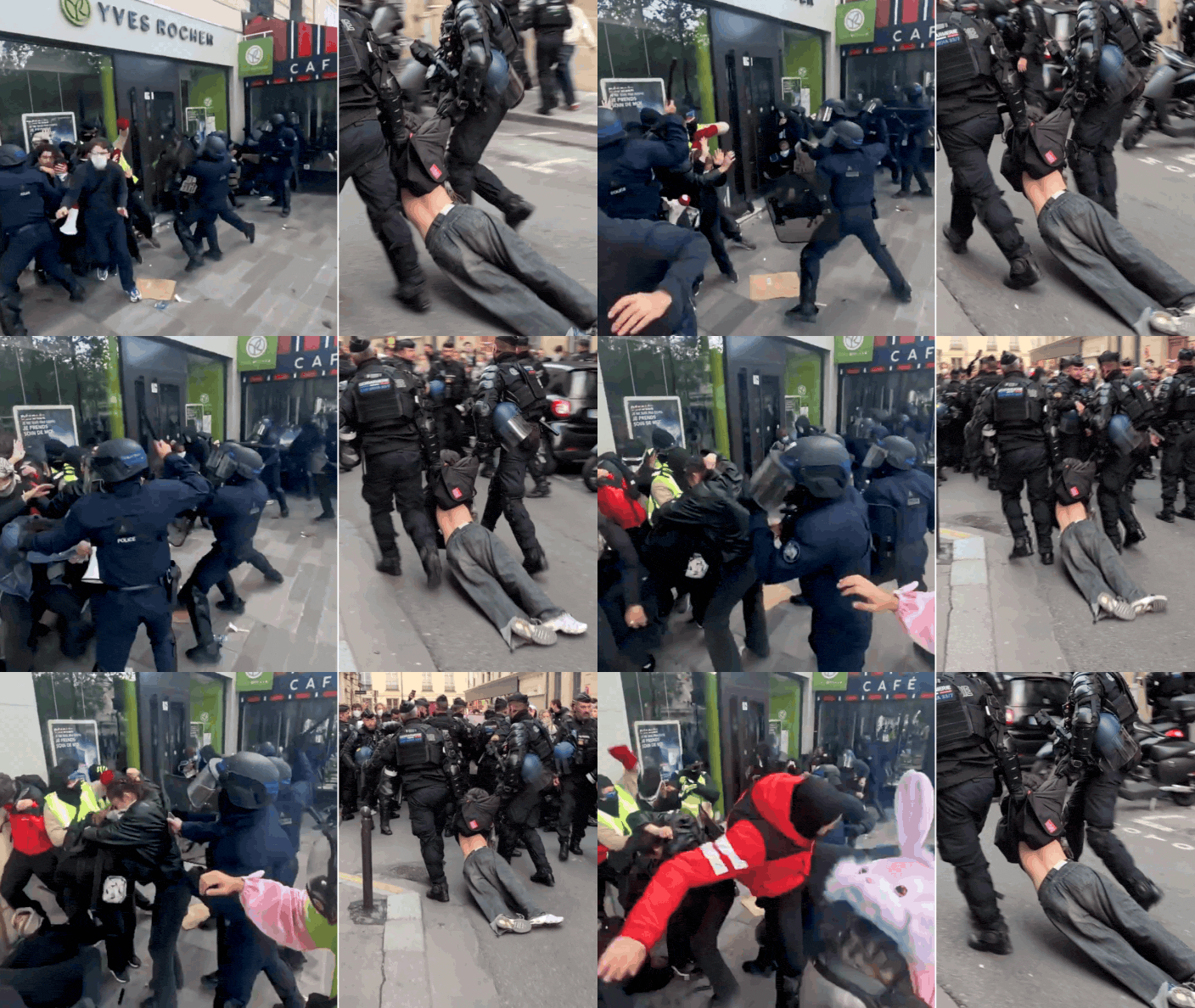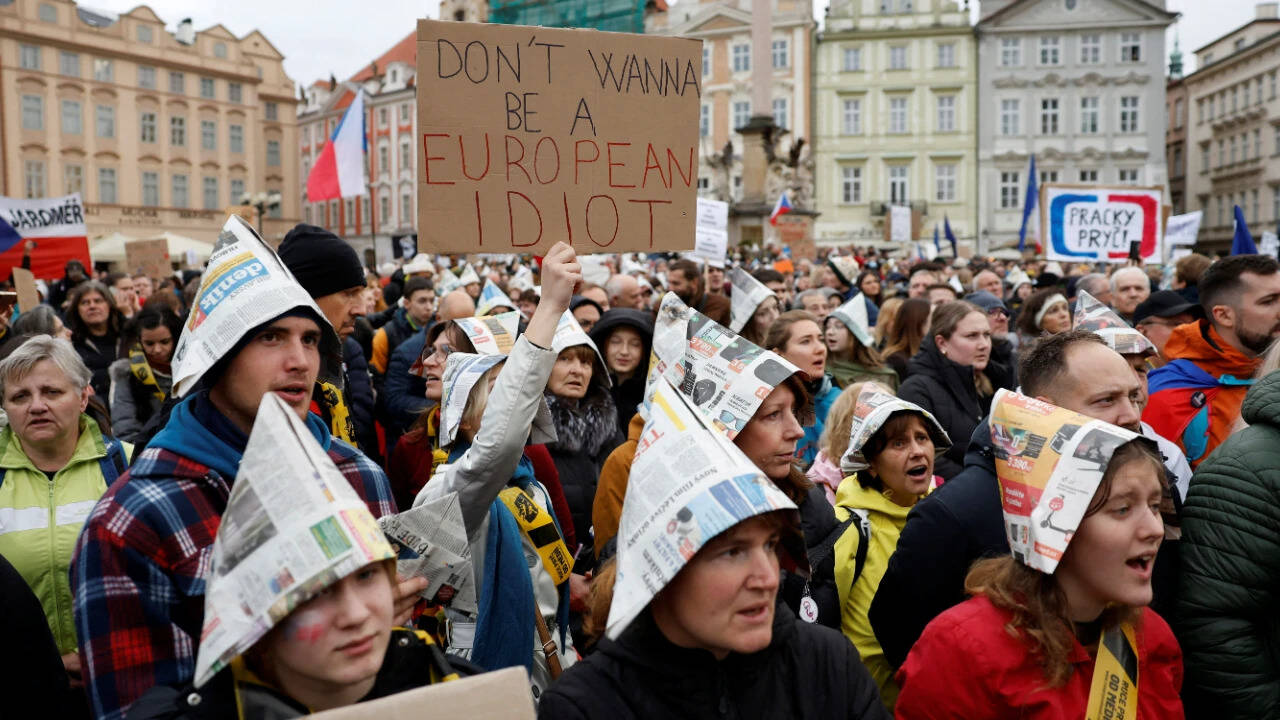
Walk across Wenceslas Square or Old Town Square when Czech politics hits a nerve, and you feel it immediately. That exact energy returned to Prague as thousands of demonstrators gathered to protest the Czech government's controversial public media funding overhaul.
People aren't just annoyed about a few extra crowns on a monthly bill or an abstract budget tweak. They're furious because they see a direct threat to the independence of Czech Television (Česká televize) and Czech Radio (Český rozhlas). When protesters chant that they've "had enough," they're reacting to a long, bitter tug-of-war over who controls the information stream in Central Europe.
If you've followed regional politics over the last few years, this clash won't surprise you. Watching how media battles unfold across Prague, Bratislava, and Budapest makes one thing obvious. Money is never just money when public broadcasting is on the table.
What Is Actually Happening With Czech Public Media
Let's strip away the political spin first. For decades, Czech public service media has relied on a direct license fee model paid by households and businesses owning a television or radio receiver. That system kept a buffer between the newsroom and the ruling coalition in parliament.
The debate in Prague centers on rewriting those rules. Depending on which faction you listen to, the overhaul is either a desperate attempt to modernize an outdated fee structure or a Trojan horse designed to bring journalists to heel.
Here is where the friction sits:
- The direct fee model versus state budget financing. Critics of license fees argue that forcing every household with a smartphone or internet connection to pay a media tax is regressive and outdated. Defenders counter that moving public broadcasters onto the annual state budget turns editorial independence into a yearly political hostage negotiation.
- Expanding the definition of a receiver. Earlier government proposals aimed to raise the monthly fees—which sat unchanged at 135 CZK for television and 45 CZK for radio for over fifteen years—while broadening the levy to cover anyone owning an internet-capable device. Opposition politicians slammed that as a stealth tax.
- The counter-push to abolish fees altogether. On the other side of the political spectrum, populist leaders and opposition figures like Andrej Babiš and the ANO movement have openly campaigned on scrapping concessionaire fees completely and folding Česká televize and Český rozhlas under direct state budget funding.
Thousands of citizens took to the streets because they've seen what happens next when a government holds the purse strings directly. You don't have to guess how that story ends. Just look across the border.
Why Protesters Say They Have Had Enough
Crowd fatigue in Prague is real, yet people still show up in the cold. Why? Because Czech civil society treats public broadcasting as a democratic tripwire.
Since the Velvet Revolution in 1989, Česká televize has occupied a unique space in Czech public life. It isn't perfect. Sometimes it's bloated, slow, and overly bureaucratic. Even its fiercest defenders will admit that over coffee.
Yet during major political crises—most notably the massive 2000–2001 Czech TV crisis when journalists literally barricaded themselves inside the Kavčí Hory newsroom to resist political appointees—public television proved it wouldn't fold quietly. Citizens showed up by the tens of thousands back then, too.
That historical muscle memory explains the anger on the streets right now. Protesters aren't marching to defend every single entertainment program or executive salary at Kavčí Hory. They're marching because once a parliament gains the power to slash or approve a broadcaster's budget every autumn, self-censorship kicks in overnight. Editors start second-guessing investigative stories. Producers start avoiding tough interviews with cabinet ministers. Nobody needs to send a censor into the studio when an accountant can achieve the exact same result.
The Central European Playbook Everyone Recognizes
You can't analyze the Prague protests in a vacuum. Anyone paying attention to Central European media knows the exact sequence of events that unfolded in Hungary under Viktor Orbán and more recently in Slovakia under Robert Fico.
In Slovakia, Fico's government dismantled the existing public broadcaster RTVS and replaced it with a new entity, STVR, restructuring leadership and budget mechanisms along the way. Thousands protested in Bratislava, warning that the country was sliding backward toward state-controlled propaganda.
Czech voters watched those broadcasts from Bratislava on their own screens. They saw journalists pushed out, boards stacked with loyalists, and critical coverage evaporate. So when politicians in Prague start talking about "restructuring," "auditing," or "abolishing license fees to save families money," alarms go off immediately.
People recognize the phrasing. It sounds reasonable on a campaign poster. Who wants to pay another monthly bill during an inflation crunch? Nobody. Framing a structural takeover as a consumer tax cut is the oldest trick in the political playbook.
What Critics of the Current System Get Right
Being honest about this fight means acknowledging why the current setup frustrates so many ordinary Czechs. Pretending Česká televize and Český rozhlas have zero flaws only hands ammunition to their enemies.
First, the fee structure genuinely fell behind reality. Keeping the TV fee frozen at 135 CZK since 2008 meant inflation quietly gutted the broadcaster's real purchasing power over fifteen years. Meanwhile, media consumption shifted completely away from traditional living-room television sets toward streaming platforms and mobile devices.
Second, transparency around spending has been a recurring sore spot. Taxpayers who fund a public institution want clear answers on external production contracts, executive bonuses, and duplicate programming. When management drags its feet on financial disclosures, public trust erodes fast.
Third, perceived editorial bias fuels resentment outside Prague. In smaller towns and rural regions across Moravia and Bohemia, plenty of voters feel that Prague-based commentators look down on them. Whether that perception is fair or exaggerated doesn't change the political reality. If millions of citizens feel alienated by a service they are legally forced to pay for, political opportunists will exploit that anger every single time.
How State Budget Funding Actually Changes a Newsroom
Suppose the critics get their way, license fees disappear, and parliament funds public media directly from the national treasury. What changes on Monday morning?
Nothing dramatic at first. The logo stays the same. The evening news still airs at 7:00 PM. That's why public pushback often struggles to sustain momentum once the initial headlines fade.
The rot happens slowly over two or three budget cycles.
The Annual Budget Squeeze
When a broadcaster relies on household fees, revenue is predictable. Management can plan multi-year investigative projects, maintain foreign correspondents in Brussels, Washington, and Kyiv, and invest in regional bureaus. Put that money inside the state budget, and every ministry competes for the same pot of cash. Suddenly, investigative units look "too expensive." Foreign desks get trimmed first.
Subtle Editorial Pressure
Politicians rarely pick up the phone and bark orders at reporters anymore. They don't have to. They simply threaten to freeze budget adjustments during coalition talks if coverage feels "unbalanced." Over time, newsroom leaders learn which topics trigger headaches and quietly steer coverage toward safer ground.
Loss of the Media Council Buffer
Under the traditional Czech model, oversight bodies like the Council for Czech Television (Rada České televize) already suffer from intense political lobbying whenever parliament elects new members. Stripping away independent revenue removes the last financial firewall protecting the institution from whoever holds a temporary majority in the Chamber of Deputies.
The Bigger Fight Over Trust and Information
Strip away the legal jargon and legislative amendments, and this battle comes down to a basic question facing every European democracy right now. Should a country maintain a well-funded public information space that doesn't answer to billionaires or ruling parties?
Commercial media in the Czech Republic is heavily concentrated. Several major newspapers, radio stations, and online portals sit inside the portfolios of wealthy oligarchs and industrial conglomerates with deep business interests tied to state regulations and subsidies. That concentration makes independent public service journalism even more vital than it was twenty years ago.
Without a strong Česká televize and Český rozhlas, huge swaths of local reporting, cultural programming, minority language broadcasts, and deep investigative work simply vanish. Private advertisers won't fund an expensive six-month investigation into municipal procurement fraud. They want clicks, outrage, and cheap lifestyle content.
Protesters in Prague understand that trade-off instinctively. They know that once a public broadcaster is hollowed out, you can't rebuild it in a single election cycle. Trust takes decades to earn and six months of bad legislation to destroy.
What to Watch Next in Czech Media Politics
If you're tracking how this standoff plays out over the coming months, ignore the loud speeches on social media and watch three concrete pressure points instead.
- Follow the legislative mechanics in the Chamber of Deputies. Watch whether lawmakers preserve an indexed, automatic revenue mechanism tied to inflation or push funding toward annual parliamentary approval. Indexation protects independence; annual votes destroy it.
- Track appointments to the television and radio councils. The real power struggle happens inside the oversight boards that hire and fire general directors. Look closely at who gets nominated and which political blocs back them.
- Watch the turnout outside Prague. Demonstrations in the capital always draw cameras, but political shifts in the Czech Republic are decided in regional cities like Brno, Ostrava, and Plzeň. If protests spread beyond Prague's historic squares, politicians in parliament will start recalculating fast.
Keep an eye on official parliamentary transcripts at the Chamber of Deputies of the Parliament of the Czech Republic and statements from the European Broadcasting Union, which actively monitors threats to public service media across Europe. Don't rely on partisan summaries—read the actual funding mechanisms being proposed, because the fine print decides who controls the microphone.