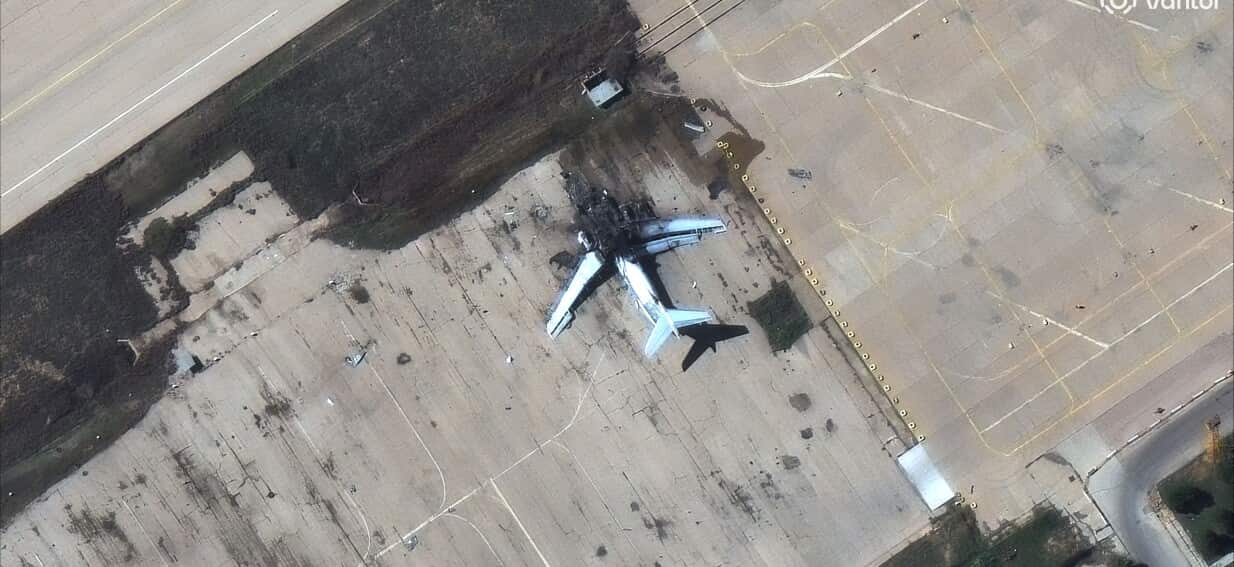
The attribution of kinetic impact events in dense urban or educational zones requires a rigorous decoupling of visual evidence from geopolitical narrative. In the case of the explosion at the primary school facility in Semnan, Iran, the initial claims suggesting a United States air strike lack the structural signatures associated with modern precision-guided munitions (PGMs). A technical audit of the blast site, fragmentation patterns, and local military infrastructure suggests the event was not an external strike but a catastrophic failure within the domestic aerospace testing corridor.
The Triad of Kinetic Evidence
Determining the origin of a high-order explosion involves the analysis of three distinct variables: the crater morphology, the thermal displacement radius, and the presence of pre-impact acoustic signatures. If you liked this piece, you might want to look at: this related article.
1. Crater Morphology and Soil Displacement
A standard U.S. air strike utilizing a GBU-39 Small Diameter Bomb or a Joint Direct Attack Munition (JDAM) produces a specific depth-to-width ratio. These munitions are designed for delayed-fuze penetration or specific overpressure. The Semnan site exhibits "shallow-dish" displacement. This indicates a low-velocity impact or a surface-level detonation. High-altitude air strikes involve terminal velocities that drive the casing deep into the substrate before high-explosive (HE) detonation. The absence of a deep penetration cavity suggests the kinetic energy was lateral rather than vertical.
2. Thermal Displacement and Carbonization
Aerial PGMs use specialized energetic materials (like AFX-757 or PBXN-109) that leave distinct chemical residues and high-heat carbonization patterns. The scorching at the Semnan facility shows irregular soot distribution. This inconsistency is a hallmark of liquid fuel combustion rather than the stable, high-velocity detonation of a military-grade warhead. When a cruise missile or heavy drone strike occurs, the thermal bloom is symmetrical. The asymmetrical charring at this site points toward the combustion of unspent propellant—a signature of a failing rocket motor. For another angle on this event, check out the latest coverage from BBC News.
3. Acoustic and Atmospheric Data
Witness accounts and available seismic data fail to record the "supersonic crack" or the sustained engine whine characteristic of F-15/F-16 sorties or subsonic BGM-109 Tomahawk flight paths. Instead, local sensors recorded a low-frequency rumble followed by a rapid pressure spike. This sequence mirrors the "shudder-and-fail" profile of a solid-fuel booster losing structural integrity mid-flight.
Geopolitical Proximity and the Testing Corridor
The school's location in Semnan is a critical variable. Semnan Province houses the Imam Khomeini Space Center and various Aerospace Force facilities of the Islamic Revolutionary Guard Corps (IRGC). This region is a primary corridor for the testing of the Shahab and Khorramshahr ballistic missile families.
The propulsion failure of a domestic prototype offers a more logically consistent explanation than a deep-penetration air strike. An external strike on a civilian target in a non-combat zone provides zero strategic utility for a foreign power, especially when such an action would trigger immediate, verifiable radar tracking from third-party regional actors. No "squawk" or transponder interference was noted by regional air traffic control centers in the minutes leading up to the event, which would typically accompany an incursion into sovereign Iranian airspace.
The Failure of the External Strike Hypothesis
To accept the theory of a U.S. air strike, one must account for the total failure of the Iranian integrated air defense system (IADS). The region is protected by S-300 batteries and the domestically produced Bavar-373. These systems are specifically tuned to detect the RCS (Radar Cross Section) of strike aircraft and standoff munitions.
The "ghost strike" theory—where an attack occurs without a single radar lock or intercept attempt—suggests one of two things:
- The Iranian IADS is entirely non-functional (unlikely given recent regional performance).
- The object originated from within the defensive perimeter, rendering the IADS blind to its trajectory.
Domestic flight tests are often exempted from certain automated engagement protocols. If a missile deviates from its flight path shortly after launch, the time-to-impact is often shorter than the human-in-the-loop decision cycle required to intercept a friendly asset.
Mechanical Proxies for the Blast
If we categorize the blast by energy output, the damage to the school building equates to approximately 100-200kg of TNT equivalent. While this matches the warhead size of a small missile, the debris field contains high concentrations of aluminum and ammonium perchlorate. These are the primary constituents of solid rocket propellant.
The presence of uncombusted propellant scattered across the playground suggests that the "warhead" was not the only source of the explosion. The entire airframe disintegrated upon impact. In a high-altitude PGM strike, the fuel is mostly exhausted by the time of impact, or the high-heat detonation vaporizes the remaining traces. The "wet" nature of the Semnan debris—where fuel-soaked materials continued to burn at low temperatures—is a definitive indicator of a low-altitude mechanical failure of a launched projectile.
Strategic Implications of Misattribution
Misidentifying a domestic industrial or military accident as an act of foreign aggression serves a short-term propaganda function but creates long-term strategic fragility. When a state attributes internal failures to external actors, it creates a "false threat" baseline that can lead to unintended escalation.
The logical framework for analyzing such events must prioritize the Physicality of Failure:
- Origin Trace: Did the object cross a border or a launch pad?
- Chemical Fingerprint: Is the residue characteristic of a stable warhead or volatile propellant?
- Strategic Logic: Does the target align with the known military doctrine of the accused?
In Semnan, all three indicators point inward. The school was not a target; it was a geographic casualty of a failed domestic propulsion test.
The operational recommendation for regional observers is to monitor the subsequent activity at the nearby Shahrud or Semnan launch sites. A sudden "stand-down" order or a pause in the scheduled satellite launch windows will confirm that the IRGC is conducting a root-cause analysis of the hardware that struck the school. Future attribution should ignore inflammatory headlines and focus on the seismic and chemical data that remains long after the rhetoric fades.