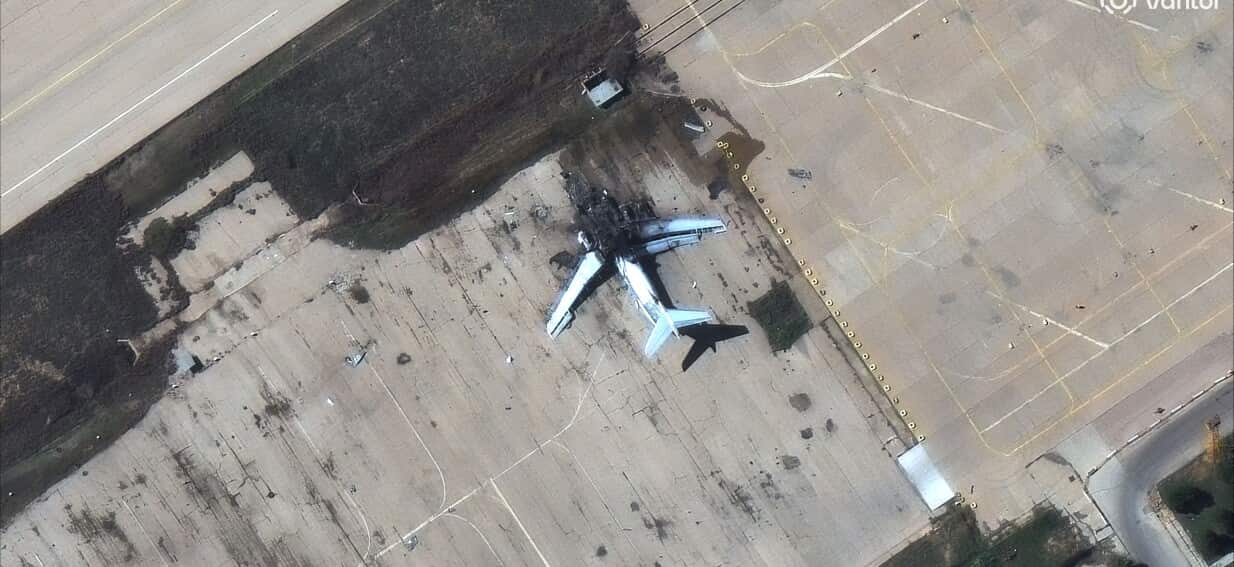
The prevailing narrative surrounding the current Middle Eastern conflict suggests a binary choice between a quick tactical victory or a slow, grinding stalemate. This is a fundamental misunderstanding of the modern theater of war. The reality is far more jagged. We are not looking at a single war, but a multi-layered explosion of regional grievances, advanced drone technology, and a total collapse of the old diplomatic guardrails. Victory is no longer defined by flags planted in capital cities. It is defined by the endurance of supply chains and the psychological threshold of civilian populations.
While analysts debate troop movements, the real story lies in the "grey zone" where state actors and non-state proxies blur. The idea that this conflict will follow a predictable arc—escalation, peak, and ceasefire—ignores the last twenty years of asymmetrical warfare. The conflict has become a permanent feature of the regional economy, driven by an arms race that favors cheap, mass-produced technology over expensive, traditional defense systems.
The Drone Saturated Battlefield
Modern combat has hit a tipping point. For decades, air superiority was the exclusive domain of wealthy nations with billion-dollar fighter jets. That era is dead. Today, a thousand-dollar suicide drone can disable a multi-million dollar tank or penetrate sophisticated air defense bubbles. This democratization of destruction has fundamentally changed the "how" of the war.
Non-state actors have mastered the art of the swarm. By launching dozens of low-cost projectiles simultaneously, they can overwhelm even the most advanced interception systems through sheer mathematical exhaustion. This isn't just a tactical shift. It is a financial one. If it costs $50,000 to intercept a $500 drone, the defender loses the war of attrition long before they lose the war of territory. This economic imbalance ensures that the fighting will persist as long as the components for these drones—often sourced from everyday consumer electronics—remain available on the global market.
The Proxy Paradox and the End of De-escalation
The Middle East has always been a theater for proxy influence, but the current configuration is uniquely volatile. Historically, the "great powers" acted as throttles. They could dial the intensity of a conflict up or down depending on their own strategic needs. Those throttles are now broken.
The organizations currently engaged on the front lines have developed their own internal momentum. They are no longer simple extensions of their benefactors' foreign policy. They have their own domestic pressures, their own recruitment cycles, and their own ideological mandates that often run contrary to the "stability" their sponsors might prefer. This creates a feedback loop where every tactical strike intended to deter future aggression actually serves as a recruitment tool for the next generation of combatants.
When we talk about the war lasting "as long as it takes," we have to ask who is making that decision. It is no longer just the men in suits in distant capitals. It is the field commanders who see every ceasefire as an opportunity for the enemy to re-arm, and therefore, an unacceptable risk.
The Collapse of Digital Information Integrity
In previous conflicts, the "fog of war" was caused by a lack of information. Today, it is caused by a surplus of it. Every person with a smartphone is a combat correspondent, a propagandist, or a victim—and often all three at once.
The psychological front of this war is being fought in real-time on social media feeds. This isn't just about "fake news" or deepfakes. It is about the selective curation of reality. When an explosion occurs, the world sees ten different angles of it within seconds, each accompanied by a different narrative of blame. This immediate, visceral connection to the violence prevents the kind of cooling-off periods that used to allow for diplomatic back-channeling. Public outrage is now a constant, high-octane fuel that makes it politically impossible for leaders to compromise.
Urban Warfare and the Architecture of Entrenchment
The physical geography of the conflict has moved into the dense, concrete hearts of major cities. This isn't the desert warfare of the 20th century. This is high-stakes, three-dimensional combat in environments where the distinction between "military infrastructure" and "civilian life" has been intentionally erased.
The Subterranean Front
Below the streets, hundreds of miles of reinforced tunnels have created a secondary map that the public rarely sees. These aren't just hiding spots. They are factories, hospitals, and command centers.
Clearing these areas requires a level of violence that inevitably results in massive civilian displacement and infrastructure collapse. This creates a humanitarian vacuum that non-state actors are more than happy to fill, further cementing their control over the population. The "outcome" of such a conflict isn't a peace treaty; it is the total hollow-out of urban centers, leaving behind a scarred landscape that will take decades to rebuild, assuming the fighting ever stops long enough for the concrete to dry.
The Energy Weapon and Global Aftershocks
We have to look at the maritime chokepoints. A significant portion of the world’s energy and trade flows through narrow corridors that are now within easy reach of even the most basic missile systems. The war is not contained to the Levant or the Gulf; it is present in every shipping container stuck in a port and every spike in European heating costs.
Economic pressure was once thought to be a tool for peace—the idea that nations are too interconnected to fight. We are seeing the inverse. Interconnection is being used as a weapon. By threatening the flow of oil or the safety of merchant ships, local actors can force the entire global economy to pay attention to their specific grievances. This ensures that the international community cannot simply "walk away" from the conflict, but it also means that any solution must satisfy a dozen different global powers with competing interests.
The Failure of Traditional Diplomacy
The UN and other international bodies are operating on a 1945 software package in a 2026 world. The mechanisms for "enforcing" international law rely on a consensus that no longer exists. We have moved into a multipolar reality where the threat of sanctions or a strongly worded resolution carries almost no weight against actors who view themselves as being in an existential struggle.
Diplomacy requires a shared language of "win-win" scenarios. In the current Middle Eastern climate, the prevailing logic is "zero-sum." For one side to feel secure, the other must be perceived as totally defeated. Since total defeat is virtually impossible in the age of asymmetrical warfare and external sponsorship, the result is a permanent state of "low-intensity" high-casualty conflict.
The Myth of the Day After
Governments frequently discuss "Day After" plans—who will govern, who will pay for reconstruction, and how the borders will be drawn. These plans are almost always fantasies. They assume a clean break between the war and the peace that simply does not happen in the modern era.
Reconstruction cannot begin while the underlying causes of the conflict remain unaddressed. If you rebuild a bridge but the group that blew it up is still in power—or still has a grievance—that bridge is just a future target. The "outcome" of this war is likely to be a series of frozen conflicts, punctuated by seasonal flare-ups, rather than a definitive resolution.
Technical Superiority vs. Human Endurance
There is a hard truth that military analysts often overlook because it cannot be quantified in a spreadsheet. High-tech militaries are built for efficiency, speed, and precision. They are designed to win quickly because their public-support bases are fragile. They cannot sustain high casualty rates or multi-decade deployments without domestic political collapse.
Conversely, the insurgent groups they fight are built for endurance. They operate on a different timeline, measuring success in generations rather than election cycles. They don't need to "win" in the traditional sense; they only need to avoid losing. As long as they exist, they are winning. This fundamental mismatch in the "will to fight" is why the most technologically advanced militaries in the world often find themselves frustrated by opponents who possess only a fraction of their firepower.
The Shifting Alliances of Convenience
Keep a close eye on the secondary players. Countries that were once staunch allies are now hedging their bets, forming quiet partnerships with former enemies to secure their own borders or energy interests. The old "East vs. West" or "Sunni vs. Shia" binaries are being replaced by a cynical, transactional brand of realpolitik.
This makes any long-term prediction nearly impossible because the "teams" can change overnight based on a single drone strike or a shift in the price of crude oil. Stability is not the goal for many of these players; managed instability is often more profitable, as it justifies increased military spending and the consolidation of domestic power.
The war in the Middle East is not a problem to be solved, but a condition to be managed. The "experts" predicting outcomes are often looking for an exit ramp that hasn't been built yet. The jagged reality is that the conflict has evolved into a self-sustaining system, fueled by technological shifts, the breakdown of global norms, and a local architecture of defiance that does not recognize the concept of a final whistle.
Stop looking for the end date on the calendar. Start looking at the new baseline of global volatility.