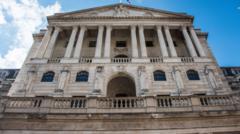
Borrowers hoping for a sudden drop in mortgage payments are going to be disappointed. The Bank of England is widely expected to keep its base interest rate frozen at 3.75% during the Monetary Policy Committee meeting. If you have been tracking the economic numbers lately, this shouldn't come as a surprise.
The dream of rapid rate cuts throughout 2026 has officially collided with geopolitical reality. Millions of homeowners are feeling the pinch of high monthly payments, but the central bank has a bigger fire to fight.
Inflation is creeping back up. It currently sits at 3.3%, which is a painful jump from the brief dip below the 2% target we saw late last year. Shifting global events mean Threadneedle Street has to stay defensive.
The Energy Shock Rewriting the Rules
You can't talk about British interest rates right now without talking about the Middle East. The ongoing conflict in the region is directly impacting UK households by messing with global supply lines and energy shipping routes.
When shipping containers have to take the long way around Africa, everything gets more expensive. Motor fuel prices are climbing at British pumps. Utility bills are on track to increase again.
Because of these energy spikes, Bank of England Governor Andrew Bailey and his colleagues are backed into a corner. If they cut rates too early, they risk supercharging an economy that is already dealing with rising import costs. It is basically an invitation for inflation to spiral out of control again.
Senior officials like Deputy Governor Sarah Breeden have been vocal about this risk. The messaging from the central bank is clear. They will do whatever it takes to drag inflation back down to that golden 2% target, even if it means keeping borrowing painful for the foreseeable future.
What the Economists Say Behind Closed Doors
City analysts are completely aligned on the immediate outcome, but they are split on what happens next. A recent Reuters poll of 65 economists showed a unanimous prediction for a hold at 3.75%. Nobody is betting on a cut.
The real story lies in the voting breakdown. At the last meeting in April, the committee voted 8-1 to maintain the rate, with a lone hawk voting for an increase to 4%. James Smith, a developed market economist at ING, expects a 7-2 split this time. More members might break ranks to demand a hike to cool down sticky core inflation.
Oxford Economics takes a grimmer view for borrowers, suggesting that the 3.75% rate will remain locked in for the rest of the year and well into 2027. On the other side of the fence, former chief economist Andy Haldane argues that underlying economic growth is fragile and actually needs lower rates to survive.
This internal tension means the central bank is taking things one meeting at a time. There is no master plan. They are reacting to raw, volatile data.
The Immediate Impact on Your Wallet
So, what does a rate freeze actually mean for your personal finances? It depends entirely on your current housing debt situation.
- Tracker and Variable Mortgages: You won't see an immediate spike in your monthly outgoings, which is a small mercy. Your rate stays pinned to the 3.75% base.
- Fixed-Rate Mortgages: If you are locked into a deal, nothing changes today. But if your fixed term ends later this year, you are looking at a harsh transition to much higher rates than you secured a few years ago.
- Savers: Cash remains king for now. High-street banks will keep offering relatively decent returns on savings accounts, giving you a good opportunity to grow emergency funds.
Mortgage expert Sarah Tucker warned homeowners against playing a waiting game. Waiting for a massive rate drop before remortgaging is a losing strategy right now. The market has already priced in these extended high rates.
Your Next Financial Moves
Stop waiting for the cavalry. The era of ultra-cheap money isn't coming back anytime soon. If your fixed-rate mortgage deal expires within the next six months, start talking to a broker immediately to lock in the best available current rate.
If you have spare cash, maximize your high-yield savings accounts before the banks start chipping away at the yields later down the line. Keep your eye on the next major milestone dates. The committee meets again in July and September. Until the geopolitical chaos settles and energy prices stabilize, expect the Bank of England to keep its foot firmly on the economic brakes.