The dust along the Iraq-Iran border does not settle; it merely waits. It clings to the boots of men who have spent decades memorizing the jagged contours of the Zagros Mountains, men who carry the weight of a thousand-year-old grievance in the chambers of their rifles. To a satellite orbiting thousands of miles above, these are just thermal signatures—blobs of heat huddled near the border of the Kurdistan Region. To the world’s intelligence agencies, they are "Kurdish opposition groups." But if you stand in the shadow of those peaks, you realize they are something far more volatile. They are the match looking for a reason to strike.
Iran is a pressure cooker with a soldered safety valve. Inside, the heat has been rising for years, fueled by a collapsing currency, a thirsty landscape where the water has run dry, and a generation of young people who no longer recognize the slogans of 1979. Outside, on the periphery, thousands of armed fighters are watching the steam whistle. They aren't just waiting for an opportunity. They are waiting for a signal. You might also find this related story insightful: The $2 Billion Pause and the High Stakes of Silence.
The Men in the Shadows of the Zagros
Consider the life of a fighter in the Komala or the PDKI. These aren't just abstract political entities. They are comprised of individuals who left their homes in Sanandaj or Mahabad because the air of the Islamic Republic felt too thin to breathe. They live in camps that look like villages but function like barracks. Their children go to school within earshot of artillery drills. For years, they have been the "forgotten front," a dormant threat that Tehran manages through periodic missile strikes and cross-border assassinations.
Something has shifted. The silence in the mountains has grown heavy. The Iranian government recently issued a blunt ultimatum to the Iraqi government: disarm these groups or face the consequences. Iraq, caught in the middle as it always is, tried to comply by moving these fighters away from the immediate border. But you cannot move a sentiment. You cannot relocate the desire for a different life. As extensively documented in latest articles by Associated Press, the implications are notable.
The fighters remain. Thousands of them. They are well-trained, highly motivated, and, most importantly, they are connected to the underground networks inside Iran that ignited during the "Woman, Life, Freedom" protests. They are the external muscle for an internal rebellion that never truly went away.
A Signal from Across the Ocean
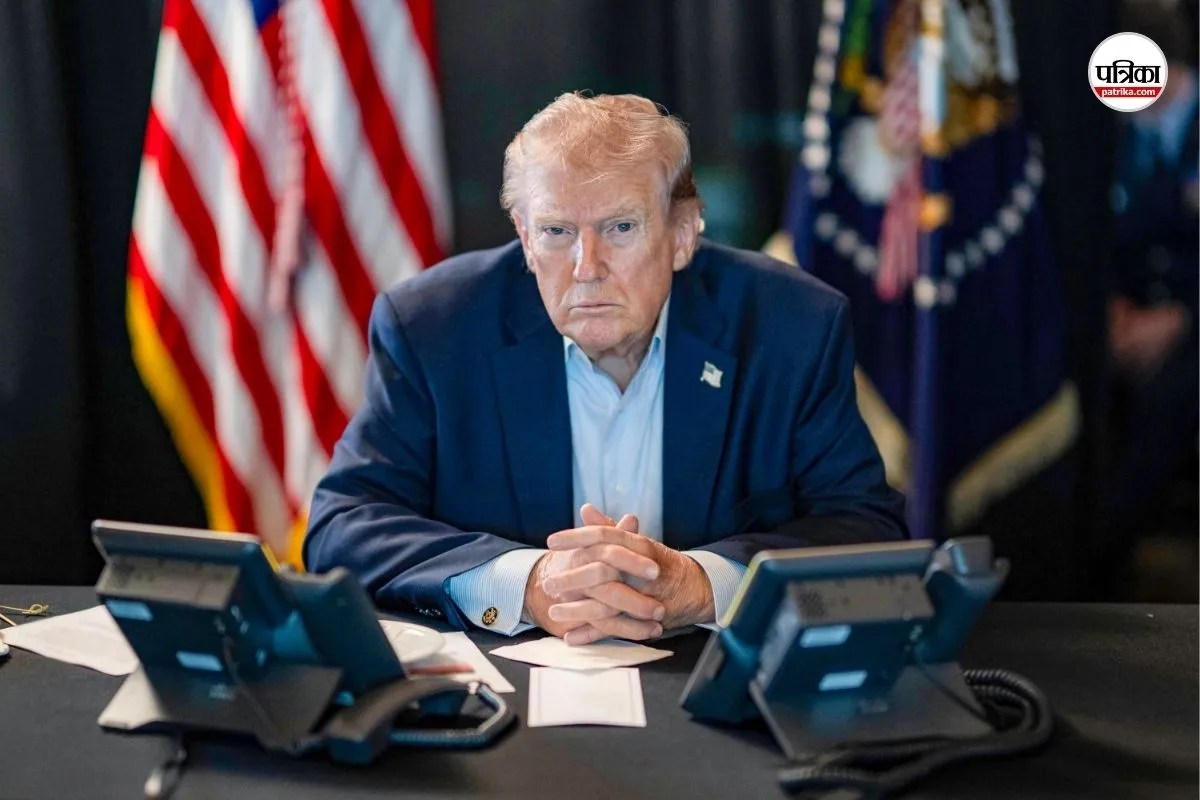
Tehran’s greatest fear isn't the rifles in the mountains. It is the green light from Washington. For decades, the United States has played a delicate game of containment, hesitant to fully back Kurdish militants for fear of destabilizing the entire region or alienating allies in Baghdad and Ankara. But foreign policy is a fickle beast, often driven by the "enemy of my enemy" logic that turns yesterday’s outcasts into tomorrow’s vanguard.
If the U.S. decides that the current Iranian administration is no longer a manageable threat but a terminal one, the arithmetic changes. A "green light" doesn't necessarily mean American boots on the ground. It means sophisticated intelligence sharing. It means modern anti-drone technology. It means the kind of logistical support that turns a ragtag militia into a coordinated revolutionary army.
Imagine the scenario. A spark flies in a provincial Iranian city—perhaps over a water riot or a garment choice. Usually, the Basij and the Revolutionary Guard move in to crush it with overwhelming force. But this time, the border breathes. This time, the thousands of fighters waiting in the Iraqi hills don't just watch. They move. They provide the professional military backbone that a civilian protest lacks.
The Specter of the Syrian Ghost
We have seen this script before, and the ending is rarely written in gold. When a state begins to fracture and outside powers begin to fund the cracks, the result is rarely a clean transition to democracy. It is more often a descent into the "Syrianization" of the state.
The stakes are invisible until they are written in blood on the sidewalk. A civil war in Iran would not look like a neat line on a map. It would be a house-to-house, brother-against-brother tragedy. It would involve the IRGC, the regular army, the various ethnic minorities—Kurds, Baluchs, Azeris, Arabs—and a middle class caught in the crossfire. The "thousands of fighters" at the border are the heralds of this possibility. They represent the moment when political dissent transforms into kinetic energy.
Tehran knows this. Their recent aggression—the missile strikes into Erbil, the threats against Baghdad—is a display of pre-emptive panic. They are trying to kill the revolution in its cradle before it can walk across the border. Every time a drone rises from an Iranian base to strike a camp in Northern Iraq, it isn't just a military operation. It is a confession of fear.
The Economy of Despair
Why would a man pick up a gun and sit in a cold mountain camp for ten years? You have to understand the mathematics of desperation. In the border provinces of Iran, the rial is a joke. Unemployment is a constant companion. When the state offers you nothing but a noose or a baton, the mountain starts to look like a sanctuary.
This isn't just about high-level geopolitics or the "Great Satan" versus the "Axis of Resistance." It is about the fact that a father in Iranian Kurdistan can't buy medicine for his daughter, and he blames the men in Tehran. He sees the fighters across the border not as terrorists, but as the only people who might actually change his reality.
The Iranian state is built on the idea of Velayat-e Faqih, the guardianship of the jurist. But a guardian who cannot provide bread or water eventually loses his ward. The "thousands of fighters" are simply the physical manifestation of that lost legitimacy. They are the debt that has come due.
The Silence Before the Storm
The world focuses on the nuclear program, the enrichment levels, and the centrifuges spinning in Natanz. Those are the loud, visible problems. But the quiet, invisible stakes are being played out on the winding roads and the hidden bunkers of the Iran-Iraq border.
Wait for the next protest. Wait for the next round of strikes. If the "thousands of fighters" start to cross in coordinated groups, if they bring the fight to the Iranian interior, then the map of the Middle East will be rewritten in a way that we cannot even imagine. It won't be a neat transition. It will be a storm.
One day, the wind will shift. The green light will flicker across the Atlantic. And the men who have been memorizing the Zagros for decades will finally start to walk home.
The dust is ready. The rifles are clean. All that is missing is the spark.