The smoke over Beirut isn't just a local crisis anymore. When Israel's military crossed the Blue Line into Southern Lebanon, it didn't just trigger a tactical skirmish with Hezbollah. It set off a diplomatic firestorm that reached all the way to New Delhi. Iran isn't staying quiet. Their Ambassador to India, Iraj Elahi, recently made it clear that Tehran views the current escalation as a point of no return. You might think a conflict thousands of miles away doesn't impact the Indian subcontinent, but the Ambassador's rhetoric suggests otherwise.
He basically told the Indian public and the global community that if Israel doesn't stop, the "axis of resistance" will move beyond mere proxy strikes. This isn't just about Lebanon or Gaza anymore. It's about a regional power telling a global partner like India that the West’s influence in the Middle East is crumbling.
The Reality of the Israeli Ground Incursion
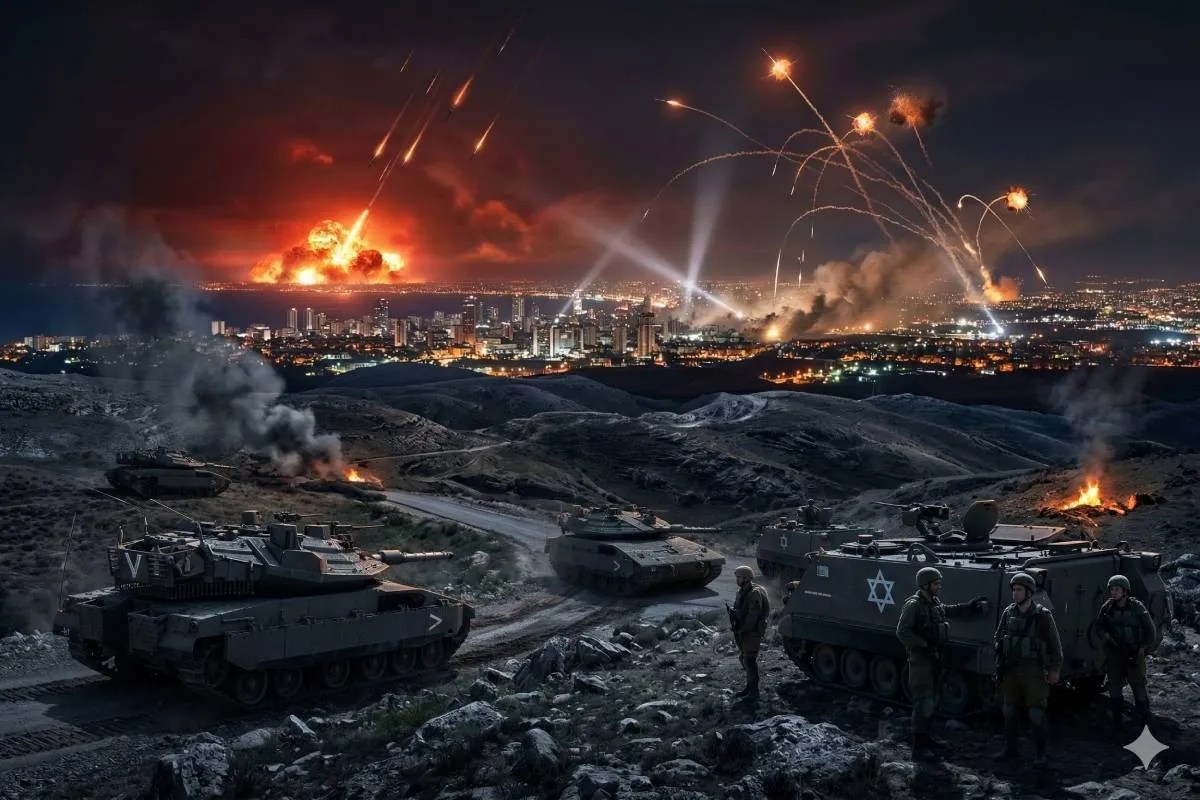
Israel calls it "Operation Northern Arrows." They claim it's a limited, localized series of raids to dismantle Hezbollah's infrastructure. But let's be real. History shows us that "limited" incursions in Lebanon rarely stay that way. In 1982, a similar "limited" move turned into a decades-long occupation.
Israeli Prime Minister Benjamin Netanyahu is betting everything on the idea that decapitating Hezbollah's leadership—including the assassination of Hassan Nasrallah—will cow the group into submission. It hasn't worked. Hezbollah is still firing rockets into Haifa and Tel Aviv. The IDF is finding that the tunnels in Southern Lebanon are far more sophisticated than the ones they encountered in Gaza.
Ambassador Elahi's comments in India focused heavily on this. He argued that Israel's "invincibility" is a myth that died on October 7 and is being buried in the hills of Lebanon. From Tehran's perspective, the ground invasion is a trap for the IDF. They want Israel bogged down in a multi-front war of attrition that drains their economy and international standing.
Why Iran is Talking to India Right Now
India occupies a unique spot on the geopolitical map. It has a "Strategic Partnership" with Israel, involving massive defense deals and Pegasus software. At the same time, India manages the Chabahar Port in Iran, a vital link for New Delhi to reach Central Asia.
When the Iranian Ambassador speaks to Indian media, he's not just giving an update. He's applying pressure. He’s reminding New Delhi that India's "Middle Way" diplomacy might be reaching its expiration date. Iran wants India to use its influence to restrain Israel.
Elahi didn't mince words. He characterized the Israeli actions as state-sponsored terrorism. He pointed out the hypocrisy of the international community, which screams about Ukraine but remains relatively hushed about the leveling of Lebanese villages. For an Indian audience that values sovereignty and non-alignment, this message is designed to resonate.
The Counterattack from Tehran
The world watched the skies over Israel light up when Iran launched nearly 200 ballistic missiles in early October. This wasn't the slow-moving drone swarm we saw in April. These were Fattah-1 and Kheibar Shekan missiles—hypersonic weapons designed to bypass the Iron Dome and Arrow defense systems.
The Iranian Ambassador in India framed this not as an act of aggression, but as a "legal and legitimate" response to the violation of Iranian sovereignty. Remember, Israel hit a diplomatic compound in Damascus and killed Ismail Haniyeh on Iranian soil. Tehran felt it had to swing back or lose its status as the regional heavyweight.
The message from the embassy was simple. If Israel hits back at Iranian oil refineries or nuclear sites, the next wave of missiles won't just target military bases. They’ll hit infrastructure. This "tit-for-tat" cycle is how a regional war starts. Honestly, we’re already in one. We just haven't labeled it yet.
Hezbollah is Not Hamas
A common mistake analysts make is treating Hezbollah like a larger version of Hamas. It's not. Hezbollah is a state within a state. They have an arsenal that rivals many European militaries.
- Precision Missiles: They have the ability to hit specific buildings in Tel Aviv.
- Combat Experience: Their fighters spent a decade in the Syrian Civil War. They know how to fight a conventional army.
- Geography: The mountainous terrain of Lebanon is a nightmare for tanks.
The Iranian Ambassador highlighted that the "Resistance" is decentralized. Even with Nasrallah gone, the command structure remains intact. This is the "hydra" effect. Cut off one head, and the organizational bureaucracy of Hezbollah simply promotes the next guy in line. Israel is fighting an ideology backed by a massive supply chain from Tehran, not just a ragtag militia.
India's Tightrope Walk
India's Ministry of External Affairs (MEA) has been calling for "restraint" and "dialogue." It’s the standard diplomatic playbook. But behind the scenes, there's panic. Over 9 million Indians live and work in the Middle East. If the Strait of Hormuz gets blocked or if a full-scale war erupts, the Indian economy takes a massive hit.
Energy prices would skyrocket. Remittances would dry up. The Iranian Ambassador knows this. By speaking out in Delhi, he's reminding the Indian government that their interests are tied to regional stability, which Iran claims is being destroyed by Israeli "expansionism."
What the Media Misses about the Ambassador's Message
Most news outlets focused on the "war" aspect. They missed the "justice" aspect. Elahi talked about the "New Regional Order." He’s suggesting that the era of U.S. hegemony in the Middle East is over. Iran sees themselves, along with Russia and China, as the new brokers of power.
He also touched on the humanitarian cost. While the world focuses on the missiles, thousands of Lebanese civilians are fleeing their homes. The Ambassador used this to paint Israel as a pariah state. It’s a move to isolate Israel not just militarily, but morally.
The Immediate Economic Fallout
Don't ignore the numbers. Oil prices are volatile. If Israel decides to take the Ambassador’s "warning" as a dare and strikes Iran's Kharg Island oil terminal, we’re looking at $100 per barrel oil overnight. For a country like India, which imports over 80% of its oil, that’s a national security threat.
The Iranian envoy basically signaled that Tehran is ready for this economic pain if it means taking Israel down with them. It’s a "Samson Option" mentality. If Iran goes down, the regional economy goes with it.
Taking the Next Steps
The situation is moving faster than the news cycle can keep up with. To understand the real impact of this conflict on your own life, you need to look past the headlines and monitor the movement of global oil markets and the diplomatic statements coming out of the MEA.
If you're an investor or just someone worried about the cost of living, watch the price of Brent Crude. If it stays above $80, the tension is baked in. If it spikes, the "counterattack" the Ambassador warned about is likely underway. Keep an eye on official statements from the Iranian and Israeli embassies in India; they often provide a clearer picture of the next 48 hours than the filtered Western media reports. Stay informed by checking primary sources and official government briefings rather than relying on social media rumors that often fuel unnecessary panic.