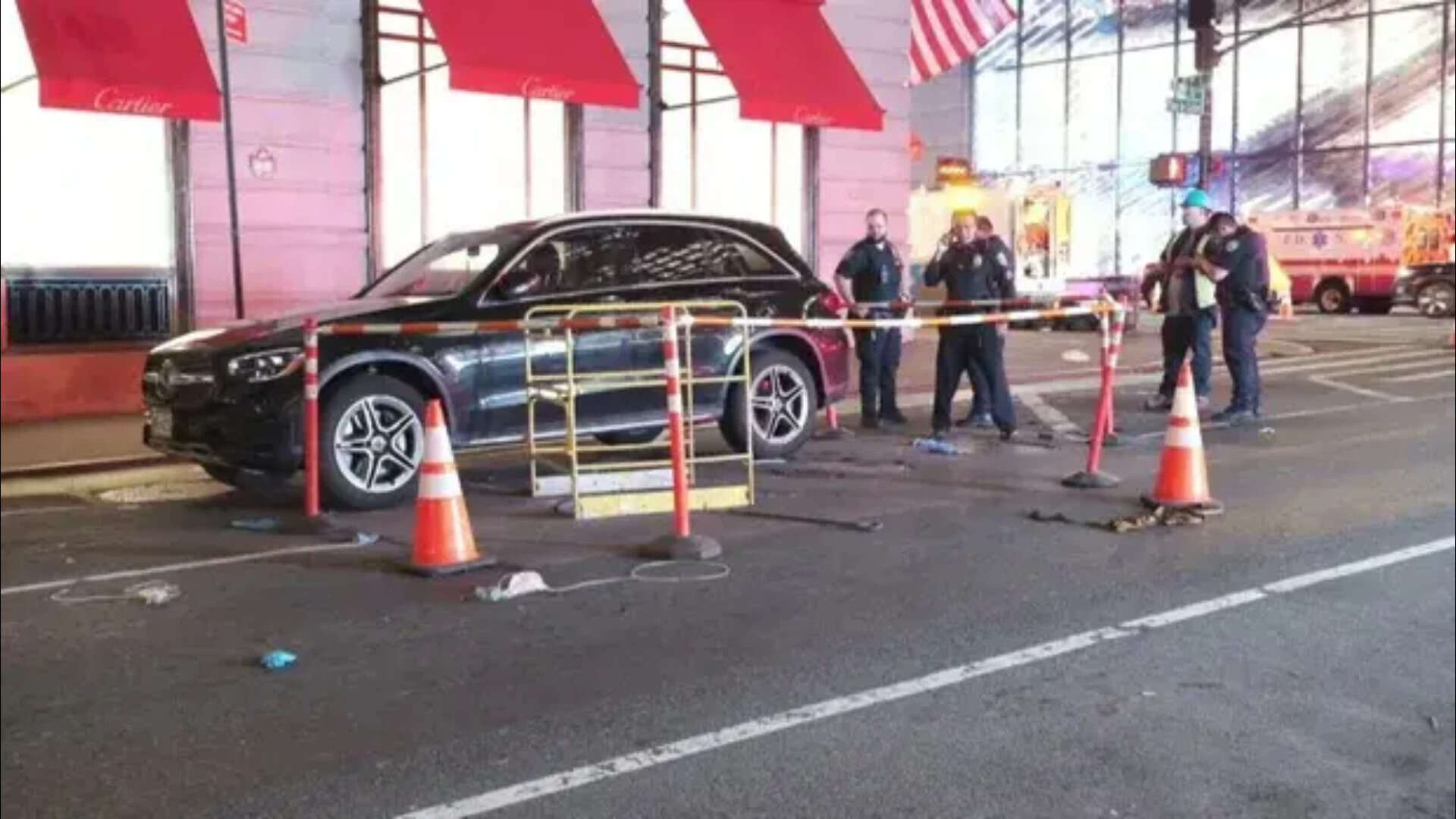
A 56-year-old Westchester County woman, Donika Gocaj, died late Monday night after stepping out of her parked Mercedes-Benz SUV and instantly plunging ten feet down an uncovered, unguarded Con Edison utility hole in Midtown Manhattan. The fatal incident occurred around 11:20 p.m. right outside the luxury Cartier mansion near East 52nd Street and Fifth Avenue. Eyewitnesses reported that Gocaj took only two steps after shutting her car door before vanishing into the pavement. First responders found her unconscious inside the shaft, where she was emitting agonizing cries for help before losing consciousness; she was later pronounced dead at New York-Presbyterian/Weill Cornell Medical Center.
Initial reports from the New York City Police Department and utility officials revealed a chilling detail. No active construction was taking place at the intersection, and the heavy iron manhole cover was discovered discarded roughly 15 feet away from the open cavern.
While Con Edison issued a standard corporate statement expressing deep sadness and promising an active investigation, the tragedy exposes a recurring, systemic vulnerability in New York City’s subterranean infrastructure management. This was not an unpredictable act of nature. It was a failure of municipal oversight and utility protocol.
A Routine Stop Turns Fatal
The victim, a resident of Briarcliff Manor, was doing what millions of New Yorkers and visitors do every night. She parked along a curb in one of the most heavily policed, brightly lit luxury commercial corridors in the world.
Eyewitness accounts indicate there was no distraction involved. Gocaj did not have her phone out, nor was she misstepping blindly.
"The minute she stepped out of that SUV, she closed the door behind her and only took a couple steps forward and just dropped into the hole," recalled Carlton Wood, a bystander who witnessed the plunge. "She was just in the hole, screaming that she was dying."
The physical environment inside that shaft compounded the trauma. Steam was rising from the maintenance cavity at the time of the fall, a common but dangerous byproduct of the city’s aging subterranean energy grid. The ten-foot drop itself is equivalent to falling off a one-story building, but landing on unyielding utility hardware, exposed valves, and metal conduit in pitch-black conditions vastly increases the likelihood of fatal internal injuries or asphyxiation.
The Systemic Failures of Infrastructure Maintenance
To understand how a multi-hundred-pound iron disc ends up sitting 15 feet away from its frame on a major Manhattan thoroughfare without any barricades, one must look at utility workflows and safety compliance. Standard operating procedures for utility companies like Con Edison dictate that a manhole should never be left open without a physical barrier, bright orange cones, or a designated spotter on the surface.
Family members who visited the scene Tuesday morning confirmed that no warning indicators were present when the fatal accident occurred. The complete absence of safety cones or temporary grates suggests a dangerous lapse in protocol.
The Protocol Gap
When utility crews or contractors access these subterranean vaults, they rely on strict chain-of-custody rules for the physical openings. If a crew finishes work or leaves a site temporarily, the cover must be mechanically re-seated and verified.
In some instances, independent contractors or unauthorized city workers manipulate utility infrastructure without proper coordination, creating lethal traps for pedestrians. The fact that the cover was found 15 feet away raises two distinct, troubling possibilities for investigators. Either a crew walked away from an open pit without securing it, or an external force displaced the cover, and the city’s monitoring systems failed to detect it.
The Problem of Displaced Covers
Heavy vehicle traffic, particularly the heavy buses and commercial trucks that frequent Fifth Avenue, can occasionally dislodge an improperly seated manhole cover. However, a cover completely removed and sitting yards away points toward human intervention rather than vehicular displacement.
The oversight of these street-level portals involves a complex web of jurisdictions. Con Edison owns the electrical and steam vaults, but the New York City Department of Transportation regulates the street surface. When communications between private utilities and municipal oversight break down, public safety suffers.
Past Precedents and the Cost of Negligence
This is far from the first time New York's underworld has broken through to the surface with fatal consequences. Over the past two decades, the city has faced numerous multi-million-dollar lawsuits stemming from infrastructure neglect.
- Stray Voltage: Underground electrical degradation regularly charges metal street grates, leading to injuries and the high-profile electrocution of pedestrians and pets.
- Manhole Explosions: Buildups of gas and pressure blow heavy iron covers stories into the air, turning cast iron into airborne shrapnel.
- Open Vault Falls: Delivery workers, commuters, and tourists have repeatedly fallen through improperly secured cellar doors and utility grates across the boroughs.
Civil litigation records show that the city and its major utilities frequently settle these cases out of court, absorbing the legal payouts as a cost of doing business rather than implementing foolproof, sensor-based monitoring for every access point in the grid.
What Happens Next in the Investigation
The investigation will now pivot to forensic tracking. The NYPD and the Manhattan District Attorney's office will examine high-definition security footage from the luxury storefronts lining Fifth Avenue, including the Cartier mansion.
This footage will provide a precise timeline of exactly when that manhole cover was removed, who removed it, and why no warning barriers were erected. If a private contracting firm or utility crew left that hole exposed and walked away, the case transitions from a tragic accident into a criminal inquiry involving reckless endangerment and negligent homicide.
Con Edison's internal safety logs will be subpoenaed to cross-reference which teams had active work orders for that specific utility node on Monday night. Simultaneously, the city’s Chief Medical Examiner will determine whether the cause of death was physical trauma from the impact or complications from the steam and environmental hazards within the shaft.
The family of Donika Gocaj is left demanding basic accountability from a city that failed to secure the very ground beneath her feet. New York infrastructure cannot rely on the vigilance of pedestrians to avoid invisible ten-foot drops on public sidewalks.
The city must answer for how a routine exit from a vehicle on Fifth Avenue became a death sentence.