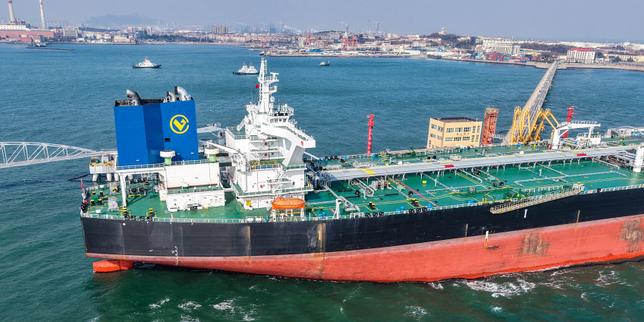
Europe is trying to pull off the ultimate regulatory flex. It’s called the Carbon Border Adjustment Mechanism (CBAM), and while it sounds like a mouthful of dry policy jargon, it’s basically a massive "climate tax" on anyone wanting to sell dirty goods to Europeans. If you’ve been following the drama in Brussels, you know the goal is to stop "carbon leakage." That’s just a fancy way of saying we don’t want our factories moving to countries where they can pollute for free.
The logic is simple. If a French steel mill has to pay for its emissions, but a mill in a country with zero climate laws doesn’t, the French mill goes out of business. That helps nobody. So, the EU decided to level the playing field by charging a fee at the border. But let’s be real. This isn't just a friendly environmental nudge. It’s a geopolitical hand grenade that’s already upsetting some of Europe's biggest trading partners.
Why CBAM is a Brilliant Mess
The brilliance of CBAM lies in its ability to export European standards without firing a single shot. By taxing the carbon content of imports like cement, electricity, fertilizers, iron, steel, and aluminum, the EU is forcing the rest of the world to choose. You either clean up your production methods or you pay the toll.
I’ve seen plenty of trade policies, but this one is uniquely aggressive. It turns the European market—the world’s largest single market—into a lever for global change. If you’re a steel producer in India or China, you can’t ignore this. You either implement your own carbon pricing to keep that tax revenue at home, or you hand it over to the EU at the border.
But here’s the rub. It’s a logistical nightmare. Calculating the exact carbon footprint of a ton of steel made in a complex overseas supply chain is bordering on impossible. We’re talking about thousands of data points, verified by third-party auditors who may or may not exist in certain regions. The administrative burden alone could crush smaller exporters, effectively turning CBAM into a protectionist wall rather than a green bridge.
The Trade War Trap
Don’t think for a second that the rest of the world is taking this lying down. Countries like Brazil, South Africa, India, and China (the BASIC group) have already voiced "grave concern." They see this as a violation of the World Trade Organization (WTO) principles. They argue it’s a form of "green protectionism" that unfairly hits developing nations that didn't cause the climate crisis in the first place.
Take India’s steel industry. It’s heavily reliant on coal. Under CBAM, Indian steel could become 20% to 35% more expensive in the European market. That’s not a small tweak. That’s a death blow to specific contracts. When you look at the numbers, it’s clear that the EU is walking a tightrope. If they make too many exceptions, the policy is toothless. If they make none, they trigger a series of retaliatory tariffs that could make the 2018 trade spats look like a playground disagreement.
There’s also the "shuffling" problem. An exporter in a high-pollution country might just send their "clean" production to Europe and sell their "dirty" stuff everywhere else. The planet doesn’t win. The atmosphere doesn't care where the carbon comes from. Total global emissions stay the same, but the EU gets to feel good about its local ledger.
Small Businesses are Caught in the Crossfire
While the giants can afford teams of consultants to navigate the new bureaucracy, mid-sized companies are panicking. Imagine you’re a German manufacturer that imports specialized aluminum components. Suddenly, your supply chain costs jump by 15% because your supplier in Turkey hasn't updated their smelting process. You can’t just switch suppliers overnight. These relationships take years to build.
The EU is phasing this in slowly, with a transition period that started in 2023 and full implementation hitting harder through 2026 and beyond. But even with a slow rollout, the uncertainty is killing investment. Companies don't know what the final price of carbon will be, as it’s tied to the EU Emissions Trading System (ETS) prices, which swing wildly based on energy markets and political winds.
The Great Subsidy Race
One thing the competitor articles often miss is how CBAM interacts with the U.S. Inflation Reduction Act (IRA). While Europe is using the "stick" of carbon taxes, the U.S. is using the "carrot" of massive subsidies. This creates a weird tension. European companies are looking across the Atlantic and wondering why they’re being taxed while their American counterparts are being handed checks to go green.
If CBAM works, it creates a "Climate Club." This is an idea championed by Nobel laureate William Nordhaus. The theory is that a group of countries with high carbon prices can protect themselves with border taxes, eventually forcing everyone else to join the club. It sounds great in a textbook. In reality, it looks like a fragmented global economy where trade blocks are defined by their carbon intensity.
Practical Realities of Implementation
If you’re a business owner or an investor, you need to stop thinking of this as a "future" problem. The reporting requirements are already here. You need to be asking your suppliers for their embedded emissions data now. Waiting until the financial hits start in 2026 is a recipe for bankruptcy.
Focus on Data Transparency
The biggest mistake I see is companies relying on "default values." If you can’t prove your emissions are low, the EU will assume they are high. They’ll use the average emissions of the worst-performing producers in a country. That’s a massive financial penalty for being lazy with your paperwork.
- Audit your supply chain. Identify every tier-one supplier in the CBAM sectors (steel, aluminum, etc.).
- Standardize reporting. Don’t let suppliers send you random spreadsheets. Give them a template based on EU Regulation 2023/956.
- Check for "Double Taxation." If a supplier already pays a carbon tax in their home country, you can often deduct that from the CBAM obligation. But you need the receipts.
The EU’s move is a gamble that the world’s desire to access European consumers is stronger than the urge to retaliate. It’s a bold attempt to make the market reflect the true cost of pollution. Whether it saves the planet or just starts a trade war depends on how much flexibility Brussels shows to the developing world.
Stop treating carbon as an environmental metric and start treating it as a financial liability. Every ton of $CO_2$ is a line item on your future balance sheet. The transition is messy, the politics are ugly, and the math is complicated. But the era of free pollution is over. Adjust your procurement strategy today or prepare to pay the price at the border.