The morning light in a small-town diner in Ohio doesn’t care about theology. It cares about the price of eggs and the grease on the griddle. But look closer at the booths, and you’ll see the invisible threads of identity pulled taut. On one side sits a woman clutching a rosary she’s carried since her confirmation; across the aisle, a man scrolls through a social media feed that blurs the line between his faith and his voting record. They are living in the middle of a quiet, seismic shift in American reverence.
Recent data has pulled back the curtain on this domestic drama. It isn't just about numbers; it is about who we allow to hold the moral compass. Americans, it turns out, are looking toward Rome with a surprising warmth, while reacting with a sharp, visceral recoil to a specific brand of political performance.
The Man in White and the Weight of Consistency
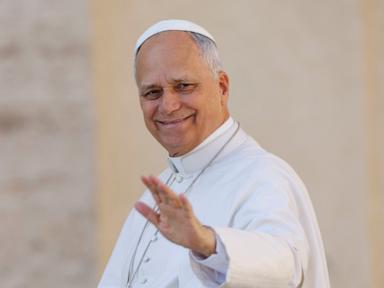
Pope Francis occupies a strange space in the American psyche. He is a 87-year-old man living in a walled city thousands of miles away, yet he currently enjoys a favorability rating that would make any modern politician weep with envy. According to a recent Pew Research Center study, roughly three-quarters of U.S. Catholics view him favorably. But the story isn't just a Catholic one. Even among the general public, the "Pope Francis effect" lingers.
Why?
It isn’t because every American agrees with his stance on the environment or the nuances of the liturgy. It’s simpler. It’s the consistency. In a world where every public figure seems to be selling a version of themselves for a specific demographic, Francis appears to be anchored. When he washes the feet of prisoners or embraces the disfigured, he isn't checking a focus group. He is performing an ancient script.
For the average American, exhausted by the "gotcha" culture of 24-hour news cycles, there is a profound relief in a leader who doesn't change his core message based on which way the wind blows in Iowa or New Hampshire. He represents a stability that feels increasingly extinct. He is the grandfather figure who still believes in the soul, even when the world prefers to talk about data points.
The Digital Blasphemy of the Timeline
Then, there is the other side of the ledger.
Consider the digital friction that occurred when Donald Trump shared a post on social media comparing his legal and political struggles to the suffering of Jesus Christ. It was a post designed to galvanize, to equate a modern political campaign with a cosmic, divine sacrifice. But instead of a universal roar of approval, it hit a wall of deep discomfort.
The data suggests a significant portion of the electorate—including many who identify as religious—found the comparison not just tactless, but fundamentally jarring.
To understand why this failed, we have to look at the "invisible stakes" of the American heart. For a believer, the image of Christ isn't a brand asset. It’s a sacred archetype. When a politician reaches into that tabernacle to pull out a metaphor for their own poll numbers, it feels like a violation of a boundary. It’s the difference between a soldier wearing a flag on his shoulder and a salesman using the flag as a tablecloth to sell used cars.
The reaction wasn't just political. It was an allergic response to the commodification of the sacred.
The Great Disconnect
We are witnessing a fascinating divergence in how Americans define "moral authority." On one hand, you have the Pope, who commands respect by leaning into the humility of his office. On the other, you have a political strategy that seeks to commandeer the prestige of faith to shield a secular leader from criticism.
The polling reflects a weariness. Americans are increasingly savvy about "faith-baiting." They can smell the difference between a leader who is moved by faith and a leader who uses faith to move people.
Imagine a hypothetical voter named Sarah. She’s a mother of three in the suburbs. She grew up in the church. She’s worried about the economy. She sees the Pope’s message of "mercy" and it feels like a cool glass of water. Then, she opens her phone and sees a post equating a courtroom drama with the Crucifixion. She doesn't see a "warrior for God." She sees a man who has lost the sense of scale. She sees a man who thinks he is the sun, and the faith is just another planet orbiting his ego.
This isn't about being "woke" or "conservative." It’s about the human need for something to remain untouchable. If everything—even the most central figures of Western faith—can be liquidated into a political meme, then nothing is actually important.
The Cost of the Comparison
The negative reaction to the Jesus post highlights a growing "exhaustion gap." People are tired of being told that their most private, spiritual convictions are just another weapon in the culture war.
When Trump leans into this imagery, he is betting on a very specific, intense base of support. And he’s right—some find it emboldening. But for the vast majority of the country, it creates a sense of "cringe." That cringe is a protective reflex. It’s the sound of a door locking.
In contrast, the Pope’s favorability is rooted in a refusal to be a partisan tool. He has criticized both the excesses of capitalism and the disregard for life in all its forms. He makes everyone a little bit uncomfortable, which is exactly why he is trusted. He isn't on anyone's "team" but his own, and that independence is a rare currency in 2026.
The Unseen Landscape of the Pew
We often talk about the "religious vote" as if it were a monolith, a giant block of wood that can be carved into any shape. It’s not. It’s a garden. It’s messy. It’s full of people who are trying to reconcile their ancient beliefs with a world that moves at the speed of a fiber-optic cable.
The rejection of the Jesus post signals that there is still a line in the sand. There is a point where the performance becomes too loud, where the ego becomes too visible, and where the "human element" is sacrificed for the sake of a headline.
People want leaders who point to something greater than themselves. Francis points to a tradition, a God, and a history that predates him by two millennia. The Jesus post pointed back to the man who posted it.
The diner in Ohio is quiet now. The woman with the rosary puts it back in her purse. The man with the phone turns it off. They both walk out into a world that is loud, confusing, and increasingly polarized. But as they go, they carry with them a silent, stubborn insistence: the sacred should stay sacred, and the throne is not a footstool for the crown.
The data is just the echo of a much deeper conversation happening in the dark. We are searching for a humbler kind of power. We are looking for a carpenter, not a king who thinks he’s a god.