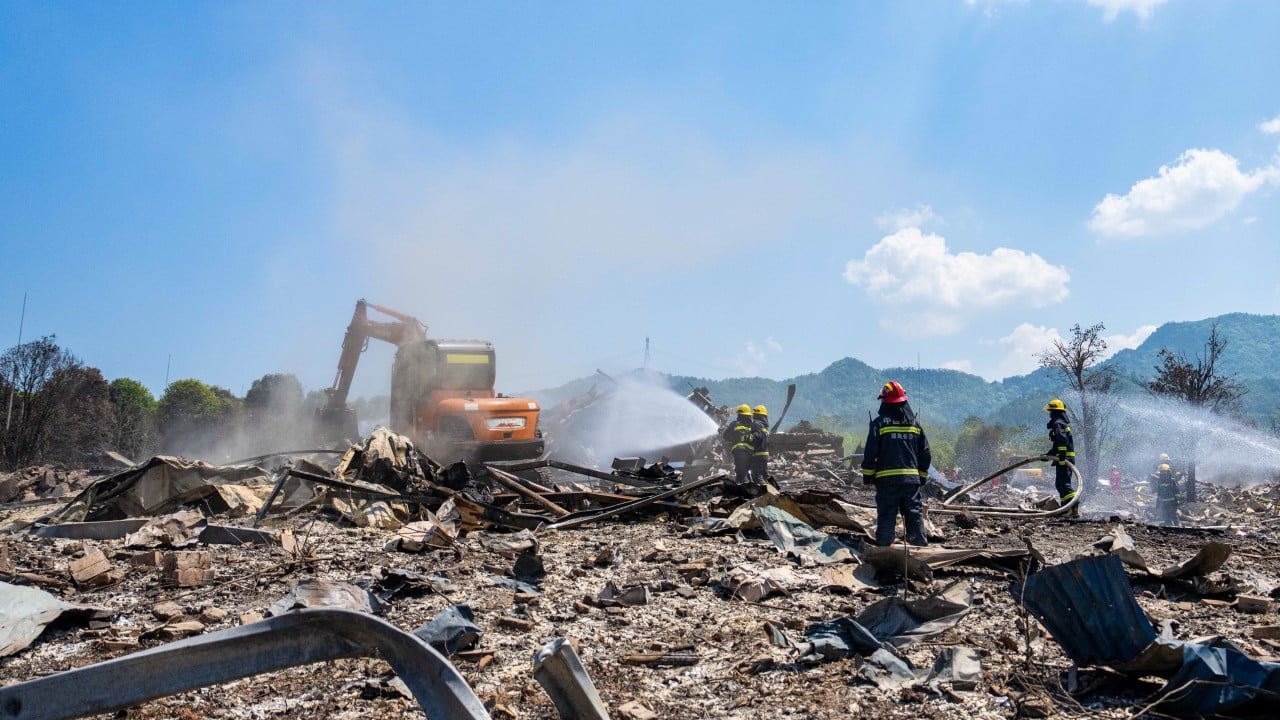
Gunpowder doesn't just disappear after the initial blast. It lingers in the soil, hides in charred debris, and waits for a single spark from a shovel or a heavy boot to wake it up again. When a fireworks factory or a massive warehouse explodes in China, the immediate tragedy grabs the headlines, but the secondary disaster starts the moment the first volunteer picks up a broom.
Most people think the danger ends once the flames are out. They’re wrong. The aftermath of a fireworks explosion is a chemical minefield. If you’re standing on a site where tons of black powder and flash powder recently detonated, you aren’t just walking on ash. You’re walking on unexploded ordnance.
The recent incidents in places like Hebei and Jiangxi provinces show a recurring, terrifying pattern. Local residents and volunteers rush in to help, often driven by a sense of community or the need to clear their own property. They go in with garden gloves and plastic buckets. It’s a recipe for permanent injury. I’ve seen reports of volunteers losing fingers or suffering severe burns days after the main event because they didn't realize that "dead" debris was actually live fuel.
Why Fireworks Debris Is More Dangerous Than the Blast
The physics of a fireworks explosion is messy. Unlike a controlled demolition, a factory blast rarely consumes 100% of the combustible material. Huge chunks of compressed gunpowder are often launched hundreds of feet away. These "slugs" of propellant can look like ordinary rocks or blackened wood.
When a volunteer hits one of these with a metal shovel, they create friction. Friction creates heat. Heat creates a hospital visit.
The Composition Problem
Fireworks aren't just one chemical. They're a cocktail of potassium nitrate, sulfur, and charcoal, often spiked with metal powders like aluminum or magnesium to create those bright whites and sparkles people love. Magnesium is particularly nasty. It burns at temperatures exceeding 2,200°C. You can't put a magnesium fire out with a quick splash of water; in fact, adding a small amount of water to some volatile metallic powders can actually trigger a hydrogen release and an even bigger explosion.
Ground Sensitivity
Unreacted powder settles into the dust. This creates a "sensitive floor" scenario. In professional ordnance disposal, experts use non-sparking tools made of brass or beryllium. Your average volunteer in a Chinese village is using steel. Steel sparks. If you're scraping a steel shovel against a concrete floor covered in a fine layer of sulfur and nitrate dust, you're basically striking a giant match.
The Mental Trap of Volunteerism
It’s hard to tell someone they can’t clean up their own backyard. In many rural areas where these accidents happen, the local government response is stretched thin. People feel they have to act. This is where the risk grows.
The adrenaline of the initial disaster wears off, and a false sense of security takes over. You see people walking through blast zones in flip-flops. You see them smoking cigarettes near piles of charred cardboard. It’s haunting to watch because the chemistry doesn't care about your intentions.
We need to stop treating these sites like construction zones and start treating them like active minefields. The "clean-up risk" isn't a side note; it's the primary threat to survivors in the 72 hours following a blast.
What Real Protection Looks Like
Standard PPE (Personal Protective Equipment) for a construction site is useless here. A basic N95 mask won't stop the toxic heavy metal vapors—like lead, barium, and strontium—that permeate the air after a fireworks explosion. These metals stay in the lungs. They get into the groundwater.
Professional remediation teams use:
- Anti-static clothing: Synthetic fabrics like polyester can build up static electricity. One tiny spark from your sleeve to a piece of metal can ignite flash powder. Cotton is better, but specialized flame-resistant treated gear is the standard.
- Non-sparking tools: If it’s magnetic, don’t use it.
- Wet-down procedures: Professionals often saturate the area with specific wetting agents to "drown" the powder, though this has to be done carefully to avoid chemical runoff.
If you aren't wearing a full-face respirator and anti-static boots, you shouldn't be within fifty feet of a blast site. Honestly, the bravest thing a volunteer can do is stay behind the police tape and let the professionals with the sensors and the brass shovels do the work.
Long Term Health Hazards of the Blast Zone
The immediate "pop" of a secondary explosion is the obvious fear. The silent killer is the chemical residue. Fireworks use perchlorates to provide oxygen for the burn. These chemicals are notorious for leaching into the soil and contaminating local wells. They interfere with thyroid function.
When volunteers kick up dust during a disorganized clean-up, they're inhaling a concentrated dose of every heavy metal used in the pyrotechnic display. This isn't just about burns. It's about chronic respiratory issues and heavy metal poisoning that might not show up for years.
China’s fireworks industry is ancient, but our approach to the aftermath of its failures is stuck in the past. We focus on the "how it happened" and ignore the "what happens next."
The Proper Protocol for Post Blast Situations
If you find yourself near a scene where fireworks have exploded, the "hero" instinct is your biggest enemy. There are specific steps that actually save lives, and none of them involve grabbing a broom.
- Establish a 500-meter perimeter: Even if the fire is out, secondary shells can "cook off" hours later.
- Identify the "Hot Zone": Anything downwind of the blast is contaminated with fine powder. This is an inhalation hazard.
- Wait for Humidity: Professional crews often wait for specific weather conditions or use industrial misters to stabilize the dust before moving a single brick.
The reality of these incidents in China is that the pressure to return to "normal" often overrides safety protocols. Families want to find their belongings. Business owners want to salvage what's left of their inventory. But when you’re dealing with gunpowder, normal doesn't exist anymore.
Stop thinking of the clean-up as a community chore. It’s a technical operation that requires specialized training. If you don't have that training, stay away. Your life is worth more than a salvaged piece of furniture or a cleared sidewalk.
Do not touch anything that looks charred but heavy. Do not use power tools. Do not drive vehicles over debris, as the heat from an exhaust pipe or the friction of a tire can trigger unexploded material buried in the dirt. The danger is under your feet.