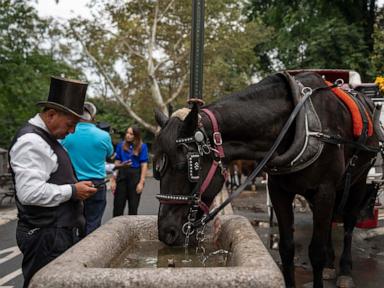
Walk past the southern edge of Central Park along 59th Street on any crisp afternoon, and you'll smell the hay before you see the top hats. That iconic Manhattan ritual is now caught in a high-stakes legal brawl. Central Park's horse-drawn carriage drivers have officially sued New York City to block an incoming ban on their industry, arguing that City Hall is stripping away their livelihoods without lawful authority or fair compensation.
This isn't just another routine municipal squabble. For decades, carriage operators, animal rights advocates, and New York politicians have traded blows over whether draft horses belong in modern Midtown traffic. Now, with a formal prohibition looming, the Transport Workers Union (TWU) Local 100 and individual medallion owners are taking their fight to state court. They claim the city's latest legislative push violates constitutional protections, bypasses proper administrative procedures, and threatens to wipe out a 160-year-old working-class trade overnight.
What Sparked the Lawsuit Against New York City
If you've followed New York politics for more than ten minutes, you know the carriage horse debate never truly dies. It just hibernates between election cycles. Former Mayor Bill de Blasio famously promised to ban the carriages on "day one" of his administration back in 2014, yet the horses stayed on the pavement long after he left office.
So what changed? Pressure from animal welfare coalitions like NYCLASS (New Yorkers for Clean, Livable, and Safe Streets) combined with renewed City Council backing pushed through a phase-out measure aimed at ending horse-drawn carriage operations within the five boroughs. Supporters of the ban point to high-profile incidents where startled or exhausted horses collapsed on Manhattan asphalt, arguing that sharing narrow streets with delivery trucks, e-bikes, and yellow cabs creates unacceptable stress and danger for the animals.
Drivers see a completely different reality. In their court filings, plaintiffs argue that the city already enforces some of the strictest equine welfare regulations in the country. Horses are restricted from working when temperatures climb above 90 degrees or drop below 18 degrees. They receive mandatory five-week annual vacations at upstate farms, regular veterinary inspections, and strict limits on daily working hours. From the drivers' perspective, lawmakers ignored empirical veterinary records to appease vocal lobbying groups.
Inside the Legal Arguments Drivers Are Making
Suing a municipality over business regulations is notoriously difficult. Cities generally hold broad "police power" to regulate public health, safety, and street traffic. Knowing this, the carriage drivers' legal team didn't just argue that the ban feels unfair—they targeted specific statutory and constitutional vulnerabilities.
Regulatory Takings and Lost Medallion Value
Much like New York's yellow taxi drivers, carriage operators operate under a tightly capped medallion system. There are 68 horse-drawn carriage medallions in New York City, and many drivers invested their life savings—or took on heavy personal debt—to buy into the industry or maintain their commercial licenses.
The lawsuit contends that outlawing the trade renders these city-issued medallions worthless overnight, amounting to an unconstitutional "taking" of private property without just compensation under both the New York State Constitution and the Fifth Amendment of the U.S. Constitution. When a government creates a regulated market, sells or sanctions licenses within that market, and then extinguishes the entire industry by fiat, courts tend to look closely at whether owners were left holding the bag.
Preemption and Overreach by City Lawmakers
Another major pillar of the complaint focuses on state versus local authority. Plaintiffs argue that New York State's Agriculture and Markets Law already governs the humane treatment of working animals across the state. By enacting an outright prohibition under the guise of animal welfare, the City Council allegedly overstepped its municipal jurisdiction and collided with existing state frameworks.
Drivers also challenge the feasibility of the city's proposed alternatives. Earlier legislative drafts and activist proposals suggested transitioning drivers to electric vintage-style carriages or offering priority access to green taxi licenses. Operators call those offers completely unworkable. Electric novelty vehicles require massive capital investment, lack dedicated charging infrastructure near Central Park, and—according to union representatives—strip away the very attraction tourists pay to experience.
The Economics Behind the 68 Medallions
To understand why drivers are fighting so fiercely, you have to look at the numbers. This isn't a hobbyist club run by wealthy equestrian elites. The Central Park carriage trade supports roughly 200 to 300 working-class New Yorkers, including drivers, stable hands, farriers, and feed suppliers. Many are immigrants who have spent twenty or thirty years working the same hacks along Central Park South.
A standard 20-minute carriage ride around the lower loop of Central Park generates steady tourist revenue, particularly between spring and New Year's Day. That cash flow pays for West Side stable rent—commercial real estate in Hell's Kitchen isn't cheap—along with specialized equine veterinary care, custom horseshoes, and high-grade hay trucked in from upstate farms.
Critics of the ban point out a glaring contradiction in the city's plan. If the carriages disappear tomorrow, what happens to the roughly 200 horses currently stabled in Manhattan? Draft horses like Percherons and Belgians aren't cheap pets; feeding and boarding a single large draft horse costs thousands of dollars each year. While animal advocacy groups routinely pledge to place retired horses in sanctuaries, industry veterans warn that sudden industry-wide liquidation often pushes working horses toward uncertain fates if sanctuary funding falls short.
What Animal Welfare Advocates Get Right and Wrong
Honesty matters here. Pretending there are zero safety issues with horses in Midtown Manhattan ignores reality.
New York traffic has transformed dramatically over the past decade. Streets are tighter due to expanded bike lanes, outdoor dining structures, and relentless commercial van traffic. When a sudden siren blasts or a lithium-ion battery pops nearby, even a well-trained draft horse can spook. Video footage of a frightened horse bolting near 59th Street goes viral within minutes, fueling public outrage that no industry spokesperson can easily spin away.
Yet animal rights campaigns often blur the line between isolated accidents and systemic abuse. Independent equine veterinarians who have examined Central Park's carriage horses frequently note that the animals maintain healthy body condition scores, clean coats, and calm temperaments. Unlike wild mustangs, draft breeds were selectively bred over centuries to pull heavy loads at a steady walk. Pulling a wheeled carriage on flat pavement actually requires far less physical strain than plowing farmland.
The real friction isn't really about daily grooming or stable cleanliness. It's a philosophical clash over whether working animals belong in dense urban centers at all in the modern era. One side sees living history and humane stewardship; the other sees an outdated spectacle forced onto asphalt.
How This Court Battle Could Play Out
Litigation against New York City moves slowly, and the drivers' immediate goal is securing a preliminary injunction. An injunction freezes the ban's enforcement clock while the underlying constitutional and statutory claims wind through New York State Supreme Court and, inevitably, the Appellate Division.
To win that pause, the plaintiffs must prove three things:
- A likelihood of success on the merits of their legal claims.
- Irreparable harm if the ban takes effect before a final ruling.
- That the balance of equities tips in their favor.
Irreparable harm is arguably their strongest card. Once a driver sells off their horses, vacates a Manhattan stable lease, and shuts down operations, you can't simply hit "undo" two years later if an appellate judge strikes down the city's law. The business is gone forever.
City attorneys, meanwhile, will lean heavily on judicial deference. Courts rarely second-guess elected legislatures on public safety and street management unless a law blatantly violates state preemption rules or tramples explicit constitutional rights. Expect the city's Law Department to file a motion to dismiss early, framing the ban as a straightforward traffic and animal-protection measure squarely within City Hall's wheelhouse.
What Visitors and New Yorkers Should Watch For Next
If you're planning a trip to New York or keeping tabs on local policy, don't expect the carriages to vanish overnight. Legal injunctions and appellate briefings routinely stretch municipal disputes out for a year or longer.
For tourists hoping to book a ride, check official NYC Department of Consumer and Worker Protection (DCWP) guidelines before handing over cash at the park entrance. Legitimate drivers display visible badges, operate licensed carriages with posted rate cards, and follow strict weather cutoffs. Avoid unverified street touts who try to steer visitors toward inflated private packages several blocks away from the official hack line on Central Park South.
If you're following the legal docket, pay close attention to the initial injunction hearing in Manhattan Supreme Court. That ruling will signal immediately whether judges view the city's ban as valid municipal regulation—or an unlawful destruction of a regulated New York trade.