Most cities treat tree planting like a photo op. A mayor shows up with a ceremonial golden shovel, drops a single sapling into a manicured park lawn, smiles for the local news cameras, and everyone goes home feeling good about the planet. Three years later, that sapling is dead from summer drought or strangled by weeds because nobody budgeted for actual maintenance.
Seattle took the exact opposite approach back in 2005, and the payoff has been massive. Instead of chasing quick publicity, the city teamed up with Forterra (formerly the Cascade Land Conservancy) to launch the Green Seattle Partnership. Twenty years later, volunteers and crews have planted more than 1.5 million native plants and brought over 2,000 acres of neglected parkland under active restoration. That sustained, twenty-year grind recently earned the program a prestigious honor from the United Nations, recognizing it as a global model for urban ecosystem recovery.
You can't just stick trees in the ground and walk away. If you've ever spent a Saturday morning pulling Himalayan blackberry roots out of hard clay soil in the Pacific Northwest, you know the truth about urban forestry. It's muddy, exhausting, unglamorous work that takes decades to show real results.
The Silent Collapse of Seattle's Canopy
To understand why Seattle's urban forest restoration matters so much, you have to look at what was happening in the early 2000s. From a distance, the Emerald City looked lush and green. Up close, the city's forested parks were dying from the inside out.
A comprehensive ecological assessment conducted around 2004 revealed a terrifying trend. Seattle's urban forest was dominated by aging bigleaf maples and red alders that were reaching the end of their natural lifespans. Worse, almost no new native conifers—like Douglas firs, western red cedars, and Sitka spruces—were growing up to replace them.
Why? Invasive species had completely taken over the forest floor.
English ivy was climbing up mature trees, weighing down branches until windstorms snapped them in half, and blocking sunlight from reaching the bark. Himalayan blackberry thickets formed impenetrable, thorny walls six feet high, choking out every native seedling trying to germinate. Without human intervention, ecologists projected that Seattle would lose up to 70 percent of its forested parkland canopy within a few decades. The city was staring down an ecological collapse right inside its own borders.
Why Planting Trees Is the Easy Part
When people hear that 1.5 million native plants have gone into the ground since 2005, they naturally focus on the planting numbers. That's a mistake. Planting a native sword fern or a young western hemlock takes about three minutes. Keeping it alive for the first five years is where the real battle happens.
In restoration ecology, there's a four-phase process that separates real recovery from wasted money:
- Invasive removal. Crews and volunteers have to physically grub out the root crowns of blackberries and peel ivy off tree trunks. If you miss a piece of root, the vine grows back faster than before.
- Site preparation and mulching. Bare soil invites new weeds. Teams haul wheelbarrows full of arborist woodchips to smother weed seeds and lock in summer moisture.
- Strategic planting. You don't just plant trees. You rebuild the entire vertical structure of a Northwest forest—canopy trees, understory shrubs like salal and Oregon grape, and groundcovers.
- Long-term stewardship. For at least three to five years after planting, crews must return every summer to water young plants during dry spells and clear away encroaching weeds.
I've watched countless neighborhood groups get burned out because they skipped straight to step three. They spend their entire grant budget buying nursery stock, host one giant planting weekend in November, and then abandon the site until the following autumn. By October, 80 percent of their expensive trees have been swallowed whole by bindweed and drought. Seattle avoided that trap by building a tracking system that monitors every single acre through all four phases.
The Volunteer Engine Behind the Numbers
Municipal parks departments never have enough money. Even in a wealthy tech hub like Seattle, city budgets get stretched thin by paved roads, sewer lines, and basic facility repairs. There was zero chance the city could afford to hire enough full-time staff to clear 2,500 acres of dense invasive brush by hand.
So they built a decentralized army of trained locals.
The Green Seattle Partnership created the Forest Steward program, and honestly, it's the secret sauce behind the entire operation. Instead of treating volunteers as disposable manual labor for one-off corporate days of service, the city trains everyday residents to become long-term site managers.
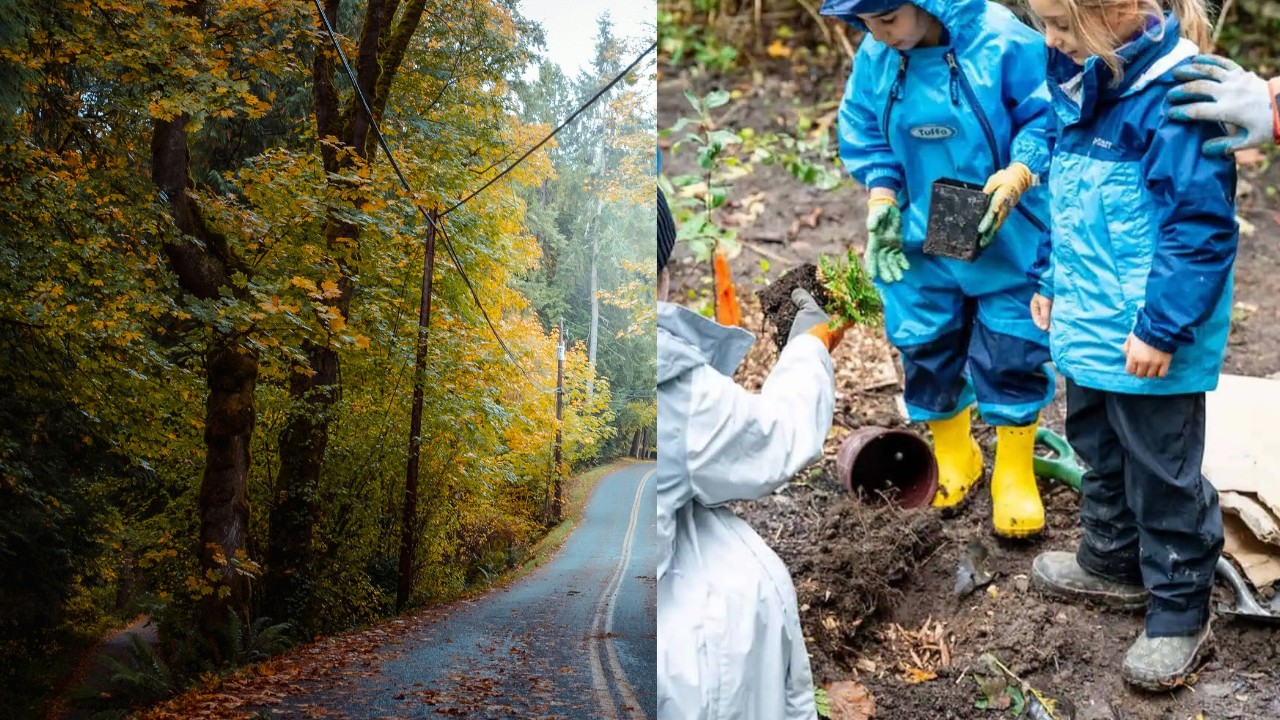
A Forest Steward adopts a specific patch of a neighborhood park—maybe two or three acres behind their house. They learn how to read a topographic map, identify native versus invasive flora, safely use loppers and weed wrenches, and organize community work parties. The city supplies the tools, the gloves, the mulch, and the plants. The steward supplies the local leadership and week-to-week consistency.
Over the past two decades, volunteers have logged well over a million hours of sweat equity in these parks. That kind of community ownership changes how neighborhoods treat public land. When thirty people from the surrounding blocks spent their Saturday mornings clearing a ravine at Carkeek Park or Seward Park, illegal dumping drops off a cliff. Neighbors start policing their own trails because they physically rebuilt the ecosystem with their own hands.
What the UN Honor Actually Recognizes
International awards often go to flashy, futuristic greenwashing projects—think vertical forests on luxury skyscrapers that require massive irrigation systems and specialized window-washing crews just to keep the shrubs alive.
The United Nations recognition of Seattle's effort stands out because it validates low-tech, high-grit ecological restoration. Under the UN Decade on Ecosystem Restoration framework, global leaders have been searching for scalable urban models that actually work in the real world. Seattle proved that a major North American city can reverse urban habitat degradation at scale without waiting for billion-dollar federal bailouts.
More than 2,000 acres are now actively enrolled in the restoration pipeline across parks like Discovery Park, Lincoln Park, and the Duwamish Greenbelt. That represents the vast majority of Seattle's total forested parkland.
Real Ecological Payoffs
Restoring 2,000 acres isn't just about making hiking trails look prettier for dog walkers. Healthy urban forests do heavy infrastructural lifting that saves taxpayers millions of dollars:
- Stormwater filtration. A mature conifer canopy intercepts massive amounts of rainfall before it ever hits pavement. The root systems and spongy forest duff absorb runoff, filtering out toxic tire dust and heavy metals before that water reaches Puget Sound and harms salmon runs.
- Urban heat island mitigation. Neighborhoods adjacent to restored greenbelts stay noticeably cooler during summer heatwaves than concrete-heavy districts just a few miles away.
- Carbon sequestration. Growing, multi-layered forests pull carbon out of the atmosphere far more efficiently than monoculture street trees or mowed grass fields.
- Biodiversity corridors. As native understory shrubs return, insect populations rebound, bringing back native songbirds, owls, and small mammals that had vanished from the city core.
The Hard Truths Nobody Mentions
If you think this twenty-year story has been smooth sailing, you haven't worked in urban conservation. Seattle's model has hit plenty of roadblocks, and pretending otherwise doesn't help other cities trying to copy the blueprint.
Climate change is shifting the baseline faster than ecologists expected. Summers in the Pacific Northwest have become noticeably hotter and drier over the past fifteen years. Trees that used to thrive easily in Seattle's clay soils—like western red cedar and bigleaf maple—are showing severe drought stress and die-off during prolonged July and August dry spells. Restoration crews have had to rewrite their planting palettes on the fly, favoring drought-tolerant species like Oregon white oak, shore pine, and ponderosa pine, and even experimenting with sourcing seeds from warmer regions further south in Oregon and California.
Money remains a constant tug-of-war, too. Every time city hall faces a budget deficit, parks maintenance is one of the first line items on the chopping block. Relying heavily on unpaid volunteers raises legitimate equity questions as well. Wealthier neighborhoods with lots of retirees and flexible-schedule professionals tend to have higher volunteer turnout than working-class neighborhoods in South Seattle, where residents are often working multiple jobs and have less free time on weekends.
To counteract that imbalance, the partnership had to deliberately shift funding toward paid professional restoration crews—including youth conservation corps and green-jobs training programs—to make sure parks in historically underserved neighborhoods along the Duwamish River got the same level of care as parks in affluent North Seattle.
How Other Cities Can Steal This Playbook
You don't need a massive municipal budget or a UN committee to apply what Seattle learned over the last twenty years. Whether you're a city planner, a parks board member, or just someone tired of watching your local woods get choked out by invasive vines, the formula comes down to a few non-negotiable rules.
Stop measuring success by trees planted. Any politician can buy ten thousand cheap seedlings and hand them out at an Earth Day festival. Measure five-year survival rates instead. If your city isn't tracking how many plants are still alive half a decade later, your urban forestry program is flying blind.
Invest in volunteer leadership, not just volunteer labor. One trained neighborhood steward who shows up every month for five years is worth more than five hundred corporate volunteers who show up once for a team-building exercise and never return. Build a training curriculum, hand over real responsibility, and trust locals to lead their own neighbors.
Pair paid crews with community volunteers. Volunteers are fantastic for planting days, mulching, and light weeding. They aren't equipped to use chainsaws on hazard trees, rappel down steep ravines to remove ivy, or haul tons of invasive debris out of wetlands. Use paid professional crews—especially local youth job programs—for the heavy, dangerous prep work, then bring in the community to plant and steward the cleared land.
Plan for the climate of 2050, not 1990. Stop planting heritage species just because they were historically common if the current soil moisture and summer temperatures can no longer support them. Consult local university extension offices and native plant societies to select resilient, drought-adapted genotypes that will actually survive the next fifty years.
If you live in Seattle and want to see how this works firsthand, pull up the Green Seattle Partnership event calendar and sign up for a two-hour work party at your nearest park this weekend. If you live somewhere else, call your local parks department tomorrow and ask one simple question: what is the five-year survival rate for the trees they planted last fall? Their answer will tell you everything you need to know about whether your city is building a real forest or just staging a photo op.