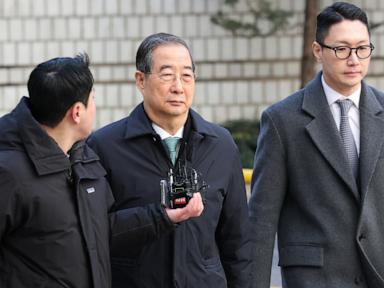
When South Korea’s Supreme Court overturns criminal charges against a former Prime Minister regarding a martial law declaration, the ruling exposes a fundamental structural divide between executive political accountability and individual criminal culpability under constitutional law. Standard political commentary treats such reversals as partisan victories or institutional failures, missing the strict evidentiary architecture required to prosecute insurrection and abuse of authority charges against cabinet-level officials. Understanding this decision requires mapping the statutory thresholds of South Korean criminal procedure, the chain-of-command mechanics of the Martial Law Act, and the burden of proof separating passive administrative presence from active constitutional subversion.
The Architecture of Executive Liability Under South Korean Law
Prosecuting a former Prime Minister for actions surrounding a martial law decree relies on two primary statutory mechanisms: the Criminal Act’s provisions on insurrection and abuse of authority, and the procedural mandates of the Martial Law Act. Under Article 87 of the South Korean Criminal Act, insurrection requires proving that an individual participated in a riot with the specific intent to usurp national territory or subvert the Constitution. The statute stratifies liability into distinct tiers: ringleaders, plotters and key executors, and passive participants.
For a Prime Minister—who holds the second-highest executive office under Article 86 of the Constitution—prosecutors typically pursue charges under the "key executor" or "abuse of authority" classifications. However, the constitutional design of the South Korean presidency creates an inherent evidentiary bottleneck for prosecutors. South Korea operates under a presidential system where the President serves as both head of state and commander-in-chief, holding the exclusive constitutional authority under Article 77 to proclaim martial law.
While Article 89 requires that a martial law declaration undergo deliberation by the State Council—the cabinet body chaired by the President with the Prime Minister acting as vice-chair—deliberation is a procedural prerequisite, not a co-equal veto. The legal friction arises when courts must determine whether a Prime Minister’s participation in a cabinet meeting, or their subsequent administrative communications, constitutes active execution of an unlawful order or merely the fulfillment of mandatory constitutional procedure.
Three Evidentiary Thresholds That Collapse Insurrection Charges
Appellate and Supreme Court reversals in high-profile political prosecutions rarely hinge on whether the underlying event occurred; they turn on whether the lower courts misapplied the legal standards connecting the defendant's conduct to the statutory elements of the crime. In overturning charges against a former Prime Minister in a martial law context, the judiciary enforces three strict thresholds.
The Distinction Between Deliberation and Conspiracy
Under South Korean administrative law, attendance at a State Council meeting does not automatically confer co-conspirator status. To establish criminal complicity, the prosecution must prove a meeting of the minds prior to or during the execution of the unlawful act. If the evidentiary record shows that the Prime Minister was summoned to a late-night cabinet session without prior knowledge of the decree's drafting, or voiced procedural objections during the deliberation, the causal link required for conspiracy breaks down. The Supreme Court consistently separates institutional proximity from criminal intent.The Operational Command Gap
Martial law execution operates through a direct military chain of command running from the President through the Minister of National Defense to the Martial Law Commander. Unlike standard domestic policy, where the Prime Minister coordinates ministries under presidential direction, operational control over martial law troops bypasses the Office for Government Policy Coordination entirely. To sustain a conviction for participating in insurrection, prosecutors must demonstrate that the Prime Minister exercised actual operational authority—such as issuing deployment orders, directing police blockades of the National Assembly, or arresting lawmakers. Absent direct documentary or testimonial proof of operational orders issued by the Prime Minister, charges predicated on structural seniority fail at the appellate level.The Mens Rea Requirement for Abuse of Authority
When insurrection charges prove too difficult to sustain, prosecutors frequently rely on Article 123 of the Criminal Act, which penalizes public officials who abuse their authority to obstruct another person from exercising their rights or force them to perform non-obligatory acts. South Korean Supreme Court precedent sets an exceptionally high bar for Article 123 convictions. The prosecution must prove both that the official acted outside their general statutory authority and that the subordinate acted out of legal compulsion rather than routine administrative compliance. If a Prime Minister merely relayed presidential directives or drafted post-hoc administrative notices without coercing subordinates into illegal acts, the elements of abuse of authority remain unfulfilled.
The Mechanics of Judicial Review in Post-Crisis Prosecutions
Post-crisis prosecutions in South Korea frequently suffer from what legal scholars term retrospective compression—the tendency of investigative bodies, operating under intense public and parliamentary pressure, to compress distinct political failures into a single criminal indictment. Special prosecutors and investigative task forces often aggregate political responsibility, moral culpability, and criminal liability into an undifferentiated narrative.
The Supreme Court acts as an institutional filter against retrospective compression by strictly enforcing the principle of nulla poena sine lege—no punishment without law. When reviewing lower court convictions involving martial law, the Supreme Court conducts a granular examination of three evidentiary layers:
- Contemporaneous Records vs. Post-Hoc Testimony: The court prioritizes objective, time-stamped records—such as cabinet meeting minutes, encrypted military communications, and entry logs—over retrospective testimony from subordinates seeking leniency. When cabinet minutes reveal procedural irregularities—such as a lack of formal signatures or missing counter-signatures required under Article 82 of the Constitution—those irregularities invalidate the administrative legitimacy of the martial law decree, yet paradoxically weaken the prosecution's case against cabinet members who refused or failed to countersign.
- The Impeachment vs. Criminal Prosecution Divergence: South Korean jurisprudence maintains a firewall between Constitutional Court impeachment proceedings and Supreme Court criminal trials. An impeachment ruling requires proving a grave violation of the Constitution or laws sufficient to warrant removal from office—a standard centered on protecting the constitutional order. A criminal conviction requires proof beyond a reasonable doubt of specific statutory offenses. Conduct that justifies parliamentary impeachment or political disgrace frequently falls short of the criminal threshold for insurrection or treason.
- Causation in Administrative Chains: Lower courts sometimes infer criminal causation from the fact that a Prime Minister did not actively physically stop an unconstitutional order. The Supreme Court rejects omission-based criminal liability unless the defendant held a specific, legally enforceable duty and the practical capacity to prevent the criminal result at that exact moment. Given the unilateral nature of presidential command over the military, a Prime Minister's inability to halt troop movements cannot be legally equated with facilitating them.
Limitations of Judicial Remedies for Executive Overreach
Relying on criminal courts to police the boundaries of martial law creates a systemic vulnerability in constitutional governance. Criminal law is fundamentally backward-looking and individualistic; it is designed to punish discrete acts by specific perpetrators, not to recalibrate broken institutional norms.
The first limitation is the acquittal paradox. When the Supreme Court overturns charges against a senior official on strict evidentiary grounds, political actors routinely misrepresent the legal technicality as a substantive vindication of the underlying martial law decree. This erodes public trust in the judiciary, which is perceived as shielding political elites, even when the court is merely applying standard rules of criminal procedure that protect all citizens from state overreach.
The second limitation is the deterrence deficit. If cabinet officials recognize that passive compliance or strategic ambiguity during an unconstitutional crisis insulates them from criminal conviction—because they lack direct military command authority—the internal executive checks designed to prevent democratic backsliding weaken. Constitutional safeguards like State Council deliberation and ministerial countersignatures rely on officials actively resisting unlawful orders, not merely avoiding leaving a paper trail of operational command.
Strategic Imperatives for Institutional Reform
To prevent future constitutional crises from collapsing into protracted, inconclusive criminal litigation, legislative and institutional reforms must target the structural ambiguities exposed by the Supreme Court's ruling rather than attempting to lower criminal evidentiary standards.
First, the National Assembly must amend the Martial Law Act to codify explicit, non-delegable procedural gates. Currently, the requirement for State Council deliberation lacks strict statutory definitions regarding quorum, mandatory recording, and the legal effect of a Prime Minister's refusal to countersign. Amending the statute to stipulate that any martial law proclamation lacking contemporaneous, recorded affirmative votes from a majority of the State Council is void ab initio—and rendering any military compliance with an uncertified decree a strict-liability offense for unit commanders—removes the ambiguity surrounding cabinet participation.
Second, legislative oversight mechanisms must shift from post-hoc criminal referrals to real-time structural blocks. Under Article 77(5) of the Constitution, the President must lift martial law when the National Assembly demands it by a majority vote. Statutory revisions should establish automated administrative protocols ensuring that security forces cannot legally restrict parliamentary access or interfere with legislative sessions, backed by mandatory, non-discretionary administrative sanctions rather than complex insurrection prosecutions.
Finally, legal analysts and policy strategists evaluating South Korean political stability must decouple Supreme Court criminal reversals from assessments of democratic resilience. An overturned conviction against a former Prime Minister signals the operational independence of the judiciary and its adherence to strict evidentiary standards—a core indicator of the rule of law—rather than a collapse of constitutional accountability.