Twenty-two dead. A few weapons caches seized. Another press release from Rawalpindi declaring operational success in Khyber Pakhtunkhwa.
If you read standard wire coverage of Pakistan’s security operations along the Afghan border, you have read this exact story a hundred times. The military launches intelligence-based operations in districts like North Waziristan, Bannu, or Tirah Valley. Inter-Services Public Relations issues a statement tallying the bodies. News outlets copy-paste the numbers, add two sentences about the Tehrik-i-Taliban Pakistan, and move on to the next headline.
That lazy consensus treats body counts as a metric of progress. It assumes that if security forces kill enough insurgents in mountain hideouts, stability eventually follows.
Two decades of counterinsurgency warfare across South Asia prove the exact opposite. When a state military measures success by tactical body counts in its own borderlands, it is advertising strategic stagnation.
The Body Count Fallacy in Counterinsurgency
Military bureaucracies love numbers because numbers look like accountability. Politicians love them because they project strength to an anxious public. Journalists love them because "22 killed in raids" fits neatly into a headline without requiring structural analysis.
Yet tactical attrition is the worst possible yardstick for measuring an insurgency.
During the Vietnam War, Secretary of Defense Robert McNamara built an entire war-fighting apparatus around statistical body counts. Every week, the Pentagon published rising enemy casualty figures that mathematically proved the Viet Cong were being depleted faster than they could recruit. The numbers were precise, impressive, and completely detached from reality. The insurgency grew stronger while losing every major tactical engagement.
Pakistan’s security establishment is trapped in the exact same statistical loop in Khyber Pakhtunkhwa.
Consider the mechanics of an intelligence-based raid in mountainous tribal terrain. To locate a cell of twenty fighters in Tirah or Waziristan, security forces rely on human intelligence networks, signals interception, and localized informants. When a raid succeeds, the military eliminates a tactical unit and recovers small arms, ammunition, and improvised explosive materials.
On paper, that is a clean win. On the ground, it creates three immediate second-order effects that favor the insurgents:
- The Martyrdom Multiplier: In tight-knit tribal societies governed by Pashtunwali—specifically the obligation of badal (revenge)—killing a local fighter rarely ends a bloodline’s involvement in militancy. It recruits his brothers, cousins, and clan members who previously sat on the fence.
- Intelligence Burn: Every successful raid exposes the local informant network that enabled it. Militant commanders immediately conduct brutal purges of suspected spies after a strike, blinding state intelligence for months afterward.
- Operational Decentralization: Surviving cells abandon fixed hideouts and dissolve into smaller, autonomous micro-cells of three to five fighters. These micro-cells are vastly harder to detect and require a fraction of the logistics to sustain.
Killing twenty-two militants does not subtract twenty-two fighters from the battlefield. In an active insurgency with cross-border sanctuary, it simply forces the adversary to shed slow-moving formations and evolve into a leaner, more elusive network.
What Standard Coverage Misses About Northwest Pakistan
Mainstream reporting frames these raids as isolated police actions against criminal holdouts. That framing ignores the geopolitical architecture keeping the insurgency alive.
You cannot understand a raid in North Waziristan without looking at three structural realities that wire stories routinely omit.
1. The Sanctuary Problem Across the Durand Line
Counterinsurgency theorist David Galula established a foundational rule in his 1964 classic Counterinsurgency Warfare: Theory and Practice: an insurgency cannot be defeated if it possesses an accessible, unmolested external sanctuary.
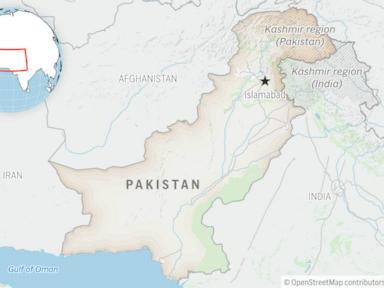
The 2,640-kilometer Durand Line separating Pakistan and Afghanistan is not a conventional border. It is a porous mountain frontier slicing straight through ethnic Pashtun homelands. Since the Taliban returned to power in Kabul in August 2021, the Tehrik-i-Taliban Pakistan (TTP) has enjoyed strategic depth across the border that no amount of Pakistani domestic raids can neutralize.
When Pakistani forces conduct a sweep in Bajaur or South Waziristan, militant commanders do not stand and fight to the last man. They disperse across ridgelines into Kunar, Nangarhar, or Paktika provinces in Afghanistan. They rest, rearm with weapons left behind during the NATO withdrawal, and wait for Pakistani troop concentrations to thin out.
Raiding hideouts inside Pakistan while the leadership and logistics hubs sit untouched across the border is like bailing water out of a boat without plugging the hole in the hull.
2. The Kinetic Addiction Over Governance
I have watched security apparatuses across multiple conflict zones fall in love with kinetic operations because kinetic operations are easy to organize compared to governance.
Deploying commandos takes weeks of planning. Building functioning civil courts, land registries, schools, and local policing in the former Federally Administered Tribal Areas (FATA) takes generations.
In 2018, Pakistan passed the 25th Constitutional Amendment, formally merging FATA into Khyber Pakhtunkhwa province. The promise was full legal integration, development funding, and civil rights for millions of residents who had lived under the colonial-era Frontier Crimes Regulation for over a century.
Years later, the administrative vacuum remains glaring. Judicial backlogs stretch for years. promised development budgets stall in bureaucratic bottlenecks. Local police forces remain outgunned and underfunded compared to regular army units.
When the state shows up primarily in armored convoys to conduct midnight raids—and leaves local communities caught between militant extortion by night and military curfews by day—the population does not rally to the state. They hedge their bets. Neutrality becomes a survival strategy, and neutrality always benefits the insurgent.
3. The Blowback of Past Strategic Depth
To pretend the current militancy in northwest Pakistan appeared out of thin air requires historical amnesia. For decades, elements within Pakistan’s security establishment differentiated between "good" militants who projected influence into Afghanistan and "bad" militants who attacked the Pakistani state.
That compartmentalization collapsed under its own contradictions. Ideological networks, smuggling routes, and militant kinship ties do not respect state-drawn classifications. Fighters trained and networked across the same madrasas and mountain corridors inevitably cross-pollinate.
Every time Islamabad negotiates a temporary ceasefire with TTP factions—as it repeatedly attempted between 2021 and 2022—it grants militants time to re-infiltrate Pakistani districts, rebuild shadow tax networks, and intimidate local elders. When those talks inevitably collapse, the military launches another wave of raids to clear territory it previously held.
Answering the Wrong Questions About Border Security
When news breaks of major military raids in northwest Pakistan, public debate immediately spirals into predictable, flawed questions. Let’s dismantle the most common ones.
Are military operations weakening the TTP?
The premise of this question confuses tactical disruption with strategic degradation.
Yes, sustained intelligence-based operations disrupt planned attacks, destroy localized IED factories, and eliminate mid-level field commanders. Without these raids, major urban centers like Peshawar and Islamabad would face far higher frequencies of mass-casualty bombings.
No, these raids are not reducing the TTP’s long-term capacity to regenerate. Research from organizations like the Pakistan Institute for Peace Studies (PIPS) and the Center for Research and Security Studies (CRSS) consistently shows that despite hundreds of annual intelligence-based operations, insurgent attack frequency in Khyber Pakhtunkhwa and Balochistan has surged dramatically since 2021. High militant death tolls have coincided with more violence, not less.
Can fencing the Afghan border stop infiltration?
Pakistan has spent hundreds of millions of dollars erecting a double-layered wire fence along roughly 90 percent of the Durand Line, complete with surveillance forts and biometric crossing points.
On a map, a fence looks decisive. In rugged alpine terrain reaching 10,000 feet, a fence is a speed bump, not a wall.
Unmanned stretches of wire in heavy snow or steep gorges are routinely cut within hours using basic bolt cutters. More importantly, militants do not need to move battalions across the border. They move individuals without weapons, linking them up with buried caches and black-market arms networks already operating inside Pakistan. A fence slows down heavy smuggling; it does not stop an ideological network embedded in cross-border tribes.
Why doesn't Pakistan launch cross-border strikes into Afghanistan?
Islamabad has actually conducted targeted airstrikes and artillery shelling inside Afghan provinces like Khost and Paktika. Every time it does, the strategic blowback is immediate.
Cross-border strikes trigger fierce border clashes with Taliban border guards, shut down critical bilateral trade crossings at Torkham and Chaman, and inflame anti-Pakistan nationalism among ordinary Afghans. Worse, they push the Taliban government in Kabul closer to rival regional powers while failing to compel Kabul to arrest TTP leaders. You cannot bomb a neighboring government into policing your border for you when that government shares blood, ideology, and twenty years of shared battlefield history with the militants you are targeting.
The Uncomfortable Reality of What Actually Works
If body counts are a mirage and border fences are porous, what breaks a entrenched rural insurgency?
History offers a clear, painful blueprint—and it requires abandoning almost every habit security establishments rely on.
1. Shift Metrics from Kills to Civil Presence
Successful counterinsurgencies measure success by whether a schoolteacher can sleep safely in their village without an armed escort, not by how many insurgents died in a ravine ten miles away.
Security forces must shift from sweep-and-leave raids to permanent, locally recruited community policing. Regular army units are blunt instruments designed for conventional warfare; they speak different dialects than local Pashtuns and rotate out every few months. Locally staffed police and Levies forces know every family, every valley, and every outsider who enters a village. Empowering, paying, and protecting local police matters infinitely more than deploying elite special forces for episodic raids.
2. Win the Information and Economic War Locally
Insurgents thrive where the state is predatory or absent. If a local farmer in Waziristan has to bribe three officials to register land or wait five years for a civil court ruling, while a militant commander settles a dispute in forty-eight hours, the militant wins legitimacy without firing a shot.
Counterinsurgency requires flooding contested districts with fast-track civil dispute resolution, transparent local development contracts executed by local labor, and genuine political representation. When local elders hold real budgetary power and physical security, they become the primary intelligence barrier against insurgent infiltration.
3. Accept the Cost of Strategic Patience
Here is the downside to a governance-first counterinsurgency strategy—and why politicians hate it: it is agonizingly slow, visually unspectacular, and produces zero immediate headlines.
In the short term, transitioning away from heavy-handed kinetic sweeps toward community-anchored policing can actually lead to a temporary spike in vulnerability as forces establish static outposts. It requires absorbing casualties without resorting to collective punishment or indiscriminate artillery fire that alienates civilians. It demands decades of uninterrupted budgetary commitment rather than splashy six-month military campaigns.
Stop Reading the Scoreboard
The next time a wire report announces that Pakistani security forces killed twenty, thirty, or fifty militants in a remote mountain valley, ignore the number.
Look instead at whether the courts in that district are open. Look at whether local police patrol the markets at night without military armor. Look at whether trade across the border is flowing without weekly closures, and whether families displaced by past operations have rebuilt their homes.
Until those metrics change, every press release celebrating another twenty-two dead militants is just documenting the latest lap on a treadmill.